

Car battery prices in Nigeria vary by brand, capacity, technology and the exact model your vehicle needs. Retailer pages reviewed in October 2026 advertised an Arnold 75Ah battery at ₦68,000, Hankook and Solite 80Ah batteries at ₦98,000 each, and a Rocket 100Ah battery at ₦132,000. These are individual advertised prices, not a universal national price list.
Before choosing a replacement, confirm the correct battery specification and whether the quotation includes testing, installation and delivery. A cheaper battery that does not fit properly or suit the vehicle’s electrical system can become an expensive mistake. This guide explains the available price evidence, compares the named brands and shows what to check before paying.
How Much Does a Car Battery Cost in Nigeria?
The reviewed offers suggest that budgeting around ₦65,000 to ₦150,000 can cover several conventional replacement batteries in the capacities discussed here. That is a sample-based planning range, not a minimum or maximum for every vehicle. Smaller batteries, different technologies and specialist imported models can fall outside it.
Separate the battery’s shelf price from the amount needed to complete the replacement. Ask whether the seller charges for delivery, fitting, testing or any vehicle-specific setup. Also establish whether the quoted amount assumes you will surrender your old battery. Two seemingly similar offers may include different services or exchange conditions.
Treat unusually cheap advertisements cautiously, especially when they lack a complete model number or clear warranty terms. Some catalogue pages contain unavailable products or old prices alongside active offers. Obtain a written quotation for the exact unit and confirm stock before sending payment or travelling to a dealer.
Arnold 75Ah and Target Premium 75Ah Prices
Arnold 75Ah advertisements reviewed across Nigerian retailers ranged from ₦65,000 at Drivon Auto Supplies to ₦80,000 at Dimaps Battery Group, with Battery.com.ng listing ₦68,000. This variation illustrates why comparing more than one seller is useful. The price difference alone does not establish that one unit is newer, more genuine or better supported.
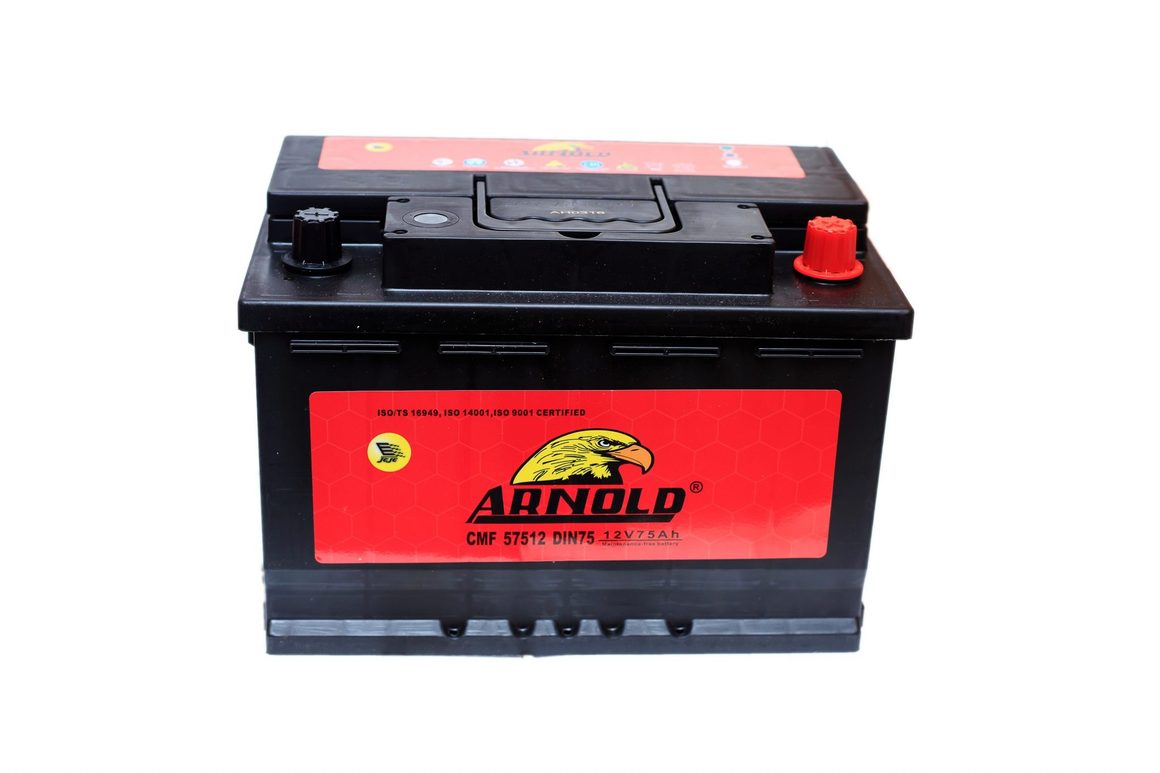
Target Premium 75Ah was advertised at ₦95,000 on Battery.com.ng’s car battery catalogue. Arnold and Target should be assessed as separate products, even when both carry a 75Ah label. Request the complete specification, physical dimensions and warranty terms rather than assuming their starting performance is identical.
For buyers balancing price and reliability, ask the retailer to test the actual battery before installation and explain the result. Check the manufacturing code and establish how warranty claims are handled locally. A lower purchase price is most useful when the unit meets your vehicle’s requirements and the seller provides practical support.
Hankook and Solite 80Ah Prices
Hankook 80Ah and Solite 80Ah batteries were each advertised at ₦98,000 on the retailer catalogue reviewed. They are separate brands, so compare the exact product codes rather than combining them into one interchangeable recommendation. Capacity alone does not establish dimensions, terminal arrangement, starting performance or compatibility.
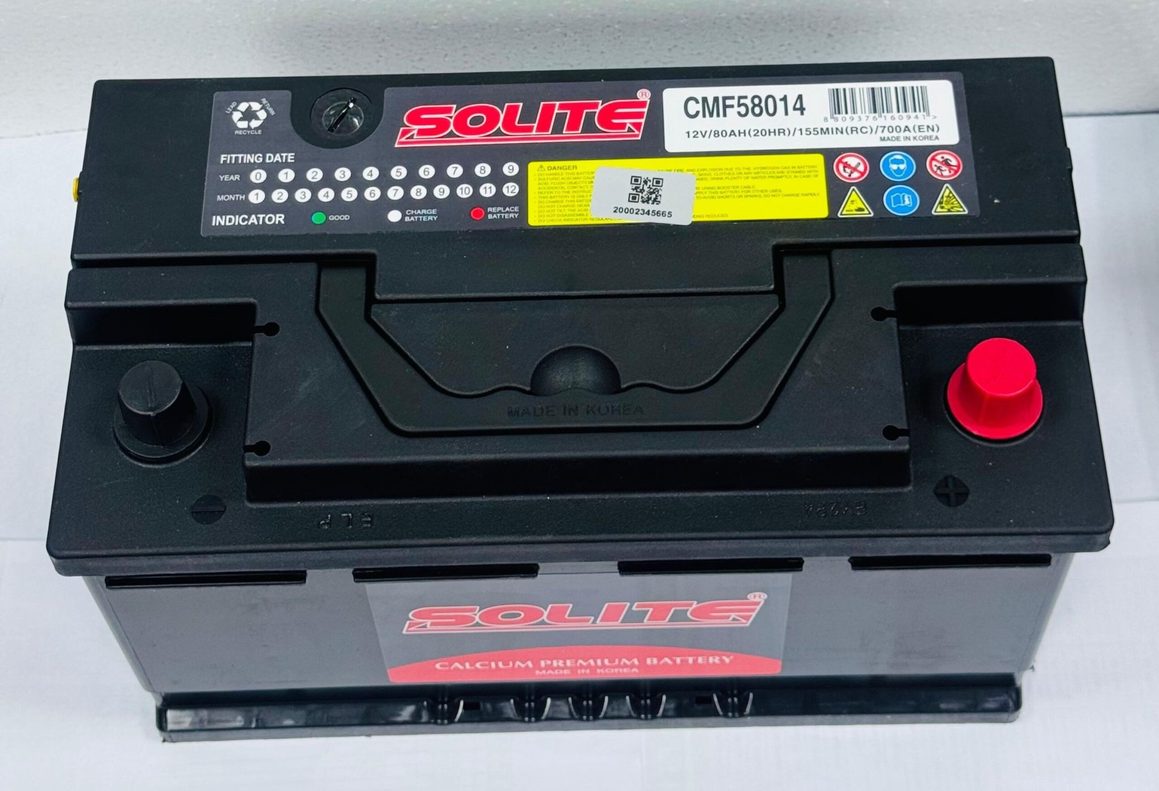
An 80Ah battery should not automatically be recommended for every Toyota Corolla or Honda Civic. Requirements vary with year, engine, original market and equipment. Check the vehicle manufacturer’s information or a reliable application catalogue, particularly if the existing battery may have been fitted incorrectly by a previous owner.
Wheelzar’s guide to choosing a car battery in Nigeria provides a broader buying context. Use it alongside vehicle-specific information and the actual product label. Descriptions such as “Korean,” “premium” or “heavy duty” may describe marketing or origin, but they do not replace the technical checks needed for correct fitment.
Rocket and Everstart 100Ah Prices
A Rocket 100Ah battery was advertised at ₦132,000 on Battery.com.ng, while Dimaps Battery Group listed an Everstart 100Ah battery at ₦150,000. These are separate retailer offers for different products, not evidence that all 100Ah batteries should cost the same. Confirm the precise model and current availability before treating either as a purchase quotation.
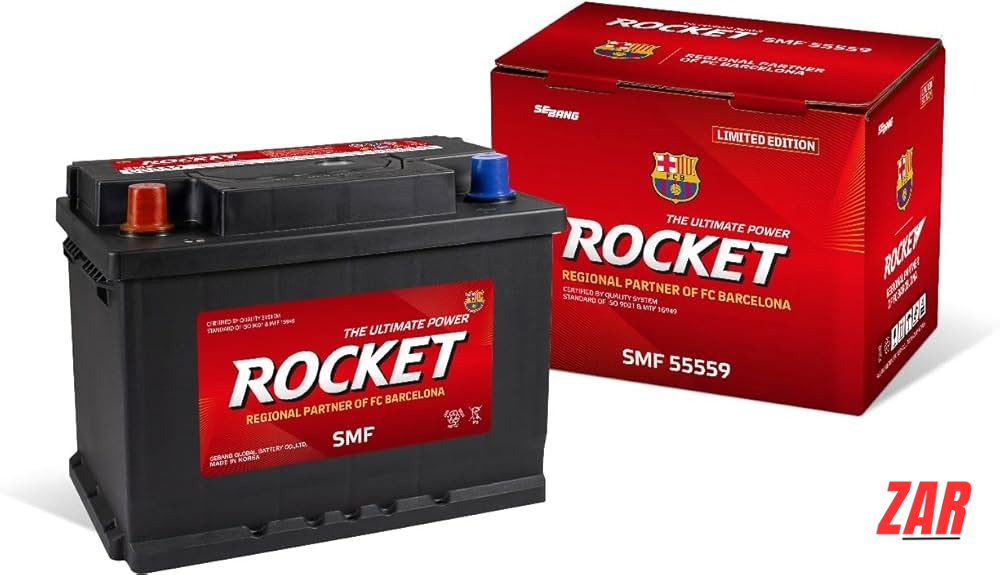
A larger capacity rating does not automatically make a battery suitable for a pickup, taxi or high-mileage vehicle. The manufacturer’s specification remains the starting point. Extra capacity cannot correct a charging fault, and the battery must fit securely without putting terminals, cables or surrounding components in an unsuitable position.
If a seller recommends moving from a smaller battery to a 100Ah model, ask what vehicle-specific evidence supports the change. Have a competent technician confirm fitment and charging compatibility. Increasing capacity simply because the car is old or travels frequently is not a sufficient reason to change its specification.
OPTIMA DH7 YellowTop: Specifications and Price Uncertainty
OPTIMA identifies the DH7 YellowTop as an AGM battery rated at 80Ah and 880 cold cranking amps, designed for compatible applications. The manufacturer’s DH7 fitment and specification guidance associates it with 94R applications. That makes its physical fitment important; it is not a universal replacement for ordinary sedans.
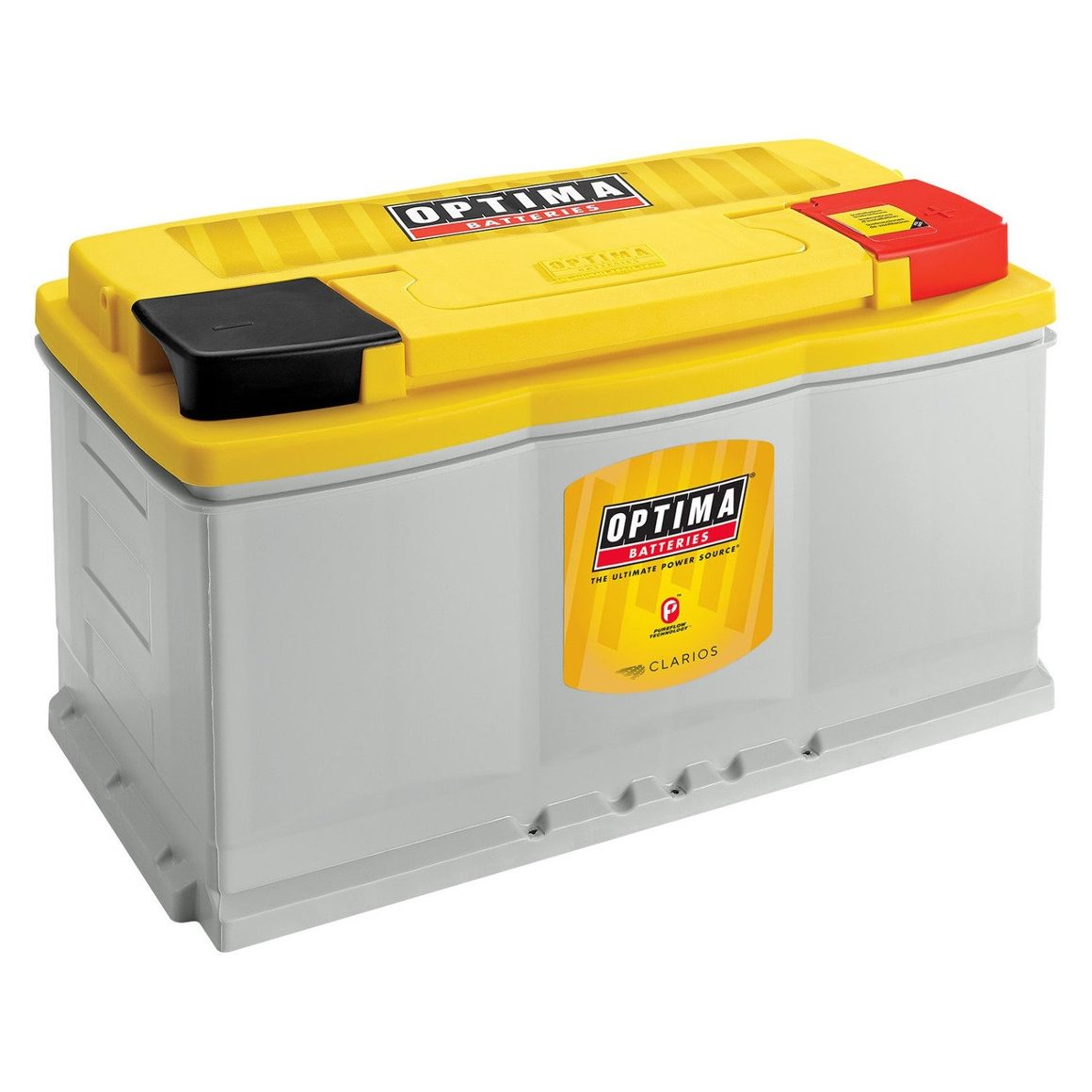
The proposed Nigerian price of ₦180,000 to ₦250,000 could not be independently confirmed from a dependable local offer during this research. Request a current landed or retail quotation before budgeting around it. The quotation should identify the exact product and explain freight, import charges where relevant, delivery and local warranty arrangements.
For buyers considering this battery, the decision should begin with compatibility and actual electrical needs. A recognised premium product does not automatically offer better value in every car. Establish who will handle a warranty claim in Nigeria, especially if the unit is imported through a seller without manufacturer-backed local support.
Mighty Max MM-G35: Confirm the Nigerian Landed Cost
The Mighty Max MM-G35 product specifications identify a Group 35, 12V, 55Ah AGM battery with 650 CCA and a 100-minute reserve capacity. Those specifications distinguish it from the 75Ah, 80Ah and 100Ah products discussed above. The manufacturer page reviewed displayed a US price of $149.99.
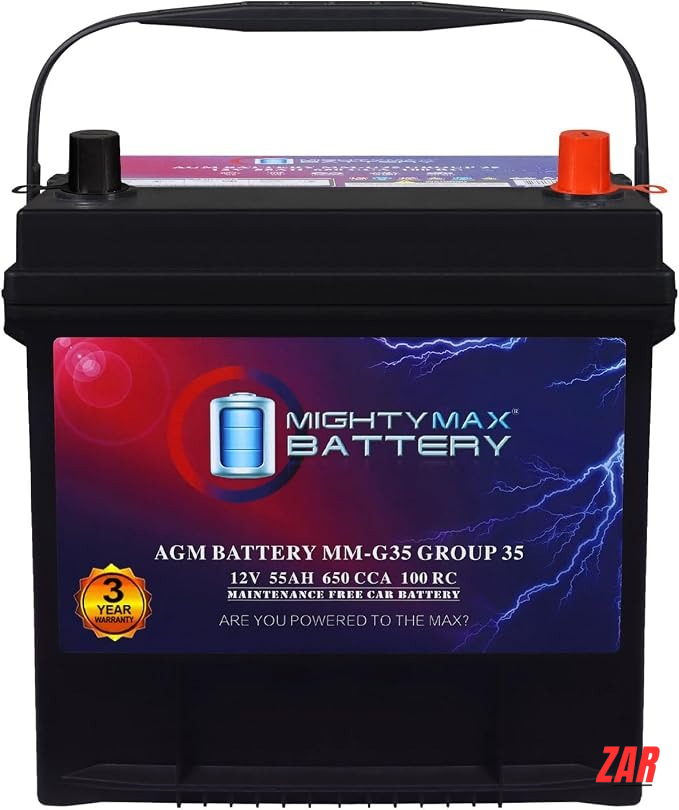
A Nigerian selling price of ₦70,000 to ₦90,000 could not be verified from the available evidence. Do not substitute a foreign website price for a delivered Nigerian quotation. Ask a supplier to confirm the unit’s authenticity, shipping arrangements, total cost and warranty support before describing it as a budget AGM option.
Understanding Ah, CCA and Battery Size
Ampere-hours, written as Ah, express electrical charge capacity under specified test conditions. Cold cranking amps, or CCA, describe starting-current capability under a standard cold-temperature test. They measure different characteristics, so a 100Ah battery does not automatically have a particular CCA rating. Check the manufacturer’s specification for the exact model.
Although Nigeria does not normally experience the extreme cold used in CCA testing, the rating remains useful for comparing batteries tested to the same standard. Follow the vehicle manufacturer’s required specification. Avoid assuming that a higher number alone proves longer life, better heat resistance or more reliable performance.
Physical compatibility is equally important. Check case dimensions, terminal position, terminal type and the securing arrangement. Where the vehicle requires venting provisions, these must also be suitable. A battery that cannot be held securely or connected correctly is the wrong choice even if its voltage and advertised capacity appear appropriate.
Maintenance-Free, EFB and AGM Batteries
“Maintenance-free” does not mean that a battery is necessarily AGM. Many maintenance-free automotive batteries are flooded lead-acid designs, while AGM batteries hold electrolyte in absorbent glass mats. EFB means enhanced flooded battery. These technologies have different operating characteristics, and the correct choice depends on the vehicle rather than the most attractive sales description.
VARTA’s technical guidance states that an AGM-equipped vehicle should receive an AGM replacement. An EFB battery should be replaced with an appropriate EFB or, where suitable, upgraded to AGM. Fitting a conventional battery instead can compromise a start-stop system and shorten battery life. Follow approved fitment guidance when changing technology.
Some vehicles also require battery registration or another manufacturer-specified setup after replacement. Ask the installer to check your exact model before quoting the job. Do not assume that physically connecting a new battery completes every installation, particularly on vehicles with battery-management systems or sophisticated charging controls.
How Long Will a Battery Last in Nigeria?
There is no dependable lifespan that applies to every battery across Nigeria. Interstate Batteries gives a general automotive estimate of three to five years, while explaining that heat, quality and driving habits influence service life. High temperatures accelerate deterioration, so that general estimate should not be presented as a guaranteed Nigerian outcome.
A claim that every local battery lasts two to four years, or that every premium AGM battery lasts longer, needs stronger evidence than brand reputation. Installation, charging behaviour, storage history and usage all matter. Arrange periodic testing and investigate changes in starting performance rather than waiting for a fixed anniversary.
If a battery becomes swollen, leaks or emits an unusually strong smell, stop treating it as a routine purchasing comparison and have it assessed safely. Avoid opening a sealed battery or attempting improvised repairs. A damaged unit needs appropriate handling by someone equipped to manage battery acid and electrical risks.
Test the Car Before Replacing the Battery
Slow cranking or repeated jump-starts can justify testing, but they do not establish that the battery is the only fault. Ask for an assessment of battery condition, charging performance and electrical connections. If the battery repeatedly goes flat while parked, investigate unintended electrical consumption rather than repeatedly buying replacements.
A fully charged battery and a healthy battery are not necessarily the same thing. A technician should interpret appropriate test results alongside the symptoms and vehicle requirements. When comparing quotes, ask whether diagnostic work is included, because replacing a battery without identifying the underlying problem can leave you paying twice.
For more context on the complete job, read Wheelzar’s car battery replacement cost guide. Obtain current workshop charges for your vehicle rather than assuming one fitting fee covers every model. Diagnosis, difficult access and any required electronic setup can change what is included.
Buying From a Dealer and Checking the Warranty
Buy from a seller who can identify the exact product, explain its date code and issue an itemised receipt. Ask whether the warranty is provided by the retailer, importer or manufacturer, and where claims are handled. A long warranty has limited practical value if the seller cannot explain the claim procedure.
Compare prices only after confirming the same model, technology and included services. Ask whether replacement is free or subject to conditions, what faults are excluded and whether testing is required for a claim. Keep the receipt and installation record somewhere accessible, rather than relying on a verbal assurance at the counter.
For an online order, request photographs of the actual unit’s label and confirm the return procedure if the wrong specification arrives. Check that the invoice describes the model you selected. If a seller proposes a substitute because stock has changed, verify its compatibility before agreeing rather than accepting another battery solely because its price is similar.
Do not treat an old battery’s exchange value as evidence of strong resale performance. Ask for the purchase price before and after any exchange allowance, and use a responsible collection or recycling route for the old unit. An opaque exchange deal can make a discount appear larger than it is.
Getting Better Value From Your Battery Budget
Keep battery care within your wider servicing routine, using Wheelzar’s car maintenance checklist as a planning reference. Ask your workshop to inspect mounting security, connections and charging performance when appropriate. If the car is stored for extended periods, follow manufacturer guidance on suitable charging or maintenance arrangements.
The best car battery price in Nigeria is a verified quotation for a genuine, compatible product with useful local support. Compare the exact specification, test the vehicle, confirm the warranty and budget for proper installation. Paying for the right replacement is usually more useful than paying extra for an oversized battery or an unsupported brand ranking.