Road signs in Nigeria fall into three main categories: regulatory signs, warning signs and informative signs. Regulatory signs communicate restrictions or instructions, warning signs identify hazards ahead, and informative signs help road users find routes, destinations and services. Understanding the sign’s shape, colour and symbol helps you recognise its message early enough to respond safely.
Knowing the meaning is only part of the task. A driver must also take the correct action: stopping completely, giving way, reducing speed, choosing the correct lane or avoiding a prohibited entrance. Following the vehicle ahead is not a substitute for reading the signs yourself.
This guide explains common Nigerian road signs and how to respond to them. One important correction for learners is that traffic travels anticlockwise around conventional roundabouts in Nigeria, consistent with driving on the right-hand side of the road.
How Road Signs Work in Nigeria
Nigeria’s road-sign system is explained through Highway Code guidance and national traffic-sign standards. The FRSC’s Highway Code literacy guidance identifies warning, regulatory and informative signs as the three basic categories. Regulatory signs include prohibitory instructions, which restrict an action, and mandatory instructions, which require an action.
Shape provides an early clue. Many regulatory signs are circular, warning signs are commonly triangular, and direction or information signs are usually rectangular. However, there are important exceptions: Stop is an octagon, while Give Way is an inverted triangle. Read the complete sign rather than relying on shape alone.
Colours also help. Red commonly indicates a restriction or danger, while blue can indicate a mandatory instruction or a service, depending on the sign’s shape and symbol. Direction boards may use green, blue or white backgrounds. The Federal Ministry of Works’ road traffic signs and markings manual provides the national design reference.
Regulatory Road Signs and Their Meanings
Stop and Give Way
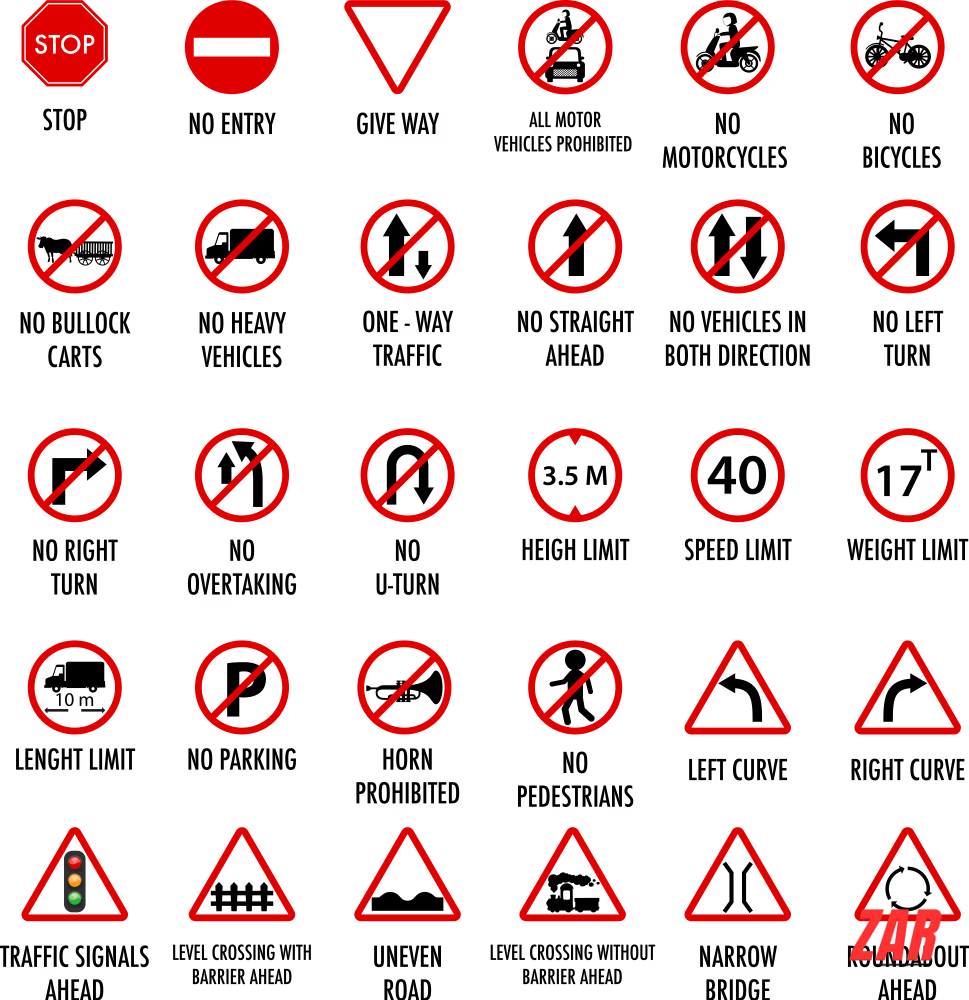
A Stop sign requires a complete stop, even when the road appears empty. Stop before the marked stop line where one is provided. Check for vehicles, pedestrians and other road users, then proceed only when it is safe. If your view is obstructed, move forward cautiously after stopping until you can see clearly without entering another vehicle’s path.
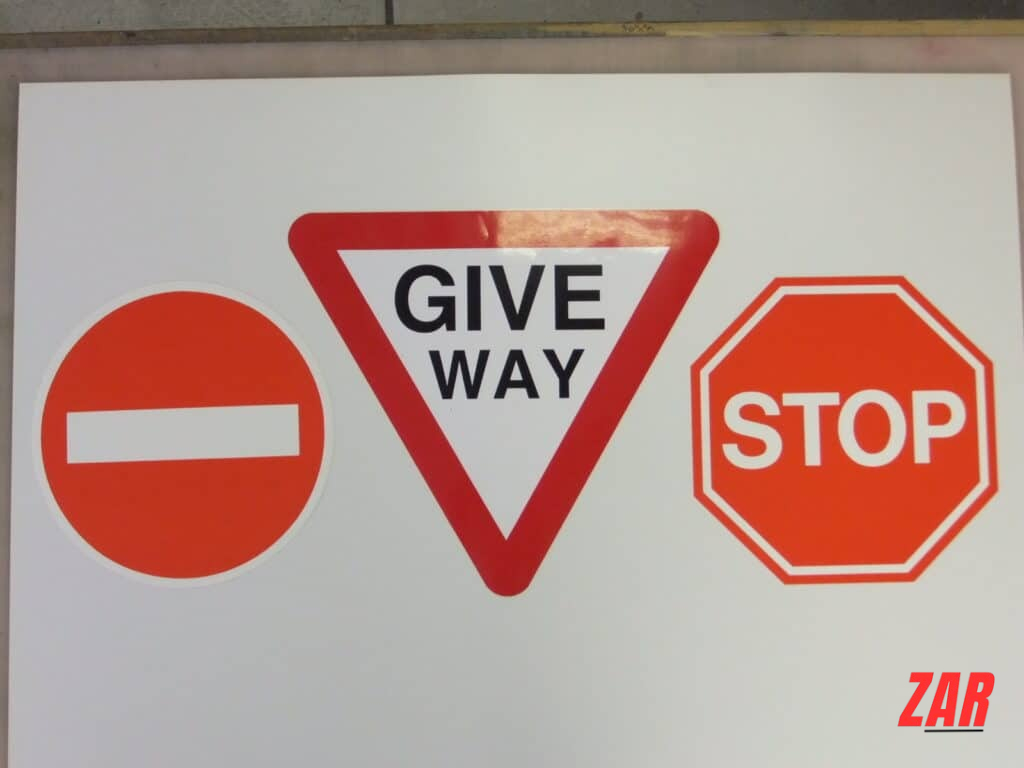
Give Way means allowing traffic with priority to proceed first. Slow down and be prepared to stop; unlike a Stop sign, it does not automatically require a complete stop when the way is clearly safe. At a junction, assess approaching traffic carefully and avoid entering if you would force another driver to brake or change direction.
No Entry and One-Way Signs
No Entry prohibits entering the road from the direction in which the sign faces you. It commonly appears at the wrong end of a one-way street or at a restricted access point. Do not assume that another driver entering makes the manoeuvre permitted.
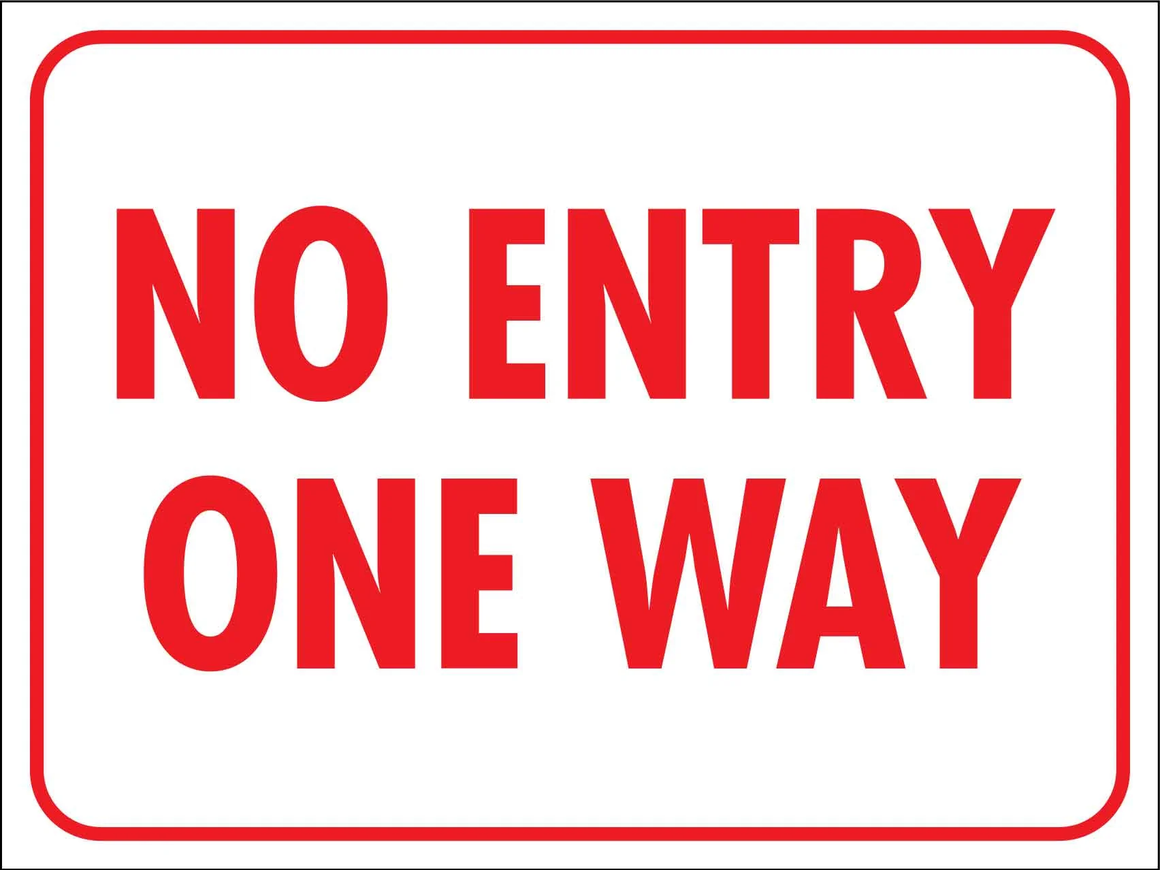
A One-Way sign identifies the permitted direction of traffic. Follow its arrow and the relevant lane markings. If you miss your turn, continue to a safe, lawful alternative instead of reversing against traffic. WheelZAR’s guide to traffic rules and regulations in Nigeria provides additional context on lane discipline and road use.
No Left Turn, No Right Turn and No U-Turn
These signs prohibit the manoeuvre shown. A crossed-out left-turn arrow means you must not turn left at the indicated location, while a No U-Turn sign prohibits turning back in the opposite direction. Check supplementary plates for any stated operating hours or vehicle exceptions.
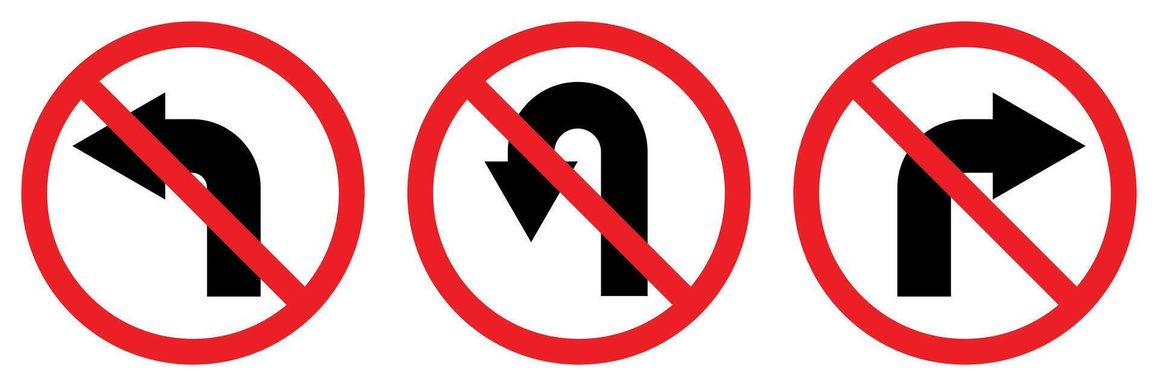
Navigation instructions do not override roadside restrictions. If your map directs you into a prohibited turn, continue safely and allow it to recalculate. Avoid stopping abruptly at the junction while deciding what to do.
No Overtaking
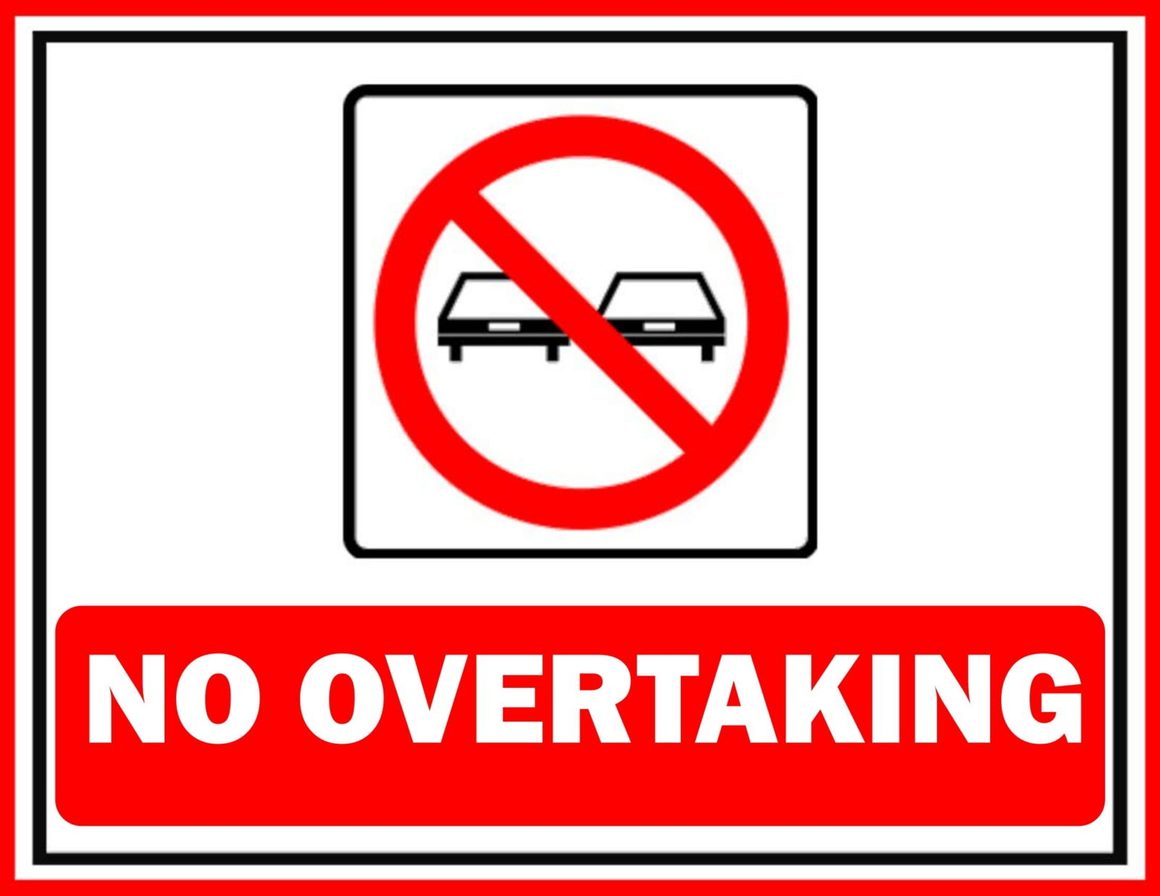
A No Overtaking sign prohibits overtaking within the restriction’s scope. It is not simply another name for “stay in your lane,” although lane markings may impose additional restrictions. Remain behind the vehicle ahead, keep a safe following distance and wait until overtaking is both permitted and safe.
No Parking and No Stopping
No Parking and No Stopping are different restrictions. No Parking prevents parking in the indicated area, while No Stopping is stricter and prohibits voluntary stopping, including a brief passenger drop-off unless an applicable exception permits it. Necessary stops caused by traffic or an emergency are different from choosing to pull over.

Warning Signs No Parking and No Stopping. Source: Vecteezy
Read any time plate, directional arrow or distance information attached to the sign. A restriction may apply only during stated hours or along a particular section of road. Switching on hazard lights does not give permission to park or stop where prohibited.
Speed, Height, Width and Weight Limits
A maximum-speed sign shows the permitted upper speed in kilometres per hour. It is a ceiling, not a target. You may need to travel considerably slower because of rain, pedestrians, poor visibility or road damage.
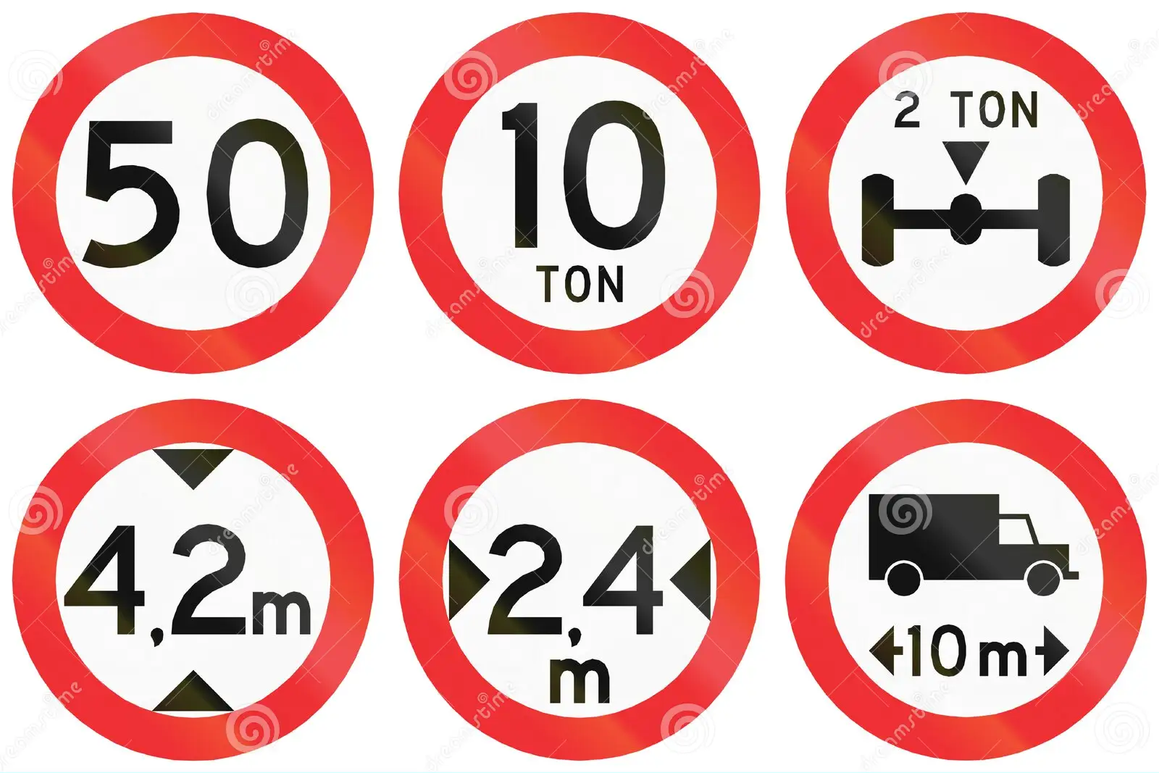
Height and width restrictions identify dimensions beyond which a vehicle must not pass. Weight restrictions may refer to total laden weight or axle load, depending on the symbol. Drivers carrying roof loads or operating commercial vehicles must know the relevant loaded dimensions and weights before approaching a restricted route.
Mandatory Directions and Minimum Speed
Keep Left and Keep Right signs tell you which side of an obstruction or traffic island to pass. A Keep Left instruction at an island does not change Nigeria’s general right-hand traffic system. Follow the indicated path while remaining alert to lane markings and nearby vehicles.
A minimum-speed sign indicates a minimum under the applicable operating conditions. It is not permission to accelerate into congestion or a hazard. Read it alongside other restrictions and respond safely to actual road conditions.
Roundabout Signs and Correct Driving Direction
A triangular roundabout warning sign tells you that a circular junction is ahead. A circular mandatory sign with arrows indicates the direction of circulation. On a conventional Nigerian roundabout, travel anticlockwise, keeping the central island on your left.
Reduce speed on approach, select the appropriate lane using signs and markings, and give way to traffic already circulating, generally approaching from your left. Follow traffic signals or an authorised officer’s directions where the junction is controlled. Do not enter unless you have a safe gap.
Maintain your lane and signal your intended exit. If you miss it, continue around where permitted instead of cutting across traffic. Watch for pedestrians near the approach and exit, and avoid assuming another driver’s indicator guarantees their next movement.
Warning Road Signs and What Drivers Should Do
Warning signs identify hazards that may require an immediate change in speed, position or attention. Many use a red-bordered triangle with a symbol showing the danger. Their purpose is to give you time to prepare before reaching the hazard.
A curve or double-curve sign warns of bends ahead. Reduce speed before the bend and avoid overtaking where your view is restricted. Junction symbols indicate an intersection, T-junction or other joining arrangement; approach ready for vehicles entering, crossing or turning.
Road Narrows and Narrow Bridge signs warn that usable width reduces ahead. Assess oncoming traffic and any priority signs before proceeding. Avoid attempting to pass another vehicle through a confined section, particularly when there is insufficient clearance.
A pedestrian-crossing warning sign alerts you to a crossing ahead. Slow down, scan both sides and be ready to stop. A school or children warning sign requires particular attention because children may move unpredictably. Obey any posted school-zone speed limit and leave enough space to stop safely.
A Slippery Road sign warns of reduced grip. Reduce speed smoothly, increase your following distance and avoid abrupt steering or braking. A steep-gradient sign calls for controlled speed and a suitable gear, while a bump or uneven-road sign means you should slow before reaching the raised or damaged surface.
Roadworks signs warn of workers, equipment, changed lanes and temporary surfaces. Follow the temporary layout and applicable speed restrictions. Railway-crossing signs require you to check signals, barriers and approaching trains; never enter unless the crossing and your exit are clear. Animal warning signs mean livestock or wildlife may enter the carriageway, so reduce speed and allow room.
Informative Signs: Directions, Parking and Services
Informative signs help you locate destinations, routes and facilities. Direction boards may show place names, distances, road numbers and arrows. Read them early so you can choose the correct lane without a last-minute swerve.
Service symbols can indicate a hospital, filling station, parking area or other facility. A Parking sign identifies parking provision, but additional plates may impose charges, operating hours or vehicle restrictions. Information signs should therefore be read in full rather than treated as automatic permission to stop anywhere nearby.
For another reference while studying, WheelZAR’s guide to Nigerian road signs and their meanings complements the categories explained here.
Speed Limits to Read Alongside Road Signs
The Nigerian Highway Code’s published table gives private cars maximum speeds of 50 km/h in built-up areas, 80 km/h on highways and 100 km/h on expressways. It gives taxis and buses 50, 80 and 90 km/h respectively, while tankers and trailers have lower limits. These are vehicle- and road-category limits, not permission to ignore a lower posted restriction.
Obey the applicable lower limit. A private car on an expressway with a posted 50 km/h restriction must not continue at 100 km/h simply because that is the general expressway maximum. Likewise, a higher road sign does not remove a lower limit applicable to your vehicle category.
Conditions can demand an even lower speed. A posted limit assumes more favourable circumstances than heavy rain, dense pedestrian activity or a damaged road may allow.
Reading Signs Early and Handling Unclear Signs
Use shape to identify the likely category, colour to narrow the meaning, and the symbol or wording to identify the exact instruction. Then check any supplementary plate for times, distances or exceptions. Looking well ahead gives you time to respond smoothly.
If a sign is faded, damaged or hidden, reduce speed and use clear markings, visible restrictions and authorised directions to assess the route. Do not assume an unclear sign gives permission to enter a restricted road. Equally, avoid guessing a manoeuvre that could put you into opposing traffic.
Traffic lights, stop lines and lane arrows also form part of the road-control system. A green light does not justify entering a blocked junction or endangering pedestrians. Keep studying beyond sign recognition through WheelZAR’s motoring guides, and practise identifying signs as a passenger or with a qualified instructor.
Penalties for Ignoring Road Signs
Disobeying signs can attract enforcement action, but there is no single fine covering every offence throughout Nigeria. The applicable offence, authority and legal framework matter. Consult the FRSC offences and penalties schedule for federal offence descriptions rather than assuming every sign violation costs ₦2,000–₦5,000.
For everyday driving, the practical objective is to recognise the instruction early and act predictably. Stop fully where required, give way to traffic with priority, obey restrictions and adjust your speed before reaching a hazard.