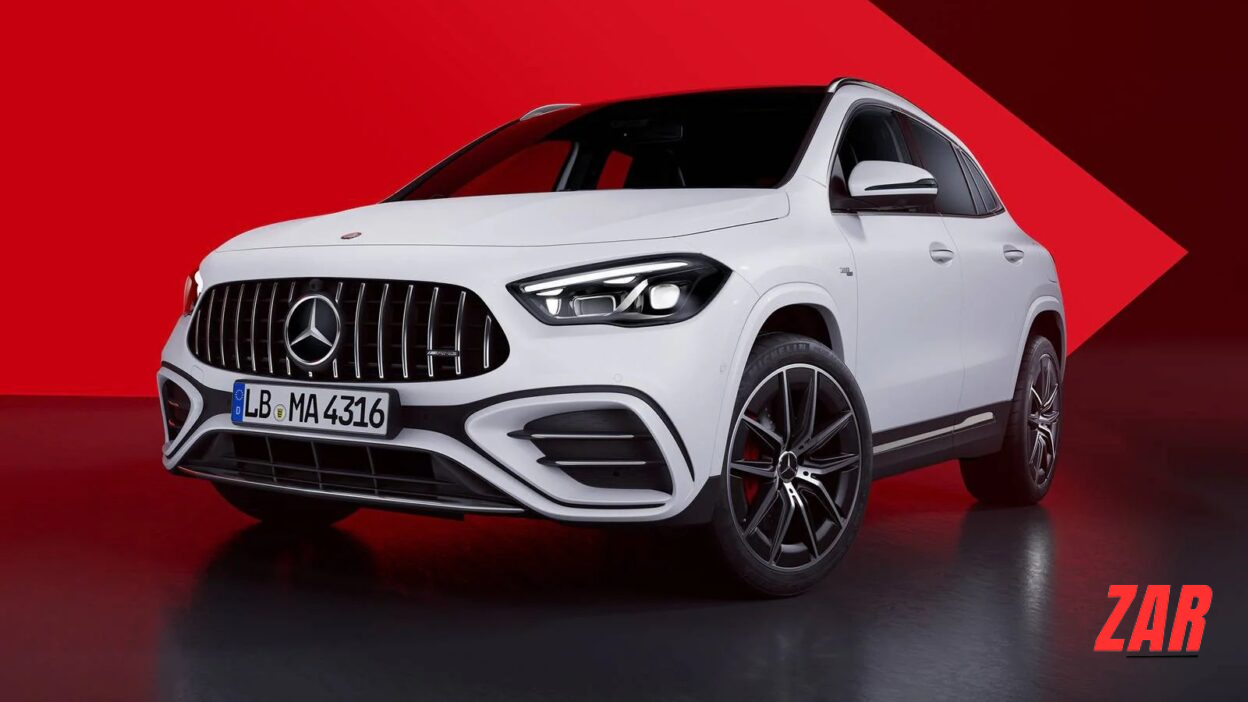
Buying a second-hand Mercedes-Benz is a dream for many drivers across Africa. The allure of the “Three-Pointed Star” represents success, comfort, and engineering excellence. However, the used market can be a minefield for the unprepared. Is it actually a smart financial move, or are you just buying someone else’s expensive problems?
The answer is not a simple yes or no. It depends heavily on your budget, your patience for maintenance, and the specific history of the car. When considering buying a Mercedes-Benz, you must look past the shiny paint and understand the mechanical reality beneath the hood. In this guide, we will break down the reality of owning a pre-owned luxury German machine in today’s market.
The Allure of the “Luxury Tax”
When you buy a used Mercedes, you are essentially playing a game with depreciation. New luxury cars lose value faster than almost any other asset. Consequently, the second-hand market allows you to feel like a millionaire at a fraction of the original cost. A car that once cost ₦84,000,000 ($60,000) can often be found for less than ₦21,000,000 ($15,000) just eight years later.
However, you must prepare for the “luxury tax.” While the purchase price drops, the cost of parts and specialized labor remains anchored to the original MSRP. A brake pad set for an S-Class does not become cheaper just because the car is now 15 years old. Researching the mercedes depreciation rates reveals that while the entry price is low, the upkeep remains at a premium level.
General Pros of Buying Used
- Depreciation Capture: A new Mercedes can lose 20-30% of its value in the first year alone. By year five, the steepest part of the curve is over. By buying used, you let the first owner take the massive financial hit.
- The Premium Experience: Even a 10-year-old Benz often feels more refined than a brand-new economy car. You get better sound insulation, higher-quality leather, and superior safety tech that mainstream brands are only just beginning to adopt.
- Engine Longevity: Mercedes-Benz builds robust engines. If you maintain them strictly, these powerplants—especially the diesel variants—can easily cross 320,000 kilometers (200,000 miles).
General Cons of Buying Used
- Higher Running Costs: Ownership is significantly more expensive than a Japanese alternative. According to reliability data, the average repair costs for a Mercedes sit around ₦1,271,200 ($908) annually. In contrast, the average across all brands is only ₦912,800 ($652).
- Complexity and Electronics: Modern Mercedes models feature complex air suspensions (Airmatic) and advanced fiber-optic electronics. When these fail, the repair bills are often significant. There are many hidden ownership risks associated with the complex sensors and computer modules that control every aspect of the car.
- The Need for Specialists: You should avoid general roadside mechanics. You will need a technician with the “Star Diagnosis” tool, which can be harder to find and more expensive per hour.
The 10-Year-Old “Sweet Spot” (e.g., 2015–2017 Models)
For most buyers, a 10-year-old Mercedes-Benz represents the perfect balance between modernity and value. Models like the W205 C-Class or the W212 E-Class (Facelift) are highly sought after. These cars still look modern and feature excellent safety technology like Blind Spot Assist and Collision Prevention.
The Reality Check:
At this age, a well-maintained C 300 or GLC 300 usually costs between ₦21,000,000 and ₦35,000,000 ($15,000–$25,000). Most of the massive depreciation has already occurred. Therefore, if you find one with a full service history, it can be a fantastic daily driver that still commands respect on the road. When evaluating older luxury models, always check the condition of the rubber seals and cooling system.
Common Issues at this Age:
- Auxiliary Battery: Expect a “Battery Reserve” warning light. Replacing this usually costs around ₦112,000 ($80).
- Transmission Service: The 7G-Tronic or 9G-Tronic transmissions require fluid changes every 50,000 to 60,000 miles. Neglecting this leads to a ₦1,400,000 ($1,000) valve body headache.
- Turbocharger Sensors: On the newer 4-cylinder engines, sensors can become finicky, though they are relatively easy to replace.
The 20-Year-Old Gamble (Roughly 2006 Models)
Buying a 20-year-old Mercedes, such as the W211 E-Class or the W203 C-Class, is an entirely different experience. These cars are incredibly cheap to buy but can be very demanding to own. You can often find these for ₦7,000,000 to ₦14,000,000 ($5,000–$10,000).
This era (early to mid-2000s) had specific engineering hurdles. For example, the M272 V6 engine (found in the 2006 E 350 or ML 350) had famous issues with “soft” balance shaft gears. Repairing this requires pulling the entire engine, costing upwards of ₦3,500,000 ($2,500). Furthermore, the SBC (Sensotronic Brake Control) system found in E-Class models of this era has a “cycle limit.” Once reached, the pump must be replaced, which is a high-precision, high-cost job.
Is it worth it? Only if you are an enthusiast or a DIY mechanic. If you want a “low-drama” commuter car, stay away from 20-year-old luxury models unless they are pristine “survivors” with a stack of receipts.
The Lexus Alternative: A Necessary Comparison
Whenever we discuss used Mercedes-Benz cars, the Lexus RX or ES series inevitably enters the conversation. If your primary goal is absolute reliability and low maintenance, Lexus wins. Lexus vehicles use Toyota-based components that are cheaper to source and more familiar to local mechanics.
However, if you prioritize “Driving Soul,” high-speed stability, and cutting-edge aesthetics, Mercedes-Benz remains the king. A Lexus is a rational choice; a Mercedes is an emotional and experiential one. Mercedes owners generally accept higher costs in exchange for a “vault-like” build quality that few other brands can replicate.
5 Practical Steps Before You Buy
- Get a Pre-Purchase Inspection (PPI): Never buy a used Benz without a specialist looking at it. A professional inspection usually costs between ₦210,000 and ₦560,000 ($150–$400), but it can save you millions in hidden failures.
- Verify the VIN: Use online databases to check for accidents or flood damage. Many used luxury cars in Africa are salvage titles imported from the US or Europe.
- Check the “Airmatic”: If the car has air suspension, raise and lower it multiple times during the test drive. Listen for any hissing sounds and ensure the car doesn’t sag after sitting for an hour.
- Test Every Button: From the sunroof to the heated seats, ensure every electronic component works. Electrical troubleshooting is the most expensive labor in the automotive industry.
- Budget for the “Baseline”: Assume the car needs a full service immediately after purchase. Budget at least ₦700,000 ($500) for new fluids, filters, and potentially a set of fresh tires.
Final Verdict: Should You Pull the Trigger?
Yes, it is worth it IF:
- You choose a model with a documented service history.
- You have a dedicated “emergency fund” of at least ₦1,400,000 ($1,000).
- You value the prestige and the “vault-like” build quality of German engineering.
No, it is NOT worth it IF:
- You are on a very tight monthly budget.
- You expect Toyota-like maintenance costs and parts availability.
- You plan to skip scheduled services to save money.
Buying a used Mercedes-Benz is an emotional and practical trade-off. You are trading higher maintenance costs for a world-class driving experience. If you do your homework and buy a well-maintained 8-to-10-year-old model, the reward is often worth the risk.
For more insights into the African automotive market and mobility trends, keep following our updates here at WheelZAR.
Reference: WheelZAR _ Leading Automobile & Mobility News Hub_10.html