In capitals across the globe, the atmosphere shifts the moment a certain motorcade turns a corner. The vehicle at its center, officially designated the Cadillac Presidential State Car, operated by the United States Secret Service under the Presidential Protective Division, is unmistakable before a single detail can be identified. It does not command attention through beauty or exotic performance in any conventional sense. It commands attention because it is visibly, irrefutably consequential: approximately 20,000 pounds of armored steel, bulletproof glass, and classified technology moving with the full weight of American state power concentrated into a single machine.
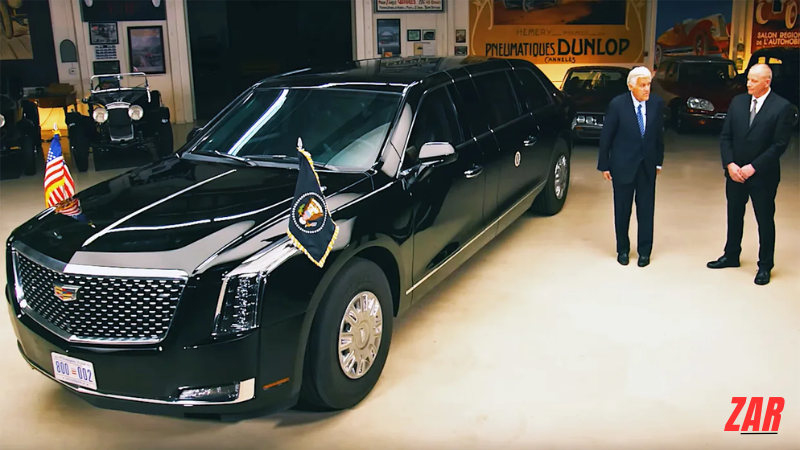
Known to the Secret Service, the press, and virtually everyone who has encountered a photograph of it simply as The Beast, it is simultaneously a car, a mobile command center, a diplomatic statement, and a piece of living American history. Its exterior is styled to resemble a Cadillac CT6 sedan, maintaining the visual language of American luxury production while concealing a mechanical and structural reality built on a commercial truck platform, a decision driven entirely by the vehicle’s armor weight and protective requirements. What the finished vehicle actually contains is classified at a level that makes comprehensive public documentation impossible. What is known comes from official statements, credentialed reporting, and the accumulated public record of decades in service.
How the Beast Evolved
The tradition of purpose-built Presidential vehicles extends further than most people realize, but the extraordinary engineering of the current fleet is a direct product of a single moment in American history rather than gradual evolution. Franklin D. Roosevelt was among the first to use a genuinely armored limousine with his 1939 Lincoln V12 “Sunshine Special.” Powered by a 150-horsepower V12 engine, its performance was severely strained when 1942 armoring upgrades ballooned its weight to over 9,300 pounds. Despite the sluggish dynamics of these early heavy vehicles, Presidents still favored open-air exposure for parades. This era of vulnerability ended permanently on November 22, 1963, when President John F. Kennedy was assassinated in his 1961 Lincoln Continental convertible. Known as the SS-100-X, JFK’s limousine relied on a 350-horsepower, 7.0-liter V8 to move its massive 7,800-pound stretched frame, but it critically lacked the protective armoring required to shield its occupants from a coordinated attack.
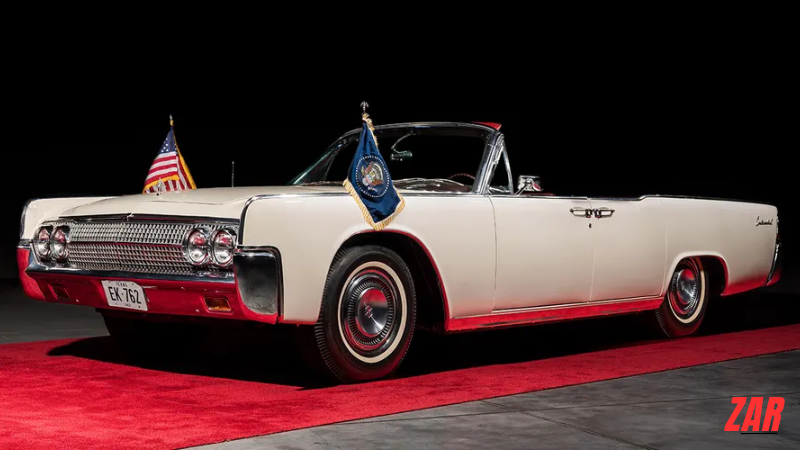
Convertible configurations were eliminated, and the entire philosophy of the Presidential vehicle was rebuilt around the principle that any degree of exposure is an unacceptable risk. The Lincoln Continentals of the 1960s and 1970s gave way to a sustained association with Cadillac and General Motors that has defined the modern fleet ever since. With each successive generation, engine performance and chassis engineering had to adapt to carry exponentially heavier payloads of ballistic glass, military-grade plating, and independent life-support systems. This relentless escalation of weight and power ultimately paved the way for the modern “Beast,” culminating in the heavily fortified 2018 generation that continues to operate through successive administrations today.
What The Beast Is Built From
The Beast’s engineering exists across three interlocking dimensions: its physical armor, its mechanical drivetrain, and its interior systems, each reflecting a different facet of the same foundational requirement: that the President of the United States must be survivable, functional, and fully operational regardless of what is happening outside the vehicle.
Armor, Structure, and Exterior Protection
The body is constructed from a combination of high-strength steel, aluminum, titanium, and ceramic composites that together form a protective shell capable of withstanding direct fire from military-grade weapons. Published accounts from former Secret Service officials and defense technology analysts indicate the vehicle is designed to survive armor-piercing rounds, rocket-propelled grenades, and explosive devices deployed at or near its path, though the specific armor ratings remain classified.
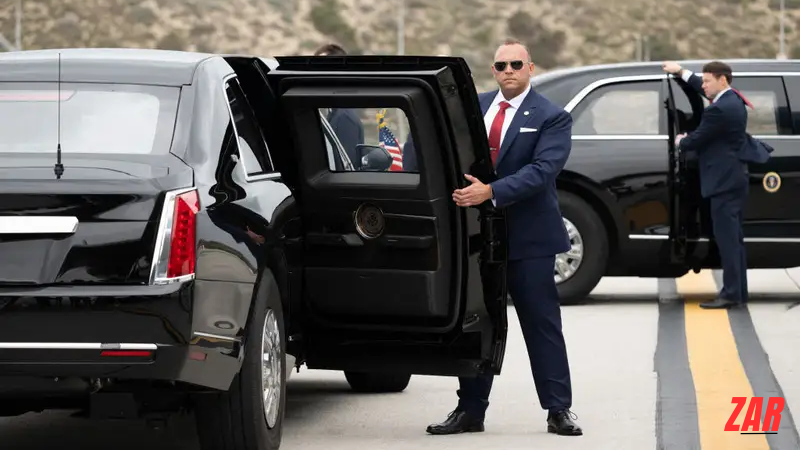
Each door weighs approximately 450 pounds, comparable to the door of a Boeing 757, and the window glass runs approximately five inches thick, composed of laminated polycarbonate and glass layers forming a transparent armor system capable of stopping high-caliber rounds. Achieving that level of optical clarity through five inches of laminated armor material is itself a materials engineering achievement of considerable complexity. The undercarriage is steel-plated against upward blast forces from explosive devices beneath the vehicle, and the fuel tank is armored and filled with a special foam derived from military aviation technology that prevents ignition even when punctured and exposed to an ignition source. The Goodyear tires are steel-reinforced for run-flat capability, allowing the vehicle to continue moving at reduced speed even after all four tires have been destroyed.
Engine, Drivetrain, and Operational Performance
The powertrain faces a challenge that has no direct consumer parallel: moving 20,000 pounds of armored vehicle reliably across urban motorcades in Lagos, Moscow, Beijing, Riyadh, and New Delhi, while retaining the ability to accelerate rapidly in emergency evacuation. The current generation is reported to use a turbocharged diesel unit in the 6.5-liter range, producing upward of 500 pound-feet of torque, paired with a heavy-duty automatic transmission. The performance metrics that matter here are not 0-60 times or top speed in any conventional sense; they are emergency acceleration from a standing position, sustained convoy speed, and reliable operation across extreme temperature ranges, altitude variations, and road conditions that no production vehicle encounters in normal service.
The drivetrain incorporates a fully sealed system, allowing operation in environments contaminated with biological, chemical, or radiological agents, a capability derived directly from military NBC vehicle design that reflects the full spectrum of threats the vehicle’s brief encompasses.
Interior Systems
The passenger compartment is separated from the driver by a partition and contains a secure telephone connected directly to the White House Situation Room, a satellite uplink operating independently of ground-based infrastructure, encrypted radio equipment for direct contact with Secret Service agents throughout the motorcade, and a public address system for external announcements. Emergency medical equipment, including supplies of the President’s specific blood type stored on board, a medical support doctrine that anticipates the critical window between an incident and hospital access.
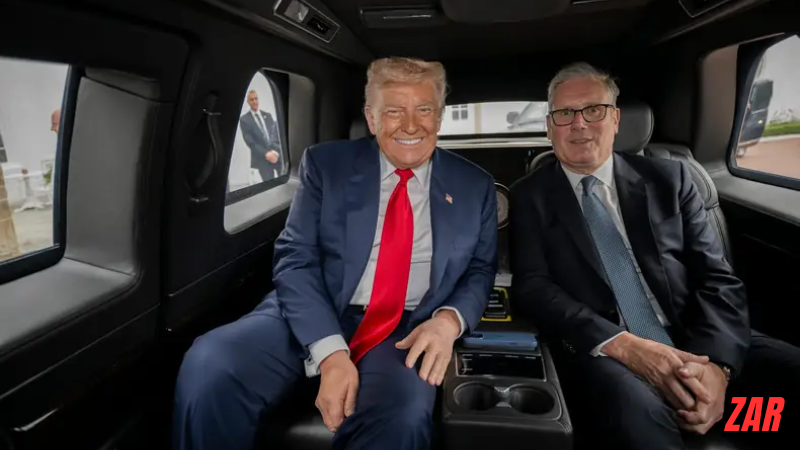
The seating accommodates the President and up to three additional passengers, with the President’s rear-right position optimized for exit access and communications proximity. The interior finish, leather, wood trim, and American flag displays maintain the visual dignity appropriate for a vehicle in which foreign heads of state and senior diplomatic partners regularly travel alongside the President. The Beast is a working environment and a state room as much as it is a protective shell, and every element of the interior serves both functions simultaneously.
Weapons Systems and Defensive Technologies
The Beast is not a passive armored box. It is a self-contained defensive platform whose confirmed and credibly reported capabilities include tear gas cannons capable of dispersing surrounding crowds, a pump-action shotgun stored for use by the Secret Service agent in the passenger compartment, and night-vision cameras providing full visibility in complete darkness without headlight use. The vehicle carries its own sealed oxygen supply, allowing it to isolate occupants from external atmospheric contamination, chemical agents, smoke, or airborne threats for a defined operational period. Engine compartment firefighting equipment allows fire suppression without requiring occupants to exit or the vehicle to stop. Electronic jamming systems suppress the radio frequencies used for remote IED detonation, providing a layer of protection that operates ahead of the vehicle rather than responding after an event.
Fleet, Deployment, and the Cost of Presidential Protection
The United States operates a fleet of approximately twelve identical Presidential State Cars rather than a single vehicle. This multi-car strategy provides vital mechanical redundancy, allows for simultaneous travel across different locations, and enables the use of decoy limousines within a motorcade to obscure the President’s exact location. Deploying these massive vehicles globally requires immense logistical coordination. Ahead of any international state visit, the limousines are loaded onto U.S. Air Force C-17 Globemaster III transport aircraft and flown to the destination, ensuring “The Beast” and its advance security team are on the ground and fully prepped long before Air Force One ever touches down.
Building just one of these rolling fortresses costs an estimated $1.5 to $2 million, reflecting the highly classified armor, bespoke systems integration, and specialized contractor labor. However, the true operational cost is exponentially higher when factoring in the dedicated cargo aircraft, global security infrastructure, and advanced teams required to support the fleet. Because the engineering behind The Beast is a strict matter of national security, each generation is retired after five to seven years. Upon decommissioning, all classified defensive systems are stripped, and the vehicles are completely dismantled to ensure no operational capability can ever be studied, sold, or replicated.
The Beast vs. Other World Leaders’ Vehicles
The United States is not the only country that provides its head of state with a specially protected vehicle, and comparing The Beast to its international counterparts reveals interesting differences in approach, technology, and philosophy.
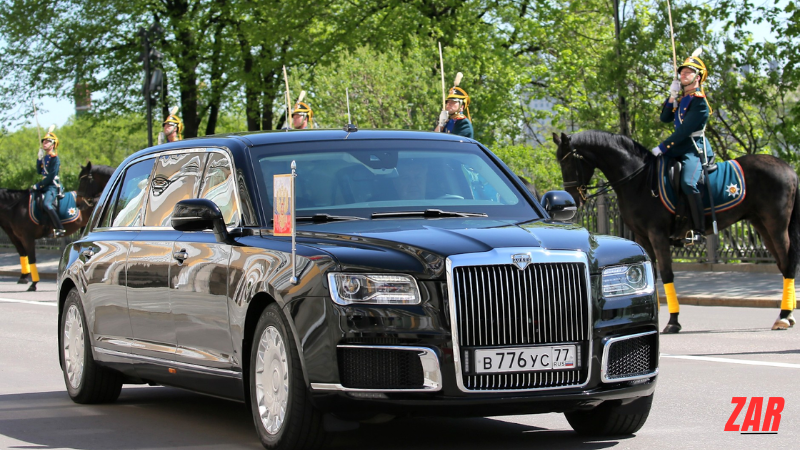
Introduced in 2018, the Russian Presidential limousine, the Aurus Senat was explicitly developed as a domestic answer to The Beast. But while both are mobile fortresses, they reflect entirely different engineering approaches. Powered by a 4.4-liter twin-turbo V8 hybrid producing nearly 600 horsepower, the roughly 7-ton Senat is significantly lighter and faster than its American counterpart, capable of reaching 60 mph in under 9 seconds. It prioritizes a balance of Rolls-Royce-style luxury, speed, and VR10-level ballistic protection.
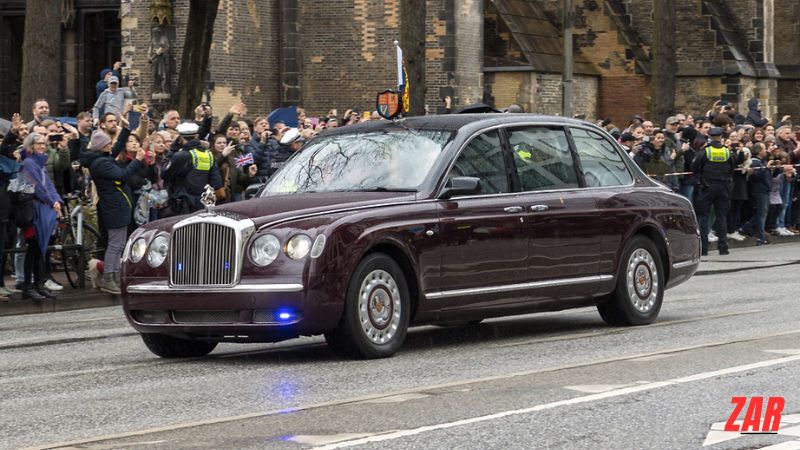
The British Royal state car, the bespoke Bentley State Limousine, takes a fundamentally different approach to executive transport. Presented to Queen Elizabeth II in 2002, only two of these vehicles were ever built. While The Beast seals its occupants behind tiny windows to maximize defense, the Bentley prioritizes ceremonial dignity and public visibility, featuring an expansive “panoramic glasshouse” and elevated roofline. Despite its regal appearance, the nearly 4-ton limousine is powered by a 6.75-liter twin-turbo V8 producing 400 horsepower. This allows it to reach a top speed of roughly 130 mph, making it significantly faster and more agile than the lumbering American vehicle.
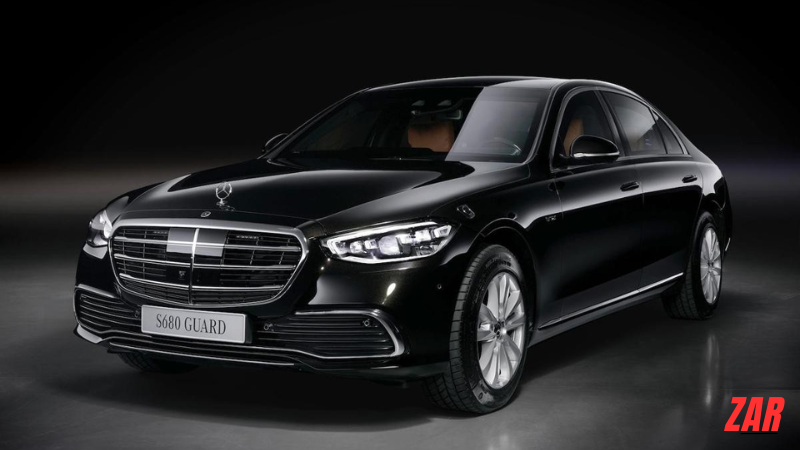
For the German Chancellor, protection comes in a significantly more discrete package. The German Federal Police relies on heavily armored Mercedes-Benz S-Class platforms, most notably the V12-powered S 680 Guard and the stretched S 600 Pullman Guard. Unlike The Beast’s unmistakable, tank-like silhouette, the Mercedes is specifically designed to blend seamlessly into standard European executive traffic. Yet, beneath its unassuming luxury exterior lies a VR10-certified protective shell the highest civilian rating available capable of stopping armor-piercing assault rifle rounds and withstanding direct explosive charges.
What distinguishes The Beast from all of these alternatives is not merely the level of protection, though that is greater than any comparable vehicle, but the totality of the system the fleet concept, the transportation logistics, the integration with a broader security apparatus, and the decades of refinement that have gone into making the Presidential motorcade a comprehensive protective operation rather than simply a heavily armored car.
Conclusion
The Beast is, in the most literal sense, a car with four wheels, an engine, and a purpose of moving people from one point to another. It is the physical expression of a doctrine: that the President of the United States must be protected at every moment, in every city on earth, against every threat that hostile intent can conceive. It is extravagant, purposeful, and technically extraordinary in equal measure, a machine that exists at the intersection of national security, geopolitical symbolism, and automotive engineering in a way that no other vehicle on earth approaches.
When it moves through the streets of any capital in the world, the Beast does not announce wealth, performance, or beauty. It announces the quiet, armored certainty of something built to be exactly what it is, doing its job at the level that job demands. But as modern threats shift from ballistics to cyberattacks and weaponized drones, how must the next generation of the Beast evolve to meet them?