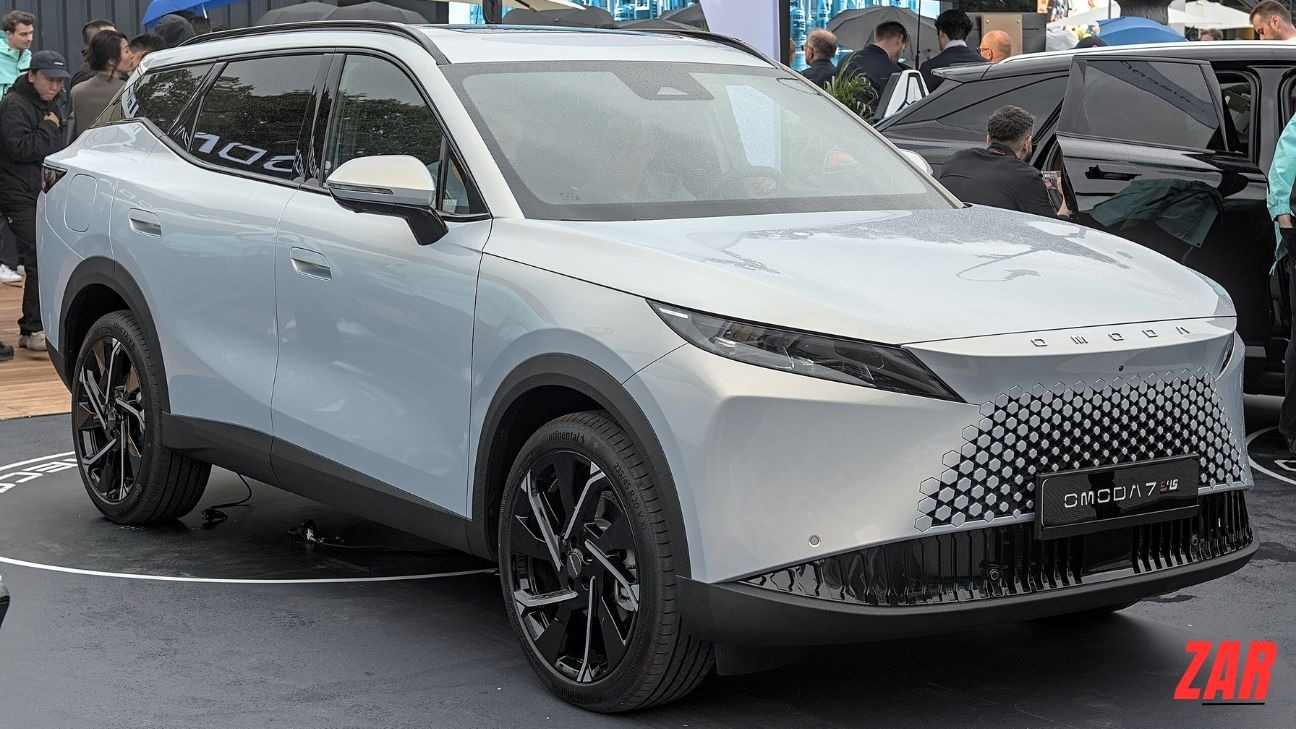
The Omoda C7 represents China’s Chery Automobile’s ambitious entry into the competitive South African crossover SUV market. Launched in 2024, this sleek compact SUV has quickly garnered attention for combining modern design, advanced technology, and competitive pricing in a segment traditionally dominated by established Japanese and European brands. As South African consumers increasingly explore value-oriented alternatives to mainstream offerings, the Omoda C7 arrives at a pivotal moment when buyers seek sophisticated features without premium badge pricing. The vehicle’s positioning reflects a growing confidence among Chinese automakers in capturing market share through quality engineering and contemporary styling that appeals to young professionals and growing families alike.
The Omoda C7 lineup in South Africa consists primarily of well-equipped variants that emphasize technology integration, comfort, and urban practicality. Unlike sprawling luxury collections, this single-model focus allows Omoda to concentrate on delivering a comprehensive package that balances style with substance. This review examines the C7’s design philosophy, performance characteristics, interior refinement, and pricing structure while evaluating how it fits within South Africa’s unique automotive landscape. From Johannesburg’s congested highways to Cape Town’s coastal routes and Durban’s humid climate, we’ll explore whether this Chinese contender can genuinely compete with established players while addressing real-world ownership considerations including maintenance accessibility, parts availability, and long-term value retention in the South African market.
[wheelzar_review]
Visual Appeal & Exterior Features
The Omoda C7 showcases a distinctly modern design language that distances itself from conservative crossover conventions. The front fascia features a bold diamond-matrix grille with integrated LED daytime running lights that create a distinctive lighting signature, flanked by sleek adaptive LED headlamps that sweep dramatically into sculpted fenders. The vehicle’s profile reveals flowing character lines running from the A-pillar to the elevated rear quarter panel, complemented by flush door handles and 18-inch diamond-cut alloy wheels that enhance its premium aesthetic. Available in contemporary colors including Aurora Green, Kunlun White, and Obsidian Black, the C7’s coupe-like roofline terminates in a subtle integrated spoiler above LED taillights featuring a continuous light bar design.
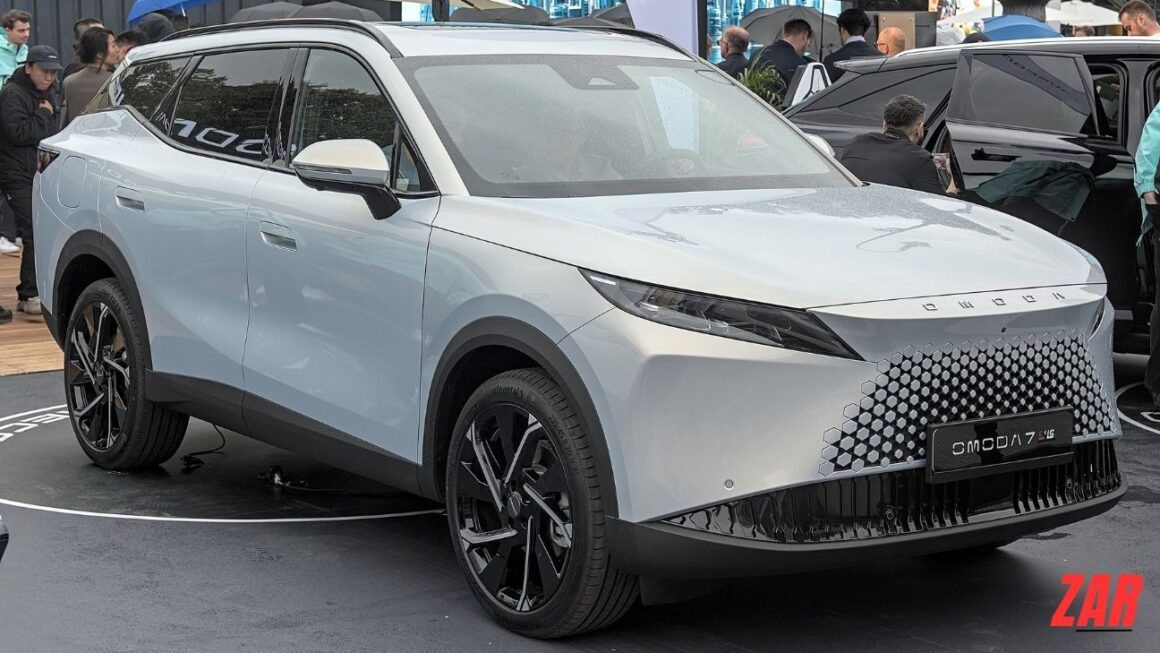
The overall stance projects confidence without aggression, measuring 4,538mm in length with a 2,672mm wheelbase that promises generous interior space while maintaining urban maneuverability. Chrome accents trace the window line and lower body cladding, adding visual interest without appearing overdone, while the sculpted bonnet features pronounced power bulges suggesting performance intent. The rear three-quarter view reveals muscular haunches and a well-proportioned glass-to-metal ratio that balances sportiness with practicality. This design approach clearly targets younger, style-conscious buyers seeking differentiation from ubiquitous Japanese crossovers while maintaining sophisticated visual appeal suitable for both professional and leisure contexts.
Interior Experience, Performance & Price
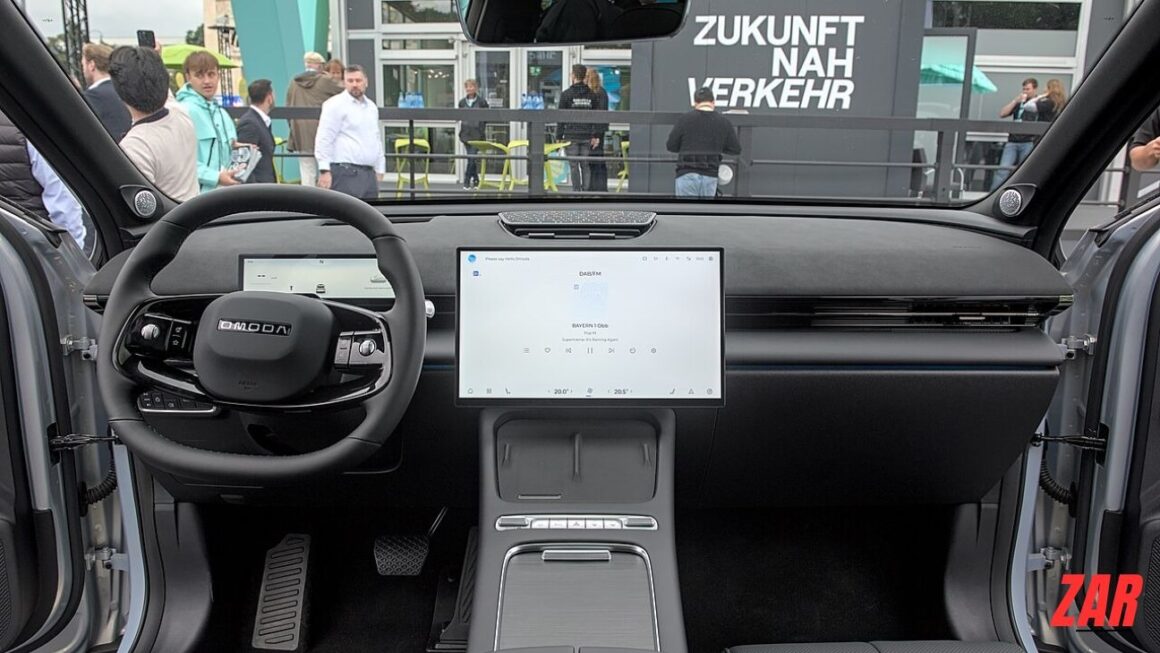
Inside, the Omoda C7 prioritizes digital integration and material quality that punches above its price point. The cabin centers around a massive 12.3-inch dual-screen layout combining digital instrumentation and infotainment on a unified curved display panel, running Omoda’s proprietary system with wireless Apple CarPlay and Android Auto compatibility. Synthetic leather upholstery with contrast stitching covers supportive front seats offering heating and ventilation functions, while rear passengers benefit from generous legroom afforded by the extended wheelbase and reclining seatbacks. Ambient lighting with 64-color customization, a panoramic sunroof stretching across both rows, wireless charging pad, and a premium Sony sound system contribute to an upscale atmosphere. Climate control operates through a separate 10.25-inch touchscreen for HVAC functions, maintaining physical backup controls that enhance usability. Storage solutions include a deep center console bin, door pockets sized for water bottles, and underfloor cargo compartments beneath the 360-liter boot.
Powering the Omoda C7 is a 1.6-liter turbocharged four-cylinder petrol engine producing 145kW (197 horsepower) and 290Nm of torque, paired exclusively with a seven-speed dual-clutch automatic transmission driving the front wheels. This powertrain configuration delivers 0-100km/h acceleration in approximately 7.8 seconds with a top speed electronically limited to 200km/h, providing spirited performance suitable for highway overtaking while maintaining claimed fuel consumption of 6.9L/100km under combined cycle testing. The chassis features MacPherson strut front suspension and multi-link rear setup tuned for comfort-oriented driving dynamics that absorb South Africa’s variable road surfaces effectively. In South Africa, the Omoda C7 is priced at approximately R539,900, positioning it competitively against established rivals while undercutting premium European alternatives by significant margins. This pricing strategy reflects Omoda’s value proposition, offering features typically reserved for vehicles costing R100,000-R150,000 more while accepting the trade-off of unproven long-term reliability and limited brand recognition in the South African marketplace.
How the Omoda C7 Fits Into South African Driving Conditions
South Africa’s diverse terrain and infrastructure present unique challenges that crossover SUVs must navigate effectively, and the Omoda C7 demonstrates reasonable adaptation to these conditions. The vehicle’s 150mm ground clearance provides adequate protection against speed bumps, potholes, and unpaved surfaces common in suburban areas and smaller towns, though it falls short of true off-road capability expected from traditional SUVs. Urban driving in Johannesburg, Pretoria, or Cape Town benefits from the compact dimensions that simplify parking while the elevated seating position improves visibility in dense traffic. The turbocharged engine delivers sufficient low-end torque for navigating Gauteng’s altitude without the breathlessness affecting naturally aspirated competitors, while the dual-clutch transmission responds smoothly in stop-and-go conditions once properly warmed. Highway cruising on routes like the N1, N2, and N3 reveals composed high-speed stability with manageable wind noise, though tire roar on coarse South African asphalt becomes noticeable above 120km/h. The climate control system copes effectively with Johannesburg’s temperature extremes and Durban’s humidity, maintaining cabin comfort without excessive fuel consumption penalties.
Practical ownership considerations reveal both strengths and uncertainties inherent to emerging Chinese brands in South Africa. Omoda has established a network of approximately 30 dealerships nationwide with plans for expansion, providing reasonable geographic coverage in major metropolitan areas though rural accessibility remains limited compared to Toyota, Nissan, or Hyundai’s extensive networks. The vehicle carries a five-year/150,000km warranty with five-year/90,000km service plan included in the purchase price, addressing initial ownership costs while maintenance intervals occur every 15,000km.
Parts availability represents the primary concern, as the brand’s limited market presence means components may require longer lead times compared to established competitors, potentially extending repair durations. Fuel efficiency averaging 7.5-8.5L/100km in real-world mixed driving proves competitive for the segment, making the C7 economically viable given South Africa’s fluctuating petrol prices. Social perception tilts positive among early adopters appreciating value and technology, though skepticism persists regarding resale values and long-term reliability records that remain unproven in the harsh African operating environment characterized by extreme temperatures, variable fuel quality, and inconsistent road maintenance standards.
Competitive Comparison: Value Proposition Analysis
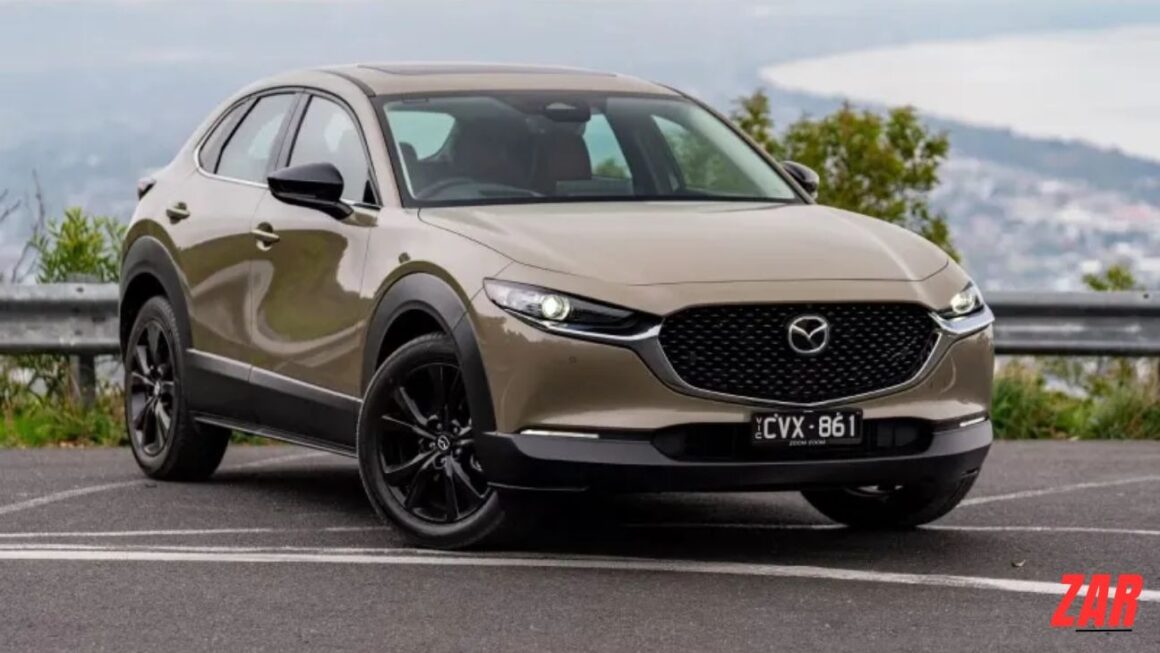
The Omoda C7 enters a fiercely contested segment dominated by proven competitors including the Mazda CX-30 (R519,600), Hyundai Kona (R489,900-R549,900), Toyota Corolla Cross (R499,300-R589,900), and Volkswagen T-Roc (R579,900-R649,900). Against these rivals, the C7’s pricing undercuts premium offerings while matching or exceeding equipment levels found in top-spec variants. The Mazda CX-30 counters with superior driving dynamics, refined powertrain, and stronger brand reputation, yet charges similar money for less technology and smaller interior dimensions. Hyundai’s Kona competes directly on price with proven reliability and extensive service network advantages, though its interior presentation and technology implementation lag behind the Omoda’s contemporary approach. Toyota’s Corolla Cross commands loyalty through unmatched reliability perceptions and resale strength, justifying premium pricing that leaves the C7 looking exceptionally equipped by comparison. The Volkswagen T-Roc appeals to European badge preference with polished refinement, but significantly higher pricing places it beyond direct comparison for value-conscious buyers considering the Omoda alternative.
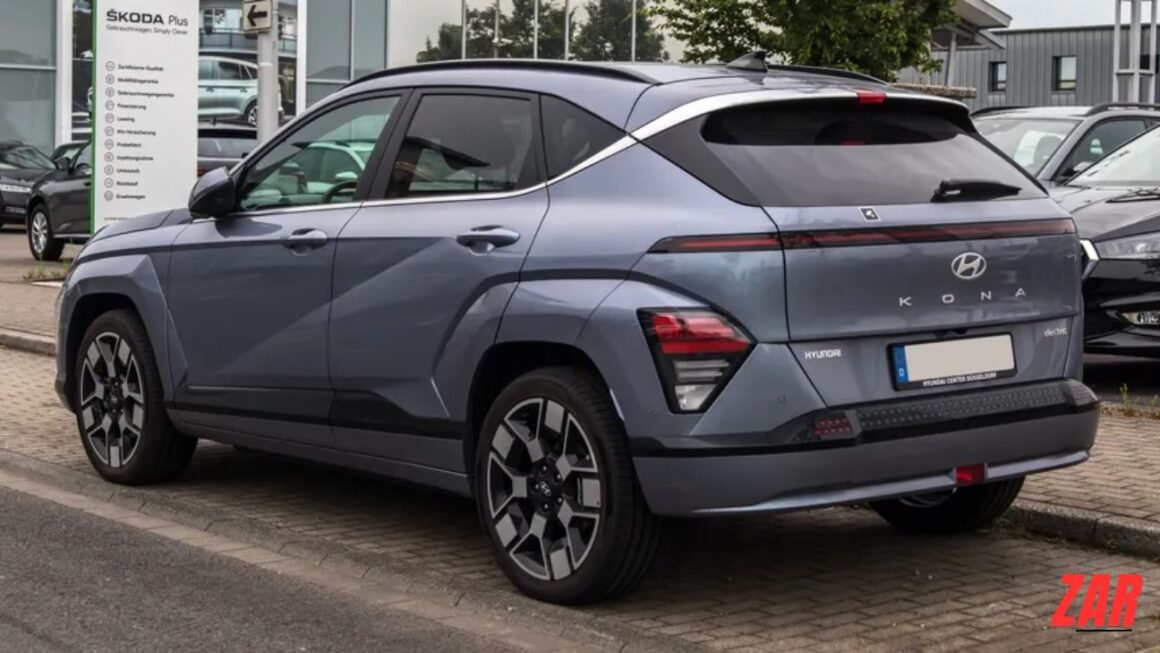
Long-term ownership calculations present the critical differentiator where established brands maintain competitive advantages despite higher initial costs. The Mazda CX-30’s naturally aspirated powertrain requires less intensive maintenance than the C7’s turbocharged dual-clutch combination, while parts remain readily available through Mazda’s mature distribution network. Toyota’s legendary reliability translates to lower unexpected repair costs and exceptional resale values that recover 55-60% of original price after three years, compared to estimated 40-45% retention for the unproven Omoda. Fuel efficiency proves comparable across competitors, with the CX-30, Kona, and Corolla Cross achieving similar real-world consumption figures that negate any advantage. Service costs favor the Omoda initially through included maintenance plans, yet post-warranty expenses remain uncertain given limited market data on consumables pricing and major service requirements. Insurance premiums for the C7 currently track slightly below Japanese competitors due to lower replacement values, though this advantage diminishes if Chinese vehicle theft rates increase. For buyers prioritizing maximum features per rand with acceptance of depreciation risk, the Omoda C7 presents compelling value; conservative buyers valuing proven reliability and strong resale should gravitate toward Toyota or Mazda despite reduced standard equipment and higher entry prices.
Conclusion
The Omoda C7 presents itself as a stylish and forward-thinking compact SUV designed for South Africa’s evolving automotive landscape. Its blend of futuristic aesthetics, digital interior features, and efficient turbocharged performance makes it a strong choice for buyers seeking modern convenience at a competitive price.
Overall, the C7 reflects a taste for innovation and youthful sophistication. It is ideal for drivers who prioritise technology, comfort, and standout design without stepping into premium pricing territory.