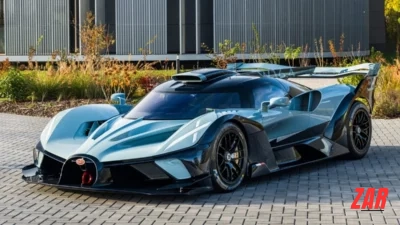
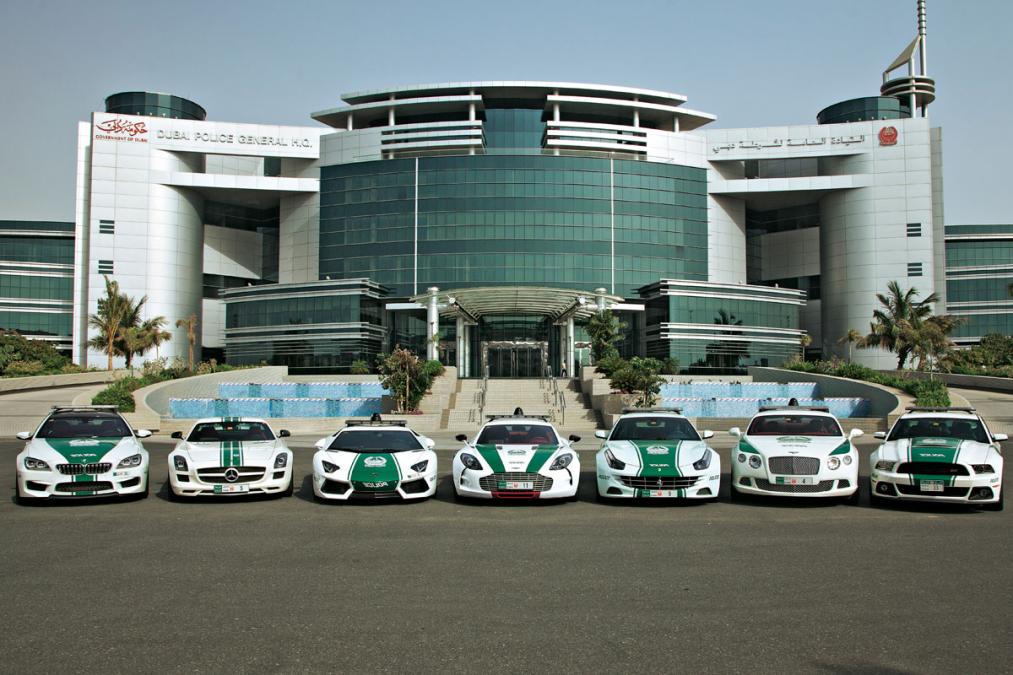
When most people think of police vehicles, they picture a standard patrol car, functional, forgettable, and built around utility rather than prestige. Bugatti police cars exist in a category entirely of their own. These are not standard-issue cruisers repurposed with a light bar. They represent deliberate, strategic decisions made by governments and law enforcement agencies that have chosen performance, visibility, and national image over conventional fleet logic.
The use of hypercar-grade machinery in law enforcement is more widespread than many realize, and Bugatti as one of the most recognizable names in automotive history, sits at the center of that conversation. Understanding why certain countries deploy Bugattis in a police capacity requires examining geography, economics, tourism strategy, and a broader philosophy of what a police vehicle is actually supposed to accomplish.
What Makes a Car Suitable for Police Use?
Before examining Bugatti specifically, it helps to understand what law enforcement agencies look for in a vehicle. The traditional criteria, reliability, cargo space, ease of maintenance, fuel economy, and officer safety, favor purpose-built platforms like the Ford Police Interceptor or Volvo V90. These are practical machines designed to handle shift after shift with minimal downtime.
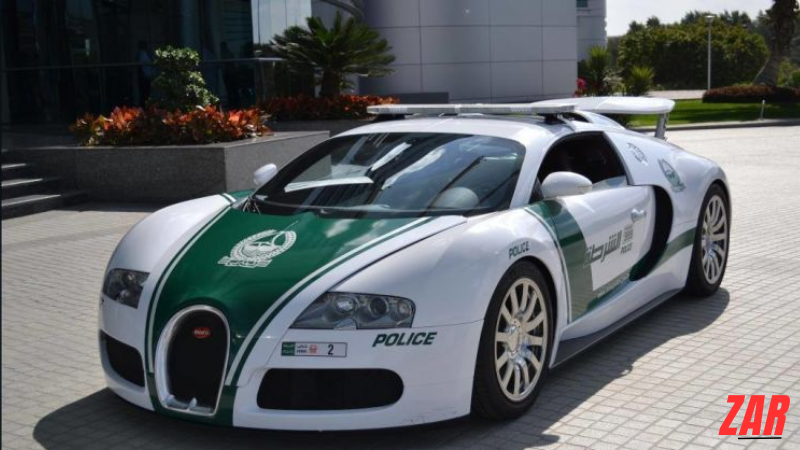
But high-performance policing introduces a second set of criteria: raw speed, acceleration, and the ability to close ground on a fleeing vehicle faster than any pursuit driver can react. On long, straight highway stretches or in countries with open road networks and high-speed traffic, conventional patrol cars can simply be outrun. A Bugatti Veyron changes that equation entirely, a capability formally recognized when the 407 km/h Dubai Veyron set the Guinness World Record for the Fastest Police Car in Service.
There is also a third dimension that rarely gets discussed in practical terms: visibility as a deterrent. A hypercar in police livery parked near a racetrack, airport, or tourist strip communicates something different from a standard patrol vehicle. It announces its presence in a way that affects behavior before any chase ever begins.
Where Bugatti Police Cars Became a Global Conversation
The UAE
The Dubai Police Force is the most cited example of hypercar law enforcement, and for good reason. Dubai began building its supercar fleet in the early 2010s, initially adding vehicles like the Ferrari FF and Lamborghini Aventador. This strategy escalated significantly when Arabian Business reported that Dubai Police had added a Bugatti Veyron in February 2014

The decision was both practical and strategic. Dubai’s roads, particularly the Sheikh Zayed Road corridor and surrounding highways, carry some of the fastest-moving traffic in the world. Speed limits are high, enforcement windows are short, and the economic profile of drivers on those roads skews heavily toward high-performance vehicles. Deploying a Bugatti Veyron with its 1,001 horsepower and a top speed that, in standard trim, exceeds 400 km/h gave Dubai Police a credible response to that environment.
But the Dubai fleet also serves a secondary purpose that the government has openly acknowledged: tourism and brand building. The UAE has invested heavily in projecting an image of wealth, modernity, and spectacle, and the sight of a Bugatti in police livery parked at the Dubai Mall or the Burj Al Arab is a form of soft marketing with global reach. Images of the fleet have circulated widely across media and social platforms, generating millions of dollars worth of international coverage that conventional advertising could not replicate.
Abu Dhabi and the Broader UAE Fleet Context
While Dubai attracts the most attention, Abu Dhabi Police have also operated high-performance vehicles as part of their fleet strategy. The emirate’s approach has been slightly more measured, focusing on patrol visibility and VIP escort capabilities rather than outright speed pursuit. Still, the broader culture within UAE law enforcement of matching vehicle capability to road environment and public perception has made the region a consistent home for exotic police cars.
The UAE’s infrastructure plays a significant role here. Roads are wide, well-maintained, and often straight over considerable distances. There is a genuine operational argument for fast vehicles in that context, even if critics note that in practice, pursuing a fleeing driver at 400 km/h on a public road would be neither safe nor legally straightforward.
Qatar and Saudi Arabia: Similar Logic, Similar Choices
Qatar, whose economic profile and road infrastructure closely mirror the UAE’s, has also deployed high-end vehicles for police use, particularly around high-profile events. During the FIFA World Cup in 2022, Qatari authorities made use of a visible hypercar fleet for patrol and deterrence purposes. While specific Bugatti models were not officially confirmed as part of that deployment at scale, the broader Gulf approach using extraordinary vehicles to signal authority and capability reflects the same underlying strategy.
Saudi Arabia’s traffic police have similarly moved toward performance vehicles in certain cities, particularly Riyadh, where high-speed arterial roads present challenges for conventional patrol. The kingdom’s Vision 2030 modernization agenda has coincided with a growing interest in projecting a contemporary, capable law enforcement image.
Europe: Demonstration Fleets and Charity Models
In Europe, the relationship between Bugatti and law enforcement takes a different form. France, where Bugatti’s modern production facility is located in Molsheim, Alsace, has seen Bugatti vehicles appear in police-adjacent contexts, primarily for demonstration events, road safety campaigns, and charity auctions.
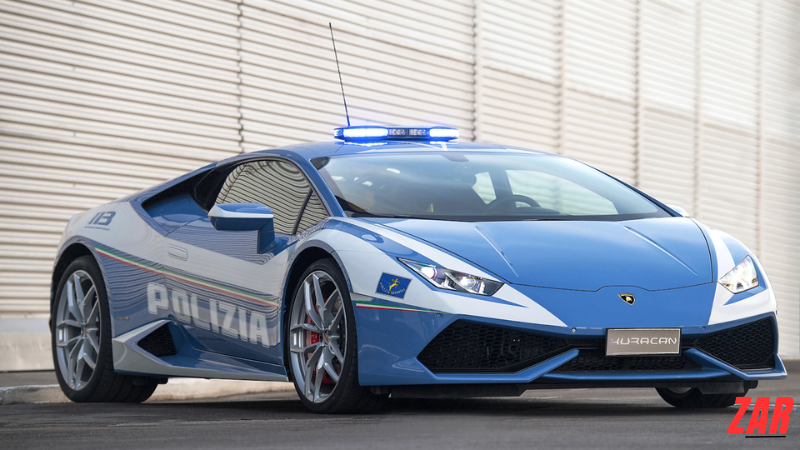
The Italian Polizia di Stato has a long-standing tradition of accepting vehicle donations from manufacturers for fleet use, which has brought Lamborghini Huracáns and Ferraris into active service, a relationship underscored by Lamborghini Official celebrating 20 years with the Italian State Police, specifically highlighting the cars’ role in high-speed organ transport missions. While Italy has not officially added a Bugatti to its active patrol fleet, the model that countries like Italy use, accepting manufacturer partnerships in exchange for exposure, is the same mechanism that could bring a Bugatti into European law enforcement use.
For Bugatti, manufacturer partnerships with law enforcement carry obvious marketing value. A Chiron or Veyron in police livery, photographed at an international auto show or in front of a landmark, is a brand statement of considerable weight. The fact that the vehicle rarely sees a genuine pursuit is, from a communications standpoint, almost irrelevant.
What Does a Bugatti Police Car Actually Cost?
This is where the conversation becomes more complicated, and where critics of hypercar policing have their strongest footing. A Bugatti Chiron in standard configuration carries a base price of approximately $3 million USD. The Chiron Super Sport and Chiron Pur Sport variants exceed $3.5 million, and limited editions like the Divo or La Voiture Noire reach far beyond that.
Maintaining a Bugatti involves specialized technicians, proprietary parts, and service intervals that are incompatible with a standard fleet maintenance program. The W16 quad-turbocharged engine that powers modern Bugattis requires a level of engineering expertise that most police vehicle workshops are not equipped to provide. Tires alone, the specially developed Michelin Pilot Sport Cup 2s fitted to the Chiron run into the thousands of dollars per set and wear relatively quickly under aggressive driving conditions.
For countries with significant oil wealth and small geographic footprints, these costs are manageable within a policing budget. For most governments, they are not. This is why Bugatti police deployments remain geographically concentrated in the Gulf, where per-capita wealth, national prestige priorities, and genuine road performance requirements converge in a way that makes the economics defensible, if not necessarily efficient.
The Operational Reality vs. the Public Image
It is worth being direct about what Bugatti police cars are, in practice, and what they are not. They are not standard patrol vehicles that officers drive through routine shifts. The risk of damage, the cost of insurance, and the mechanical complexity of these machines make that kind of deployment impractical. In most documented cases, hypercar police vehicles are used for high-visibility patrol in specific tourist or commercial districts, VIP escort duties, road safety and awareness campaigns, motor shows and public events, and media appearances.
That is not cynical, it is simply what these vehicles are suited for. A Bugatti Chiron can travel from 0 to 100 km/h in under 2.5 seconds and will reach its governed top speed of 420 km/h faster than almost any vehicle on earth. But deploying it in a high-speed pursuit on a public road would present obvious risks to other drivers, and the legal frameworks governing police pursuits in most jurisdictions would not sanction that kind of engagement regardless of vehicle capability.
The honest framing, then, is that Bugatti police cars function primarily as high-impact symbols. They communicate something about the country that deploys them, its wealth, its ambition, its relationship with automotive culture and they do so effectively. Whether that justifies the expenditure depends entirely on how a given government values those signals.
Bugatti’s Own Perspective on Law Enforcement Use
Bugatti has not publicly marketed its vehicles specifically to law enforcement agencies. The company’s production volumes are extremely limited, typically fewer than 100 cars per year and the purchase process is more akin to a luxury goods acquisition than a fleet procurement exercise. Buyers are vetted, relationships are personal, and delivery timelines can extend to years.
When governments have acquired Bugatties for police use, those acquisitions have generally gone through standard sales channels rather than bespoke law enforcement programs. There is no Bugatti Police Package equivalent to what Ford or Dodge offer for the American market. The vehicles are modified post-purchase by the acquiring agency for livery and lighting, with Bugatti’s involvement limited to what the factory warranty permits.
This matters because it underscores that Bugatti police cars are a phenomenon driven by buyers rather than by the manufacturer’s strategy. Bugatti benefits from the visibility, certainly, but the decision to place its car in law enforcement livery originates with governments seeking a particular kind of statement.
How Bugatti Police Cars Compare to Other Hypercar Law Enforcement Vehicles
Bugatti is not alone in this space. The broader category of hypercar policing includes a range of vehicles across different price points and performance levels. Lamborghini has the most formalized law enforcement presence, with the Huracán LP 610-4 and its successor models serving with the Italian Polizia di Stato under a structured donation and partnership arrangement. As highlighted by Lamborghini Official News, these vehicles are used as medical emergency response cars, carrying defibrillators and donor organs, as well as for high-speed pursuit when required.
The McLaren 650S has been used by police in the UK, Qatar, and Spain. Ferrari has supplied vehicles to Italian and Middle Eastern law enforcement. The Aston Martin Rapide S appeared in police service in the UK. Even the Lexus LFA has appeared in law enforcement contexts in Japan.
Within this broader landscape, Bugatti sits at the apex of the most expensive, the fastest, and the most attention-generating option available. Its deployment is rarer than Lamborghini’s precisely because the cost and complexity are significantly higher, and because the operational use cases that justify a Lamborghini, particularly the organ transport role, do not scale in the same way to a vehicle that costs three times as much and is considerably harder to service.
The Tourism and Soft Power Dimension
Governments that deploy Bugatti police cars are, to varying degrees, thinking about international perception as much as domestic law enforcement outcomes. This is a legitimate consideration in countries where tourism revenue and foreign investment are significant economic priorities.
The Dubai Police supercar fleet, which includes the Bugatti Veyron alongside Lamborghinis, Ferraris, Aston Martins, and a Lykan Hypersport, has been extensively covered by international automotive media, mainstream news outlets, and travel publications. That coverage, including CNN’s report on Dubai Police Supercars and Tourism Impact, positions Dubai as a place of excess, ambition, and spectacle, which aligns directly with the emirate’s tourism proposition.
In this framing, the Bugatti is not primarily a law enforcement tool. It is a component of a national communications strategy, and its cost should arguably be measured against marketing and tourism budgets rather than policing budgets. Whether that accounting makes the numbers work is a political judgment rather than an operational one.
Criticism and Counterarguments
The deployment of hypercars in law enforcement attracts criticism on several grounds, and those arguments deserve fair consideration.
The most common objection is economic: that spending millions on a vehicle that rarely performs a core policing function is an indefensible allocation of public resources. In countries with significant infrastructure gaps, understaffed police forces, or underfunded emergency services, the opportunity cost of a Bugatti fleet is considerable and visible.
A second criticism focuses on the gap between the vehicle’s marketed capability and its actual deployment. If a Bugatti police car is never used in a genuine pursuit or cannot be, under prevailing legal frameworks then the speed justification collapses, leaving only the image justification, which is harder to defend publicly.
Defenders of the practice argue that tourism and deterrence value is real and measurable, that the vehicles do serve genuine patrol functions in specific high-value districts, and that in wealthy jurisdictions where the budget impact is minimal, the expenditure should be judged against the outcomes it delivers rather than against abstract principles of austerity.
Both positions have merit. The truth, as is often the case in policing policy, sits in context. A Bugatti in Dubai makes a different kind of sense than a Bugatti in a city with underfunded basic services.
What Bugatti Police Cars Tell Us About Modern Law Enforcement Strategy
Bugatti police cars are, at their core, a story about the expanding definition of what a police vehicle is supposed to do. In their traditional form, police cars are tools utilitarian, practical, optimized for function over form. In their hypercar form, they are statements about capability, about national identity, and about the kind of country a government wants to project to the world.
The countries that have deployed Bugattis in law enforcement, most prominently the UAE, have done so with a clear-eyed understanding of both the operational and the symbolic dimensions. The vehicles are not deployed as general-purpose patrol cars, and no serious observer treats them as such. They occupy a specific niche: high-visibility, high-impact assets that signal authority and generate attention in ways that conventional equipment cannot.
Whether that approach is worth the cost depends on where you sit in the conversation. From a pure policing efficiency standpoint, the argument is weak. From a national branding and deterrence standpoint, particularly in tourist-heavy, high-wealth jurisdictions, it is more defensible than it might initially appear.
What is clear is that Bugatti police cars are not going away. As long as governments value the statement they make, and as long as Bugatti continues to produce vehicles capable of making that statement with unmistakable authority, the hypercar will remain an occasional, attention-commanding presence in law enforcement fleets around the world.