

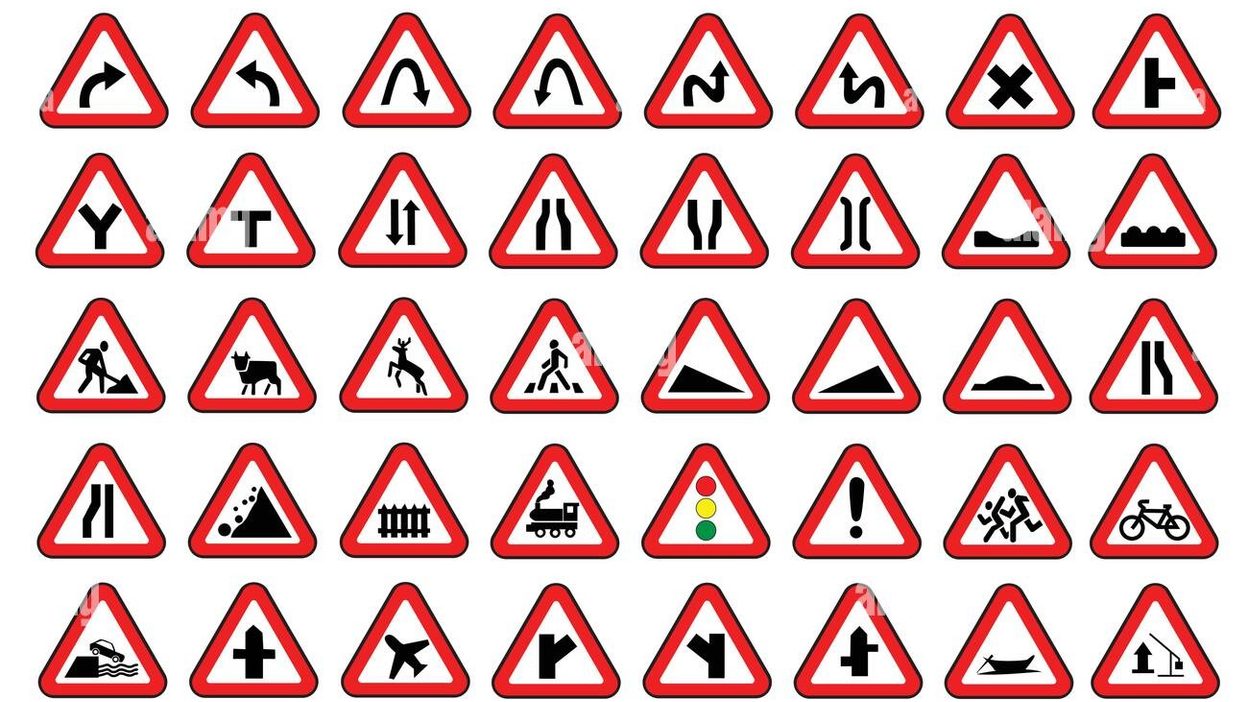
Understanding road signs and meaning in Nigeria is one of the first things every driver should learn before getting behind the wheel. Nigerian roads can change quickly from a quiet residential street to a busy junction, highway, school zone or construction area, and the signs are there to tell you what is coming and what you are expected to do.
The Federal Road Safety Corps (FRSC) describes road traffic signs as a basic means of communication between the road and road users. They are used to direct, warn and inform motorists and pedestrians about road conditions and features ahead. The FRSC groups Nigerian road signs into three main categories: warning or danger signs, regulatory signs and informative signs.
If you are preparing for a driving test, learning to drive, or simply trying to become a better driver, this guide explains road signs in Nigeria and their meaning, including their names, symbols, shapes and what you should do when you see them.
How to Read a Road Sign Before You Read the Symbol
One of the easiest ways to understand road signs and symbols in Nigeria is to look at the shape and colour before trying to interpret the picture.
The shape often tells you the general purpose of the sign. An octagonal Stop sign means you must come to a complete stop. An inverted triangle indicates Give Way, meaning you must yield to other traffic where required.
Circular signs are commonly associated with regulatory instructions. In the FRSC’s current Highway Code literacy material, prohibitory signs are generally circular, while mandatory signs are circular with a blue background. The Stop sign is a special prohibitory sign because it uses an octagonal shape.
Triangular signs are generally used to warn drivers about hazards or changes in road conditions. Rectangular signs are commonly used to provide information, directions and other guidance.
So when you approach an unfamiliar sign, think about it in this order: shape first, colour second, symbol third. That simple habit can help you understand a sign much faster.
Regulatory Road Signs in Nigeria and Their Meaning
Regulatory signs are signs that tell you what you must or must not do. They are especially important because ignoring one can put you in danger and may also amount to a traffic offence.
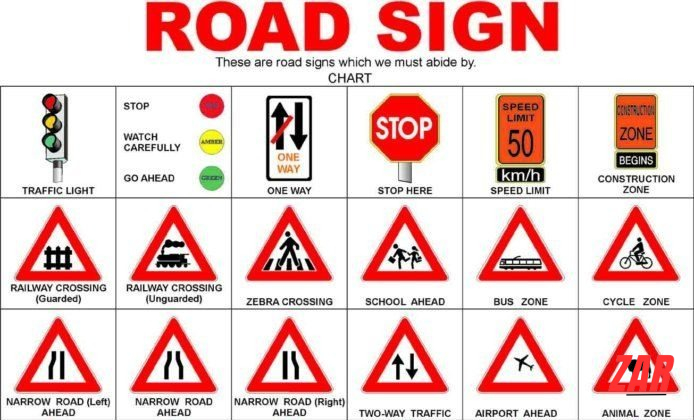
Stop
A Stop sign means you must come to a complete halt before proceeding. Do not simply slow down and drive through because the junction looks empty.
After stopping, check the road carefully and proceed only when it is safe.
Give Way
Give Way means you must slow down and yield to traffic that has priority.
You may not necessarily need to stop if the road is clear, but you must be prepared to stop and allow other road users to proceed.
No Entry
A No Entry sign means you must not enter that road or lane from that direction.
You will commonly encounter this around one-way streets, restricted entrances and certain junctions. Seeing an empty road does not mean you can enter it.
No Left Turn
This sign means turning left at the particular junction or location is prohibited.
Drivers sometimes ignore this when they are trying to avoid traffic, but taking a prohibited turn can create a dangerous conflict with vehicles coming from another direction.
No Right Turn
No Right Turn means you cannot turn right at that location.
Look out for it particularly around junctions where traffic movements have been restricted.
No U-Turn
A No U-Turn sign means you must not turn the vehicle around at that location.
If you need to change direction, continue until you reach a location where a U-turn or other legal turning movement is permitted.
No Overtaking
A No Overtaking sign prohibits overtaking within the restricted section.
This restriction is particularly important around bends, junctions, bridges and other locations where visibility may be limited.
No Parking
No Parking means you are not permitted to park your vehicle at that location.
Do not assume that leaving the engine running makes the vehicle legally parked. The exact traffic rule and enforcement can depend on the location and applicable traffic law.
No Stopping
No Stopping is more restrictive than No Parking. It indicates that stopping is prohibited within the restricted area, subject to the specific sign or supplementary plate.
This can be particularly important around busy junctions, pedestrian areas and locations where stopped vehicles could obstruct traffic.
No Horn
A No Horn sign indicates that drivers should not sound their vehicle horn within the restricted area, except where another traffic rule or genuine safety situation requires an appropriate warning.
You may see restrictions around places such as hospitals and other quiet zones.
Speed Limit
A speed-limit sign tells you the maximum permitted speed for the applicable road or vehicle category under the posted conditions.
The number displayed is normally expressed in kilometres per hour. Do not treat the number as a target speed. Weather, traffic, visibility and road conditions may require you to drive below the posted maximum.
Height and Weight Restrictions
These signs tell drivers that vehicles above a specified height or weight are not permitted beyond the restriction.
They are particularly important for buses, trucks, trailers and other large vehicles.
No Entry for Lorries
This sign restricts heavy goods vehicles or lorries from entering the affected road or area. A passenger car may still be allowed through unless another restriction applies.
Mandatory Road Signs in Nigeria
Mandatory signs give drivers a positive instruction. The FRSC identifies mandatory signs as circular signs with a blue background.
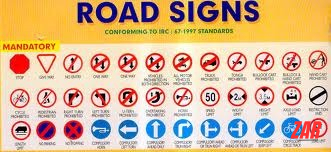
Mandatory Road Signs. Source: NairaLand Forum
Keep Left and Keep Right
Keep Left or Keep Right tells you which side of an obstruction or traffic island you should use.
The arrow on the sign is important because it shows the required direction.
One Way
A One Way sign tells you that traffic is permitted to travel only in the indicated direction.
Do not enter from the opposite direction simply because there are no vehicles coming towards you.
Roundabout Direction
At a roundabout, follow the required direction and give priority according to the applicable traffic control and road layout.
Never enter a roundabout at high speed simply because you believe you have priority.
Turn Left or Turn Right Ahead
Where a mandatory turn is indicated, you must follow the direction shown.
This can occur where the road layout prevents vehicles from continuing straight ahead.
Minimum Speed
A minimum-speed sign indicates the lowest permitted speed under the applicable conditions.
It is different from a maximum speed-limit sign. The purpose is normally to prevent vehicles from travelling unnecessarily slowly and disrupting traffic flow on roads where higher continuous speeds are required.
Pass Either Side
This sign indicates that you can pass an obstruction on either side.
Pay attention to the road layout and other traffic before choosing your path.
A supplementary plate below a regulatory sign can provide additional information about when or to whom the restriction applies. For example, a sign may specify particular hours or exemptions.
Warning Road Signs in Nigeria and Their Meaning
Warning signs are designed to alert you to hazards ahead. They give you time to reduce speed, increase attention and prepare for what is coming.
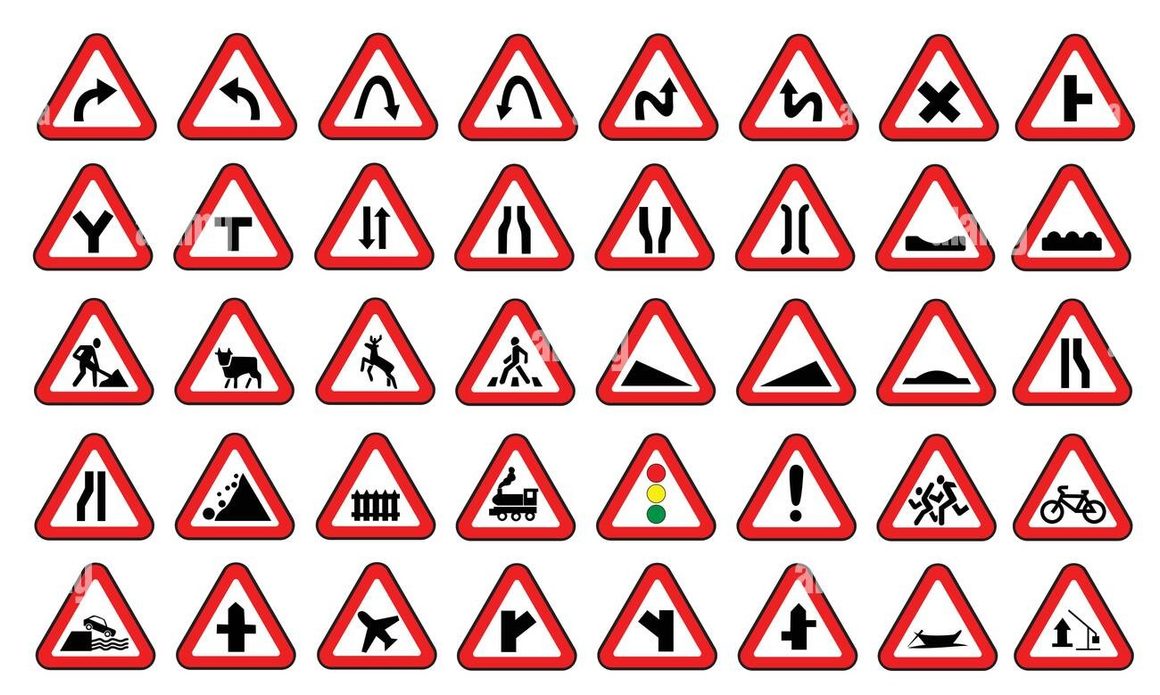
Curve Left or Right
A curve warning tells you that the road bends ahead.
Reduce your speed before reaching the bend rather than braking suddenly while already in the curve.
Double Curve
A double-curve sign warns that there are two consecutive bends, usually in opposite directions.
Do not accelerate after the first bend because another curve may immediately follow.
Crossroads
A crossroads warning indicates that another road intersects the road ahead.
Watch for vehicles approaching from either side and prepare to adjust your speed.
T-Junction and Y-Junction
A T-junction warning means the road ahead ends at another road.
A Y-junction indicates that the road divides into two directions.
Both require you to pay attention to the road layout and other vehicles before choosing your movement.
Side Road
A side-road warning indicates that another road joins the main road from the side shown on the sign.
Vehicles may enter the main road ahead, so reduce speed and remain alert.
Roundabout Ahead
This sign warns you that a roundabout is approaching.
Start reducing speed early and prepare to follow the lane markings and traffic rules.
Road Narrows
A Road Narrows sign means the available carriageway becomes narrower ahead.
Avoid unnecessary overtaking and give other road users sufficient space.
Narrow Bridge
This warns that the bridge ahead is narrower than the road leading to it.
Slow down and be prepared to allow other vehicles to pass safely.
Pedestrian Crossing
A pedestrian-crossing warning means people may be crossing the road ahead.
Reduce speed and be prepared to stop when necessary.
Pedestrian crossings are especially important around schools, markets, residential areas and busy urban roads.
School
A School warning sign indicates that children may be present in or around the road.
Slow down, watch carefully for children crossing and be prepared to stop.
This is one of the signs that drivers should never treat casually.
Slippery Road
A Slippery Road warning indicates that the road may have reduced grip.
The risk can become greater during rainfall, so reduce speed and avoid sudden braking or steering.
Men at Work
This sign warns you about road construction or maintenance work.
You may encounter workers, construction equipment, lane diversions or temporary road arrangements.
Follow temporary signs and instructions from traffic personnel rather than assuming the normal road layout still applies.
Uneven Road or Bump
This warning indicates an uneven section, hump or other change in the road surface.
Reduce speed before reaching the obstruction. Waiting until your front wheels are already on the bump defeats the purpose of the warning.
Steep Hill
A steep-hill warning indicates a significant incline or decline ahead.
Drivers should control their speed and use an appropriate gear, particularly when travelling downhill.
Railway Crossing
A railway-crossing warning indicates that a railway line is ahead.
Slow down and be prepared to stop. Never attempt to cross when a train is approaching or when the crossing is closed.
Cattle or Animals
This sign warns that animals or livestock may enter the road.
Reduce speed and be prepared for unpredictable movement.
Two-Way Traffic
A Two-Way Traffic sign warns that vehicles may be travelling in both directions.
This is particularly important after a one-way section or divided road comes to an end.
Informative Road Signs in Nigeria
Informative signs help drivers understand where they are going and what services or facilities are available.
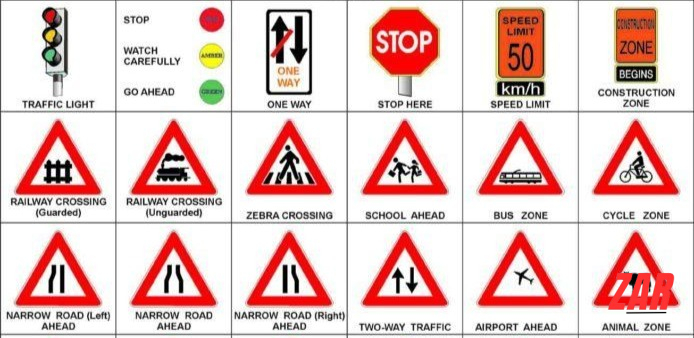
They can include place names, directions, distances and information about facilities.
Place Name and Distance
These signs tell you the name of a town, city, area or destination and may show the distance in kilometres.
They are particularly useful on intercity roads and highways.
Advance Direction Signs
These signs tell you which direction or lane leads towards a particular destination.
Pay attention to them early because waiting until the last moment to change lanes can be dangerous.
Hospital
A hospital sign tells you that a medical facility is nearby or indicates the direction to one.
The familiar medical symbol or letter H may appear on the sign.
Filling Station
A filling-station sign indicates the location or direction of a fuel station.
This can be particularly useful when travelling long distances.
Parking
A Parking sign indicates an area where parking is permitted, subject to any additional restrictions.
Do not assume that every open space beside a road is a legal parking area.
Airport and Motor Park
Directional signs can guide motorists towards airports, motor parks and other major transport facilities.
First Aid and Mechanical Help
These signs indicate roadside assistance, first-aid facilities or mechanical services where provided.
Lay-By
A lay-by indicates an area where motorists can safely pull off the main carriageway.
It is safer to use a designated lay-by than to stop unnecessarily on the main road.
The Federal Ministry of Works also publishes a Road Signs & Markings volume within its Highways Code and Manual resources, showing that road signage forms part of the wider national road-design framework.
Speed Limits You Need to Understand
Speed limits are closely connected to road signs because the posted limit tells you how fast you are legally permitted to travel under the applicable conditions.
The FRSC’s speed-limiting information identifies 100 km/h for private vehicles, 90 km/h for commercial vehicles and lower limits for heavier trucks.
For drivers, the most important rule is simple: the posted speed limit takes priority over assumptions about how fast you normally drive.
Urban roads can have lower limits because of pedestrians, junctions, schools, markets and high traffic volumes. Expressways and highways may permit higher speeds where properly posted.
Even when the posted maximum is high, you should reduce speed when visibility is poor, the road is wet, traffic is heavy or the road surface is damaged.
Official Names vs What Nigerian Drivers Call Them
Drivers do not always use the official names of road signs in everyday conversation.
For example, many Nigerians call a Give Way sign “Yield”, while No Entry may casually be described as “No Go”. A pedestrian crossing is often called a “Zebra”, while an Uneven Road sign may simply be called a “Bump” or “Speed Breaker”.
These everyday descriptions are useful in normal conversation, but if you are preparing for a driving test, learn the official names.
The FRSC’s driver-education programme specifically includes road signs and regulations as part of standardized driver training.
Road Signs and Their Meaning in Nigeria: What Drivers Should Remember
When you see a road sign, do not wait until you are directly underneath it before deciding what it means.
Look ahead, identify the sign, understand the instruction and adjust your driving early.
A Stop sign means stop. Give Way means yield. No Entry means do not enter. A speed-limit sign tells you the maximum applicable speed. A warning triangle tells you to prepare for a hazard. An information sign helps you understand the road or find a destination.
Also remember that road signs work together with road markings, traffic lights, traffic officers and other road-control measures. The FRSC notes that signs and road markings serve the common purpose of guiding road users.
If you are driving in Lagos, it is also worth familiarising yourself with the Lagos State traffic-management system because traffic enforcement and prescribed fines can depend on the specific violation and applicable state rules. Lagos’ official Traffic Management Solutions platform provides information on traffic laws, violations and prescribed fines.
What to Do When a Road Sign Is Faded or Missing
Nigerian drivers sometimes face faded, damaged or missing signs. A 2026 working paper from the National Institute for Legislative and Democratic Studies specifically highlights missing, faded and poorly maintained road signage as an ongoing road-safety concern.
If a sign is difficult to see, do not use that as an excuse to ignore an obvious road restriction.
Look for other clues such as road markings, lane direction, traffic lights, junction layout and other signs. If you are approaching a school, pedestrian crossing, construction zone or sharp bend, reduce your speed and remain prepared for hazards even when signage is poor.
The safest approach is to drive according to the visible road conditions rather than relying solely on whether a sign looks new.
Why Road Signs Matter More Than You Think
Road signs are not decoration placed beside the road. They are part of the communication system that allows thousands of drivers, pedestrians and other road users to share the same road.
Imagine approaching a busy junction where you have never driven before. Without signs, you have to guess where to turn, who has priority and which direction traffic is moving.
A simple Stop, Give Way, One Way or No Entry sign removes much of that uncertainty.
That is why the FRSC considers knowledge of road traffic signs essential for drivers. Its current Highway Code literacy material describes signs as a basic communication means for safe motoring.
Road Signs and Safe Car Ownership
Understanding road signs is only one part of becoming a safer driver. Your vehicle also needs to be in good mechanical condition.
Brakes, tyres, lights, suspension and windscreen visibility can all affect your ability to respond when a sign tells you to stop, slow down or change direction.
If you are considering buying a used vehicle, our guide to the most reliable Nigerian-used cars in 2026 can help you compare some of the options available in the Nigerian market.
For SUV buyers, our guides to the Lexus GX 460 price in Nigeria and Lexus GX 470 price in Nigeria also cover the mechanical and ownership considerations that come with older luxury SUVs.
The point is simple: knowing what a Stop sign means is useless if your brakes cannot stop the vehicle safely.
Final Thoughts
Learning road signs and meaning in Nigeria does not have to be complicated. Start with the three major groups: warning signs alert you to hazards, regulatory signs tell you what you must or must not do, and informative signs help you understand the road and find your destination.
Then learn the important signs one by one: Stop, Give Way, No Entry, No Overtaking, speed limits, Keep Left, pedestrian crossings, School, Men at Work, slippery road, roundabout and directional signs.
Most importantly, do not treat road signs as suggestions. They are part of the communication system that keeps Nigerian roads organised and safer.
If you can recognise the shape, understand the colour and interpret the symbol before you reach the sign, you are already becoming a more informed driver.