If you’re shopping for a reliable, affordable SUV that can handle Nigeria’s roads without breaking your budget, the 2008 Honda CR-V still stands tall in 2025. This third generation CR-V, which ran from 2007 to 2011, remains one of the most trusted compact crossovers ever built. It perfectly combines car-like handling, excellent fuel economy, and Honda’s legendary reliability, a formula that has kept it a top choice for Nigerian families, students, and daily commuters alike.
When it first launched, the 2008 CR-V completely changed Honda’s SUV game. Gone was the boxy old school design of the early 2000s; in its place came a sleeker, more refined look that felt premium without being flashy. It was also one of the first SUVs in its segment to feel truly “crossover like” smoother, quieter, and much easier to drive in tight Lagos traffic than traditional off roaders. Fast forward to today, and it’s still a benchmark for anyone looking to buy a dependable used SUV in Nigeria.
Design and Driving Experience
The 2008 CR-V brought a modern redesign that was both functional and stylish. Honda engineers reshaped the body to improve aerodynamics, enhance stability, and reduce wind noise at highway speeds. It’s a five passenger SUV that fits neatly between compact and mid size, offering a commanding driving position without the bulky feel of larger SUVs. The lines are soft but purposeful, a look that has aged gracefully even after almost two decades on the road.
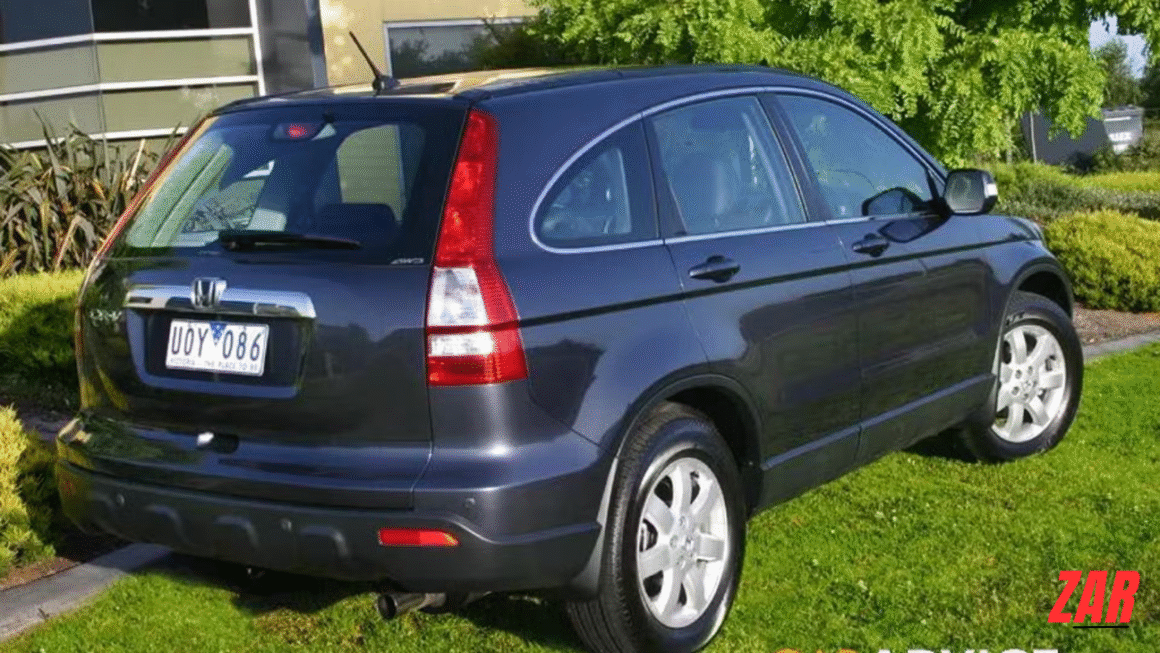
Under the hood, every 2008 CR-V comes with Honda’s dependable 2.4 liter DOHC i-VTEC four cylinder engine producing 166 horsepower. It’s paired with a smooth shifting five speed automatic transmission, delivering lively acceleration for city driving while keeping fuel consumption modest. There’s no V6 option, but the 2.4 liter holds its own in traffic, and most Nigerian drivers appreciate its low maintenance needs and solid performance. The Real Time 4WD system available on higher trims automatically engages the rear wheels when it senses slip perfect for wet or uneven roads in areas like Abuja or Port Harcourt.
Interior Comfort and Practical Features
Step inside the 2008 CR-V, and you’ll immediately feel why so many Nigerian families still love it. The interior design is simple, functional, and built to last. Honda used high quality soft touch materials on key surfaces, and there’s very little in the way of squeaks or rattles even in older units. The upright dashboard gives the cabin a spacious feel, while the gear selector mounted on the lower dash frees up extra legroom in the front row.
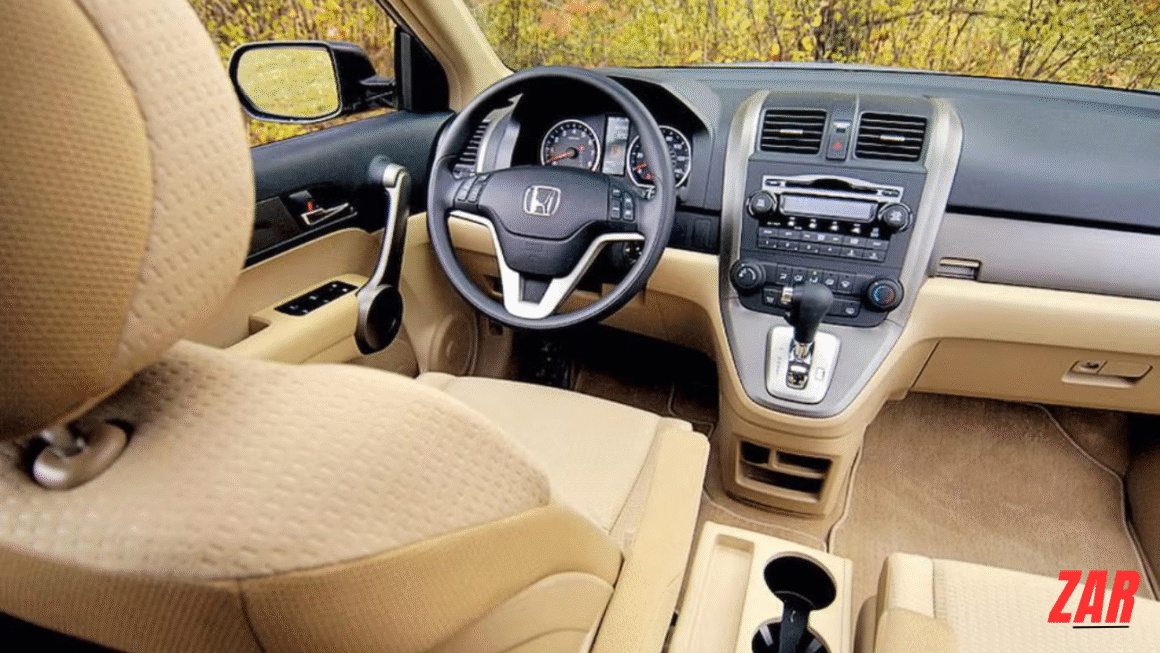
The seats are supportive and well padded for long drives, with the EX L trim offering leather upholstery and heated front seats. Both rows offer generous headroom and legroom, and the rear seats recline and slide forward or back to prioritize either cargo or passenger space. The cargo area is among the best in its class 35.7 cubic feet behind the rear seats and over 70 cubic feet when they’re folded down. You can even stash smaller items in the hidden underfloor storage bin, a lifesaver for Lagos shoppers and road trippers.
Tech features for its time were impressive. All trims came standard with power windows, mirrors, and locks, plus air conditioning, cruise control, and an audio system with CD and AUX input. Higher trims added niceties like a power sunroof, upgraded speakers, and a premium sound system with a built in subwoofer. The EX L even offered dual zone automatic climate control and optional navigation with a rearview camera a luxury in 2008. Though Bluetooth wasn’t standard, many Nigerian owners have since upgraded their infotainment units with Android screens and reverse cameras, keeping the interior feeling modern.
Safety and Build Quality
Safety has always been one of Honda’s strongest selling points, and the 2008 CR-V was no exception. It earned a “Top Safety Pick” from the Insurance Institute for Highway Safety (IIHS) and a five star rating in frontal and side crash tests from the NHTSA. Its Advanced Compatibility Engineering (ACE) body structure helps absorb and redirect crash energy, giving it superior protection compared to many rivals of the time.
Standard safety features include front, side, and curtain airbags, active head restraints, antilock brakes with electronic brakeforce distribution, and Honda’s Vehicle Stability Assist (VSA). These systems all work quietly in the background to keep the car composed on slippery or uneven roads, something Nigerian drivers value during rainy season commutes or expressway drives.
While there have been several recalls globally (mostly airbag related, due to the Takata issue), most affected units have already been fixed by dealers. Any buyer today should still check the VIN before purchasing, but Honda’s recall coverage remains excellent worldwide.
Reliability and Common Issues
Ask any mechanic from Ikeja to Owerri about the CR-V, and they’ll likely tell you the same thing “This motor no dey die.” The 2008 CR-V has earned near legendary reliability status. With proper maintenance oil changes, transmission fluid checks, and brake service it’s not uncommon to see these SUVs go past 300,000 kilometers without major repairs.
Still, like every used car, there are a few issues to watch for. The most common complaints include air conditioning compressor failures, worn out door lock actuators, and brake rotor warping. The AC problem, often called “Black Death,” happens when the compressor seizes and contaminates the system, leading to costly repairs if ignored. Regular flushing every few years can prevent it.
Other minor concerns include paint peeling on some colors, noisy wheel bearings, or occasional alternator failure but these are wear and tear issues, not deal breakers. The key takeaway is that the CR-V’s core components engine, transmission, and suspension are extremely durable. Parts are also easy to find and relatively affordable in Nigeria, thanks to interchangeability with other Honda models. Annual maintenance costs are modest, averaging around ₦400,000 per year for oil, tires, and general service far cheaper than what you’d spend on most European SUVs. Many Nigerian owners call it “maintenance for peace of mind,” and they’re not wrong.
On Nigerian roads, the CR-V feels planted and confident. The steering is light yet precise, making it easy to weave through city traffic or handle winding expressways. Its suspension setup gives it a car-like ride quality, soaking up small bumps, though it can get a bit firm over major potholes or rough rural routes. Top speed hovers around 115 mph, and 0–60 mph takes roughly nine seconds decent for its size and segment.
Driving Experience on Nigerian Roads
One reason the 2008 CR-V remains a fan favorite here is how well it adapts to local driving conditions. Its moderate ground clearance handles speed bumps and uneven roads comfortably, while the firm chassis feels stable even on high speed expressways. Unlike bulkier SUVs, the CR-V’s compact size makes it easy to maneuver through Lagos Island traffic or squeeze into tight Abuja parking spots.
Even in the rainy season, the optional Real Time 4WD system offers added confidence on slippery roads. It’s not an off roader like a Land Cruiser, but for everyday driving school runs, office commutes, weekend market trips it’s ideal. The steering feels light yet responsive, visibility is great, and the overall driving character strikes that perfect balance between sedan comfort and SUV capability.
Buying Guide and Prices in Nigeria (2025 Update)
As of 2025, the 2008 Honda CR-V is one of the most budget friendly and reliable compact SUVs in the Nigerian used market. Prices vary depending on condition, trim, and whether it’s a Tokunbo (foreign used) or locally used model. On average, expect to pay between ₦4.5 million and ₦6.5 million for a clean Tokunbo unit, while local ones in good shape go for ₦3 million to ₦5 million.
The EX and EX L trims tend to command higher prices due to their luxury features, but even the base LX offers solid value. Before buying, always check service history and inspect the AC system, brakes, and suspension. Parts are widely available, and many Honda specialists across Lagos, Benin, and Port Harcourt can handle repairs easily.
Insurance and running costs are low, making it an excellent choice for middle class families or first time car owners. It’s also a popular pick among Uber and Bolt drivers who value fuel economy and comfort for long hours on the road.
Why the 2008 CR-V Still Rules in 2025
Nearly two decades after its debut, the 2008 Honda CR-V continues to prove why it’s one of the smartest used SUVs you can buy in Nigeria. It offers the perfect mix of fuel efficiency, comfort, and reliability qualities that matter most in a country where roads and fuel prices can test any car’s endurance.
It may not have the flashy tech or brute power of newer models, but what it lacks in modern flair, it makes up for with bulletproof dependability. Whether you’re a family looking for a practical daily driver or a young professional upgrading from a sedan, the 2008 CR-V still delivers solid value that few vehicles can match.
Simply put, it’s a car that works with no drama, no surprises, just dependable Honda engineering that keeps you moving. In a market full of short lived trends, the CR-V remains a timeless Nigerian favorite that reminds us that true quality never goes out of style.