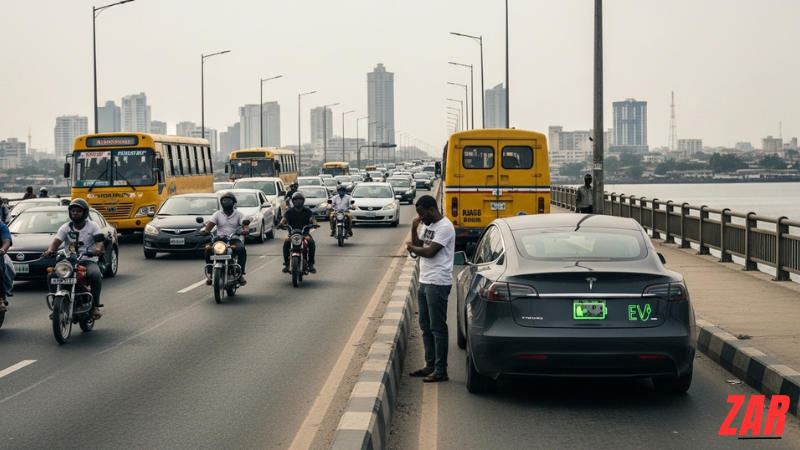
Electric vehicles (EVs) are slowly appearing on Nigerian roads, especially in Lagos. But one question keeps coming up whenever people talk about them: what actually happens if an EV battery dies in traffic—especially on a major route like the 3rd Mainland Bridge?
The concern is not theoretical. Nigerian social media has already seen multiple stories and debates about EVs running out of battery in the middle of busy roads. These incidents reveal a deeper issue around infrastructure, charging access, and what EV ownership really looks like in Nigeria today.
Why the Idea of an EV Dying on the 3rd Mainland Bridge Worries People
The 3rd Mainland Bridge is one of the busiest roads in West Africa, connecting Lagos Island with the mainland. Traffic can stretch for hours, and drivers often spend long periods idling with their air conditioning running.
For EV owners, that raises an uncomfortable scenario: what happens if your battery reaches zero while you are stuck in traffic halfway across the bridge?
Unlike petrol vehicles, you cannot simply walk to a roadside vendor to buy fuel. The car will shut down completely once the battery is depleted. At that point, the only realistic solution is recovery or towing.
The fear of this exact scenario is widely discussed on Nigerian social media, where users frequently question whether the country’s current infrastructure can support electric vehicles reliably.
Real Nigerian Stories Circulating Online
Much of the public conversation about EV reliability in Nigeria comes from real anecdotes shared online.
One widely circulated post described a Tesla owner in Lagos who allegedly forgot to charge their vehicle before leaving home. According to the story, the car ran out of battery while crossing the 3rd Mainland Bridge and eventually had to be towed away.
Even if details of such stories are sometimes exaggerated, the narrative resonates because it reflects a genuine concern.
Another user on X asked a direct question to EV owners in Nigeria: where exactly do they charge their cars? The user specifically mentioned areas like Orchid Road and Ajah—neighbourhoods known for long commutes and heavy traffic—wondering what drivers would do if their battery suddenly died there.

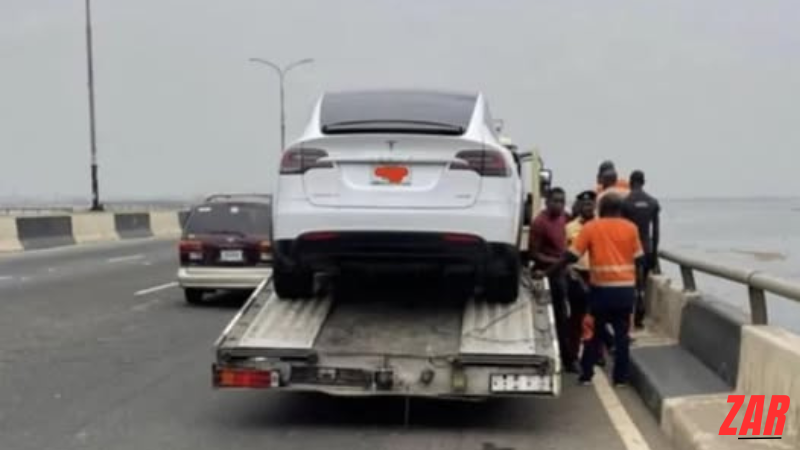
The post captured a common worry among Nigerians: EV adoption may be increasing globally, but local infrastructure still feels uncertain.
Some posts also approach the topic humorously. Meme videos occasionally show electric cars being charged during fuel scarcity periods, with captions asking what happens “if the battery die for road.” These jokes highlight a deeper skepticism about whether EVs are practical in Nigeria’s current environment.
Why Battery Stranding Is a Bigger Concern in Nigeria
In countries with mature EV ecosystems, running out of battery is inconvenient but manageable. Drivers can usually find a charging station nearby or call roadside assistance equipped with mobile chargers.
Nigeria presents a different reality.
Limited Public Charging Stations
Public EV charging infrastructure is still in its early stages. Most charging points are located in areas like Victoria Island, Lekki, and a few corporate or private locations.
This means drivers traveling outside those areas often have limited backup options if their battery level becomes critically low.
Several companies are attempting to expand charging infrastructure across West Africa. Some networks have announced plans to deploy hundreds of charging stations over the next few years. But for now, the coverage remains sparse.
Unreliable Electricity Supply
Another challenge is Nigeria’s power supply.
Many EV owners rely on home charging using solar systems, inverters, or generators. However, frequent blackouts mean charging plans can easily be disrupted.
If power goes out overnight, a driver may wake up to find their vehicle partially charged instead of fully ready for the day.
This increases the risk of miscalculating range during long Lagos commutes.
Traffic Conditions That Drain Batteries Faster
Lagos traffic itself can also reduce expected driving range.
Air conditioning, stop‑and‑go traffic, and long idle periods all consume energy. While EVs are generally efficient in traffic compared with petrol cars, extreme congestion can still push drivers closer to their battery limits than expected.
On routes like the Lekki‑Ajah corridor or the 3rd Mainland Bridge during rush hour, journeys that should take 20 minutes can stretch into hours.
Limited EV Mechanics and Recovery Services
If an EV stops working on the road, the options for quick assistance are limited.
Traditional mechanics often lack experience with electric vehicles. In most cases, the only immediate solution is towing the car to a safe location or back home for charging.
Towing an EV also requires proper handling to avoid damaging the drivetrain, which can make recovery more complicated than with standard vehicles.
What Actually Happens If an EV Battery Dies on the Road
If an electric vehicle’s battery fully depletes, several things typically occur.
First, the vehicle will gradually limit power output as the battery approaches zero. Most EVs provide multiple warnings and alerts before reaching a complete shutdown.
Once the battery is completely drained, the car will no longer move under its own power.
At that stage, the typical options include:
- Calling a towing service
- Requesting roadside assistance
- Waiting for a mobile charging service (where available)
In Nigeria, towing is currently the most common outcome.
How EV Owners in Nigeria Reduce the Risk
Despite the concerns, most EV owners in Nigeria rarely experience complete battery depletion. This is largely because they adopt careful charging habits and plan their routes.
Charging at Home Before Every Trip
Many EV owners treat charging the same way people treat charging their phones.
The car is plugged in overnight so that it starts the day with a full battery. This simple routine eliminates most range anxiety.
Installing Solar Charging Systems
Because of grid instability, some EV owners invest in solar systems specifically designed to charge their vehicles.
Solar charging setups provide a more reliable energy source and reduce dependence on public infrastructure.
Monitoring Battery Range Carefully
Modern EVs provide accurate range estimates and energy consumption data.
Drivers often monitor these metrics closely, especially before long journeys across Lagos.
Planning routes around available charging stations is also becoming more common.
Avoiding Low Battery in High‑Traffic Areas
Experienced EV drivers generally avoid entering heavy traffic corridors with low battery levels.
If a driver knows they must cross the 3rd Mainland Bridge during rush hour, they typically ensure the vehicle is well charged beforehand.
Is Range Anxiety Slowing EV Adoption in Nigeria?
Range anxiety—the fear of running out of battery—is one of the biggest psychological barriers to EV adoption in Nigeria.
Although the number of electric vehicles in the country is gradually increasing, estimates suggest only tens of thousands are currently on the road.
Most owners are early adopters with access to private charging infrastructure at home or work.
For commercial drivers, ride‑hailing operators, and daily commuters, concerns about battery range and charging availability remain significant obstacles.
However, the situation is slowly changing as infrastructure projects expand and awareness improves.
The Bottom Line
If an EV battery dies on the 3rd Mainland Bridge, the most likely outcome today is simple but inconvenient: the vehicle will need to be towed to a charging location.
While the scenario is possible, it is relatively rare among experienced EV owners who plan their charging routines carefully.
The bigger issue is not the technology itself but the surrounding infrastructure. As Nigeria develops more charging stations, reliable electricity supply, and EV support services, stories about stranded electric cars will likely become far less common.
For now, Nigerian EV drivers rely on planning, home charging, and careful battery management to ensure that running out of power on Lagos roads remains an unlikely event.