The Range Rover Velar stands as one of Britain’s most design-focused luxury SUVs, representing Land Rover’s commitment to sophisticated aesthetics and legendary capability. Launched in 2017 and named after the original 1969 Range Rover prototypes, the Velar has become a favorite among Nigeria’s successful entrepreneurs, business executives, and design-conscious buyers who appreciate British automotive elegance over German precision or Japanese reliability. Its distinctive minimalist design and advanced technology reflect a growing trend among affluent Nigerians toward vehicles that make sophisticated statements without excessive ostentation.
The Velar collection available in Nigeria spans multiple trim levels and powertrains, leaning heavily toward luxury and refinement while maintaining the off-road capability Range Rover is famous for. From the efficient four-cylinder P250 models that balance performance with economy to the powerful supercharged V6 P380 variants that deliver exhilarating acceleration, the range caters to different priorities. This review covers everything from the Velar’s striking exterior design and premium interior experience to its real-world performance on Nigerian roads, ownership costs, competitive positioning, and how it fits into the local driving environment where infrastructure challenges meet luxury aspirations.
[wheelzar_review]
Visual Appeal & Exterior Features
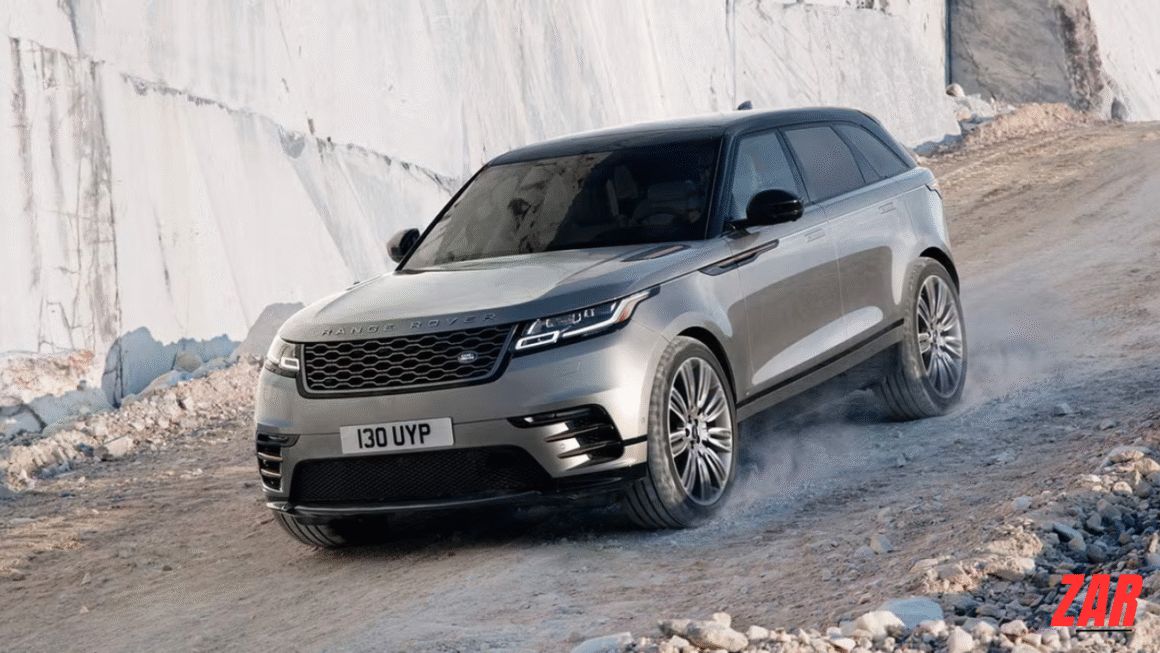
The Range Rover Velar’s exterior design represents automotive minimalism at its finest, with clean surfaces and flush details that create a sophisticated presence on any road. The front fascia features sleek Matrix LED headlights with distinctive daytime running light signatures, paired with the signature Range Rover grille that sits low and wide, finished in body color or contrasting black depending on specification. The defining characteristic is the flush door handles that retract seamlessly into the bodywork until needed, contributing to the aerodynamic profile and ultra-modern aesthetic. Available in sophisticated colors including Corris Grey, Santorini Black, Silicon Silver, Firenze Red, and Yulong White, the Velar offers options from understated elegance to bold statements. The side profile showcases a continuous waistline flowing uninterrupted from front to rear, while the floating roofline achieved through blacked-out D-pillars adds contemporary flair that distinguishes it from traditional SUVs. Slim LED taillights wrap around the rear corners, and the subtle integrated spoiler balances style with function. Standard 19-inch wheels look purposeful, though optional 20, 21, and 22-inch designs dramatically enhance road presence, making the Velar instantly recognizable in Lagos traffic or Abuja’s diplomatic districts.
Interior Experience — Performance & Price
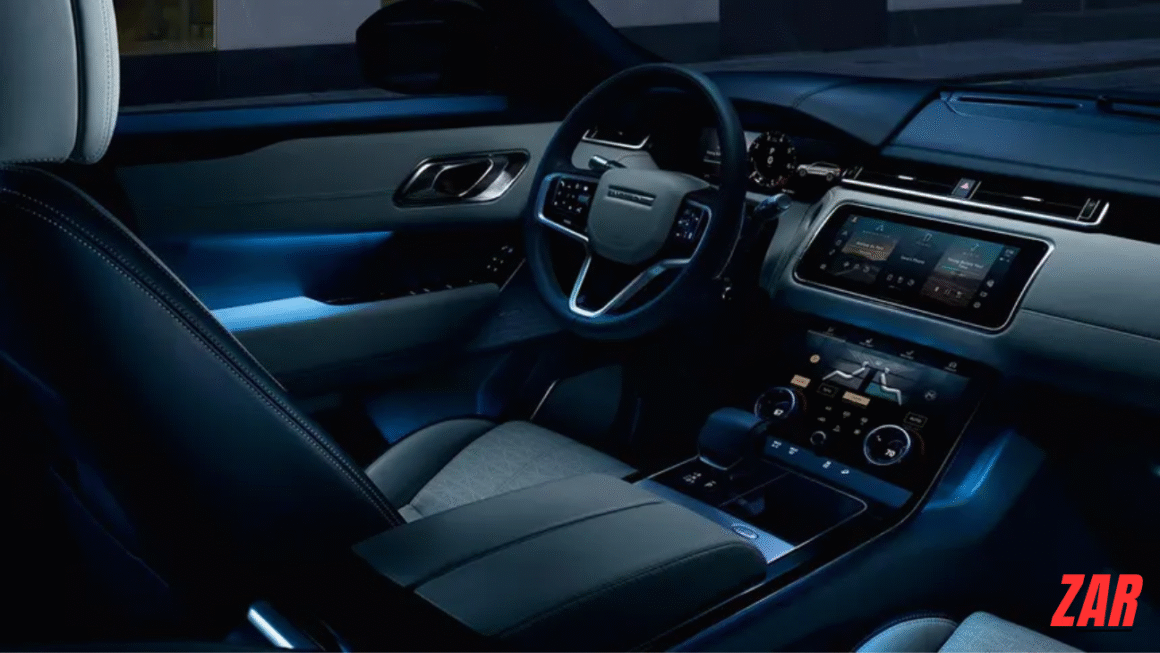
The Velar’s cabin delivers minimalist luxury through the Touch Pro Duo system featuring two stacked 10-inch high-resolution touchscreens controlling virtually all vehicle functions, creating a nearly button-free environment that feels futuristic. Premium leather upholstery covers seats, dashboard, and door panels, complemented by genuine aluminum or optional open-pore wood trim that elevates the ambiance. Soft-touch materials cover every surface hands naturally contact, while the digital instrument cluster displays crisp, configurable information. Front seats offer extensive 14-way power adjustments, heating, cooling, and massage functions on higher trims, providing exceptional comfort during long Nigerian journeys. Rear passengers enjoy generous legroom and headroom with available heated seats, dedicated climate controls, and USB charging ports that keep devices powered. The cabin seats five adults comfortably, though the coupe-like roofline prioritizes style over maximum headroom. Technology includes the Meridian premium sound system with up to 23 speakers on top trims, wireless charging, Apple CarPlay and Android Auto integration, and a panoramic sunroof flooding the interior with light.
The Range Rover Velar offers multiple powertrain options catering to different performance priorities and budgets. The P250 variant features a 2.0-liter turbocharged four-cylinder engine producing 247 horsepower and 365 Nm of torque, paired with an eight-speed automatic transmission and permanent all-wheel drive. This setup delivers 0 to 100 km/h in approximately 7.1 seconds with a top speed around 217 km/h, providing smooth, refined performance suitable for daily Nigerian driving with fuel economy averaging 9 to 11 km/l in mixed conditions. The performance-focused P380 packs a 3.0-liter supercharged V6 generating 380 horsepower and 450 Nm of torque, accelerating 0 to 100 km/h in just 5.3 seconds with a top speed of 250 km/h and fuel consumption of 7 to 9 km/l. In Nigeria’s 2025 market, brand new Velars from authorized dealers like Coscharis Motors start at approximately ₦55 million for base P250 S-trim models, rising to ₦65 million to ₦75 million for SE and HSE specifications, ₦75 million to ₦90 million for P380 R-Dynamic HSE variants, and exceeding ₦90 million up to ₦110 million for top Autobiography editions. Foreign-used Tokunbo units offer substantial value, with 2018-2019 models priced ₦35 million to ₦50 million, 2020-2021 examples commanding ₦45 million to ₦65 million, and recent 2022-2023 units selling for ₦60 million to ₦80 million depending on mileage and specification.
How It Fits Into Nigerian Terrain and Driving Conditions
The Velar performs remarkably well in Nigerian conditions due to its elevated ground clearance, adaptive suspension, and all-wheel-drive system. It handles Lagos traffic, uneven roads, and the rainy season confidently. Its high seating position provides excellent visibility, while the suspension absorbs potholes and rough patches found in semi-urban areas. Fuel economy varies, but the 2.0L engine remains more practical for daily Nigerian use compared to the 3.0L variant.
In terms of ownership, the Velar demands premium maintenance. Original parts are available in Lagos, Abuja, and Port Harcourt, though at higher costs than German competitors. Vehicle servicing requires specialized technicians, and insurance premiums are typically on the higher side. However, the prestige and social value attached to owning a Velar remain high among Nigerian luxury buyers.
Competitive Comparison
Against competitors like the BMW X6, Porsche Macan, and Mercedes-Benz GLE, the Velar offers superior minimalist design and off-road capability. The BMW X6 leads in sporty performance, while the Macan delivers sharper handling. However, the Velar stands out for buyers who prioritize elegance, comfort, and brand presence. Price-wise, it offers a middle-ground between the more expensive Range Rover Sport and the entry-level Evoque.
In long-term ownership, the Velar’s maintenance cost is higher than mainstream SUVs but comparable to other luxury European brands. It retains decent resale value thanks to its strong brand reputation. While the GLE may offer cheaper servicing, the Velar provides a more distinctive design and all-terrain advantage, making it a better all-rounder for Nigerian road versatility.
Conclusion
Overall, the Range Rover Velar presents itself as a luxury SUV that balances design, technology, comfort, and performance. Its minimalist styling, premium cabin, and strong road presence make it one of the most appealing options for Nigerian luxury car buyers. For those who desire modern features without stepping up to the higher-priced Range Rover Sport, the Velar remains a smart and stylish choice.
The Velar reflects the taste of Nigerian buyers who value sophistication, versatility, and prestige. Its combination of comfort and capability fits perfectly into Nigeria’s urban lifestyle while remaining suitable for semi-rural terrains. Would you choose the Velar for its elegance and technology, or would you prefer one of its performance-focused competitors?