


The title of the most expensive car in the world no longer belongs solely to traditional performance machines. In 2026, the ultra-luxury automotive market is defined by bespoke craftsmanship, exclusivity, coachbuilding, and personalized engineering as much as speed or horsepower.
At the very top of the market, brands like Rolls-Royce, Bugatti, Pagani, Koenigsegg, and Mercedes-Maybach are building cars that function as collectible works of art rather than standard vehicles. Many are produced in extremely limited numbers, while some are entirely one-off commissions designed specifically for a single owner.
The current leader is the Rolls-Royce La Rose Noire Droptail, a hand-built masterpiece valued at approximately $30–32 million. Closely behind it are other ultra-exclusive coachbuilt models like the Rolls-Royce Boat Tail and Bugatti La Voiture Noire.
This guide explores the top 10 most expensive cars in the world in 2026, including their estimated prices, defining features, performance details, and why collectors are willing to spend tens of millions of dollars to own them.
What Makes a Car the Most Expensive in the World?
The price of an ultra-luxury car is rarely determined by performance alone. While speed, engine output, and engineering still matter, the most expensive cars in the world derive much of their value from exclusivity, craftsmanship, customization, heritage, and collector appeal.
At the highest end of the automotive market, buyers are not simply purchasing transportation. They are acquiring a rare object that may represent years of engineering development, handcrafted artistry, and personal collaboration with the manufacturer.
In many cases, these vehicles function more like collectible art pieces than ordinary production cars.
Several factors influence the valuation of these vehicles.
Ultra-Limited Production
Scarcity plays a major role in pricing. Many of the cars on this list are produced in extremely small numbers — sometimes fewer than 10 units globally. In some cases, manufacturers build only a single example.
The fewer examples that exist, the more desirable the car becomes among collectors and investors.
This scarcity creates an exclusivity factor that cannot easily be replicated. When only one or two people in the world can own a specific vehicle, demand among ultra-wealthy collectors increases significantly.
Limited production also helps manufacturers maintain prestige. Instead of competing through volume sales, brands such as Rolls-Royce, Pagani, and Bugatti focus on creating exceptionally rare vehicles with strong emotional and collector value.
For many buyers, rarity itself becomes one of the most important luxury features.
Bespoke Coachbuilding
Modern coachbuilding programs have transformed luxury automotive manufacturing. Instead of offering standard trims and option packages, manufacturers like Rolls-Royce now create fully personalized vehicles tailored to individual clients.
This level of customization can include:
- Unique body designs
- Hand-crafted interiors
- Custom materials and finishes
- Personalized color schemes
- Exclusive artwork and detailing
- Tailored engineering modifications
Some vehicles require years of collaboration between the client and manufacturer before production even begins.
In certain projects, clients work directly with designers, engineers, and artisans to create vehicles that reflect personal tastes, lifestyles, or even family heritage. Buyers may request rare wood finishes, custom embroidery, specialized luggage compartments, or completely original exterior styling.
This process transforms the vehicle into something deeply personal.
Coachbuilding also revives an important tradition from early automotive history, when wealthy buyers commissioned custom bodies from specialist designers. Modern brands have adapted that tradition for today’s ultra-luxury market.
Brand Heritage and Prestige
Brands with long histories of engineering excellence and luxury craftsmanship naturally command higher valuations.
Rolls-Royce, Bugatti, Pagani, and Mercedes-Maybach have built reputations that extend beyond transportation. Their vehicles are symbols of wealth, exclusivity, achievement, and social status.
Heritage plays a particularly important role in collector psychology. Buyers are often attracted to brands with strong historical significance, motorsport achievements, or iconic design legacies.
For example, Bugatti’s reputation is heavily connected to its historic racing pedigree and engineering innovation, while Rolls-Royce has spent more than a century building an identity centered around refinement and handcrafted luxury.
That legacy adds intangible value that cannot easily be measured through specifications alone.
Performance and Engineering
While luxury dominates the upper end of the market, hypercar manufacturers still compete aggressively on performance.
Many of the world’s most expensive cars feature:
- Quad-turbocharged engines
- Carbon-fiber monocoques
- Lightweight aerodynamic systems
- Advanced suspension technology
- Extremely high horsepower figures
- Speeds exceeding 250 mph
For some buyers, owning one of the fastest cars in the world remains just as important as exclusivity.
Modern hypercars often represent the cutting edge of automotive engineering. Manufacturers invest heavily in lightweight materials, aerodynamic testing, and hybrid powertrain development to achieve extraordinary performance benchmarks.
The engineering behind these vehicles frequently influences broader automotive innovation as technologies developed for limited-production hypercars eventually appear in more mainstream performance vehicles.
This combination of rarity, engineering excellence, and visual drama helps explain why collectors are willing to spend tens of millions of dollars on a single automobile.
Top 10 Most Expensive Cars in the World in 2026
The following rankings focus on new or modern ultra-exclusive vehicles rather than historic auction sales.
1. Rolls-Royce La Rose Noire Droptail — $30–32 Million
The Rolls-Royce La Rose Noire Droptail currently holds the title of the most expensive car in the world.
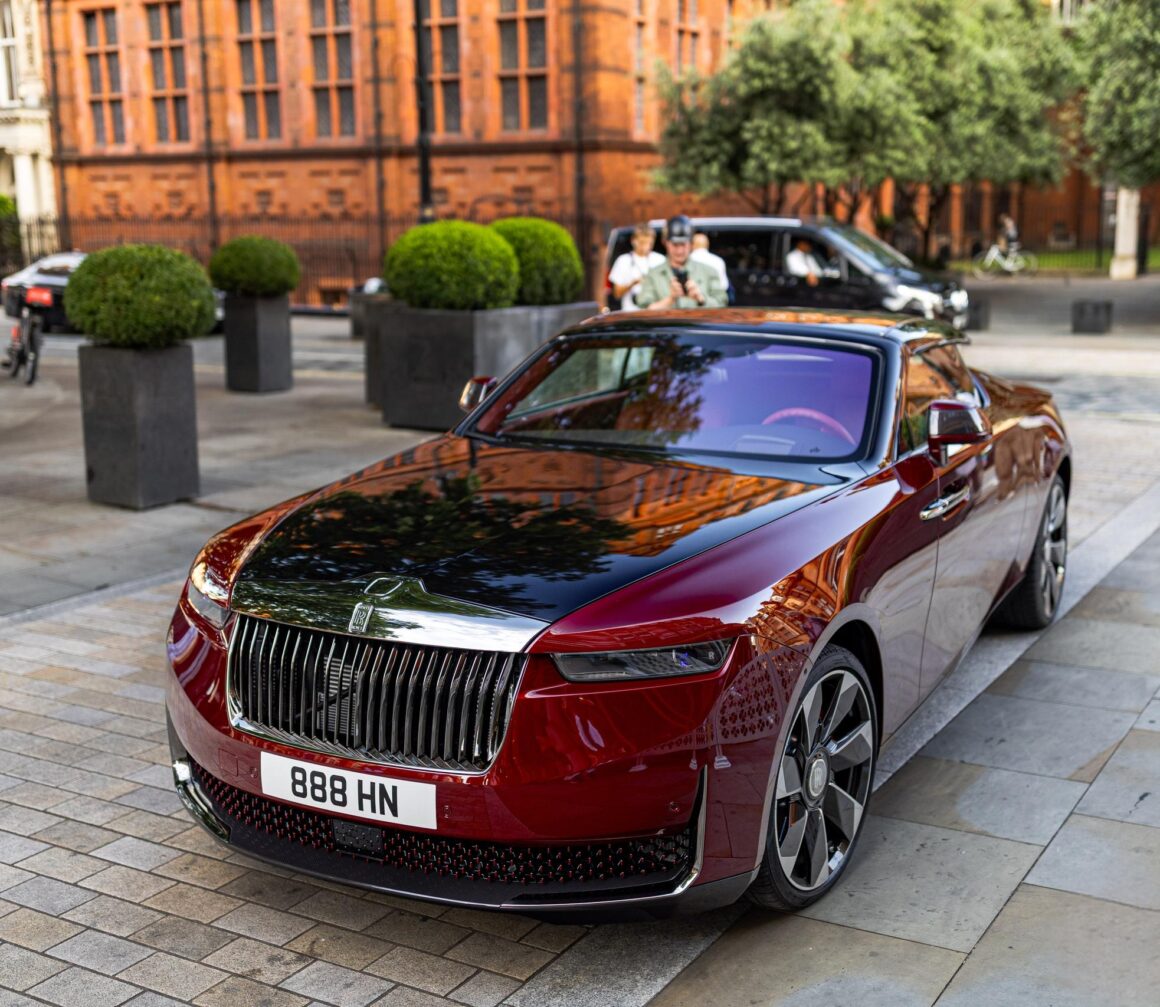
Created under Rolls-Royce’s exclusive Coachbuild division, the La Rose Noire Droptail is a highly personalized two-seat roadster inspired by the Black Baccara rose. Only four Droptail models will ever exist, making it one of the rarest modern luxury vehicles ever produced.
One of the defining features is its dramatic color-shifting paintwork, which changes appearance depending on lighting conditions. The vehicle also features an intricate handcrafted wooden interior composed of over 1,600 individually placed pieces.
Unlike traditional hypercars that prioritize aggressive performance, the La Rose Noire Droptail focuses on elegance, craftsmanship, and exclusivity.
Key Highlights
- Estimated price: $30–32 million
- Coachbuilt by Rolls-Royce
- Only four units planned
- Inspired by the Black Baccara rose
- Handcrafted luxury interior
2. Rolls-Royce Boat Tail — Approximately $28 Million
The Rolls-Royce Boat Tail represents one of the most ambitious modern coachbuilding projects ever undertaken.
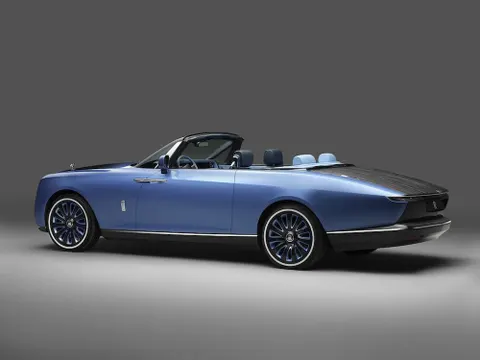
Inspired by luxury yachts, the Boat Tail features a rear deck design that opens like butterfly wings to reveal a custom hosting suite complete with parasols, serving equipment, and luxury accessories.
Each Boat Tail is uniquely designed around its owner’s lifestyle and preferences. The level of personalization involved reportedly required years of design collaboration.
The Boat Tail reflects Rolls-Royce’s shift toward ultra-exclusive collector vehicles designed for billionaires rather than traditional luxury buyers.
Key Highlights
- Estimated price: $28 million
- Yacht-inspired design philosophy
- Fully bespoke construction
- Extremely limited production
- Luxury hosting suite integrated into rear deck
3. Bugatti La Voiture Noire — $18–19 Million
Bugatti’s La Voiture Noire remains one of the most recognizable ultra-expensive hypercars in the world.
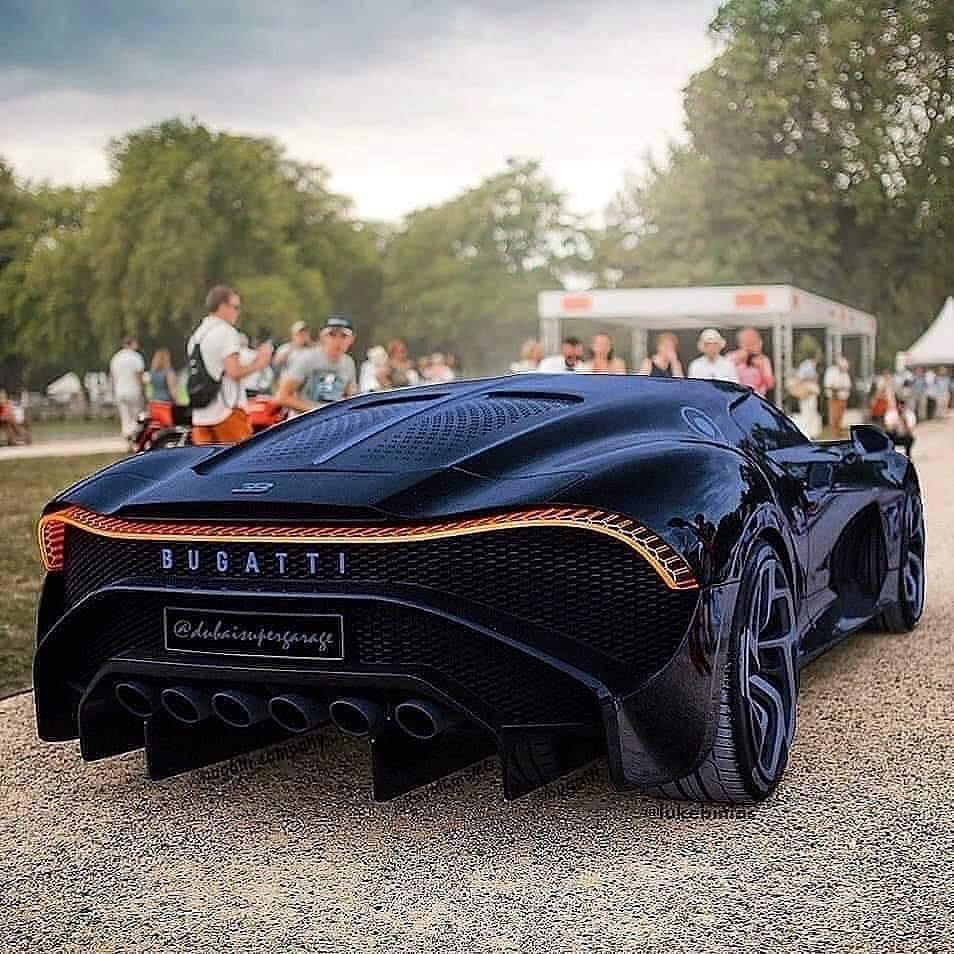
Designed as a tribute to the legendary Bugatti Type 57 SC Atlantic, the car combines modern engineering with classic Bugatti design language.
Under the hood sits Bugatti’s famous quad-turbocharged 8.0-liter W16 engine capable of producing immense power and extreme top speeds.
The vehicle’s name translates to “The Black Car,” and its dramatic all-black carbon-fiber bodywork contributes significantly to its visual identity.
Unlike mass-produced supercars, La Voiture Noire is a true one-off creation.
Key Highlights
- Estimated price: $18–19 million
- One-off Bugatti hypercar
- Quad-turbocharged W16 engine
- Carbon-fiber construction
- Inspired by the Type 57 SC Atlantic
4. Pagani Zonda HP Barchetta — $17–17.5 Million
The Pagani Zonda HP Barchetta represents one of the final and most exclusive evolutions of the legendary Zonda platform.

Featuring an open-top design, partially covered rear wheels, and a naturally aspirated V12 engine sourced from Mercedes-AMG, the HP Barchetta combines extreme performance with handcrafted Italian artistry.
Pagani vehicles are known for their obsessive attention to detail, including aerospace-inspired materials, exposed carbon-fiber construction, and highly artistic interiors.
Only a handful of HP Barchetta models were ever produced.
Key Highlights
- Estimated price: $17–17.5 million
- Open-top hypercar design
- Mercedes-AMG V12 engine
- Ultra-limited production
- Handcrafted carbon-fiber construction
5. SP Automotive Chaos — Approximately $14.5 Million
The SP Automotive Chaos is one of the newest entrants in the ultra-hypercar category.
Developed by Greek manufacturer SP Automotive, the Chaos aims to redefine performance boundaries with extreme horsepower figures and futuristic engineering concepts.
The vehicle has attracted global attention for its aggressive styling, advanced lightweight materials, and ambitious performance claims.
Although less established than Bugatti or Pagani, the Chaos demonstrates how emerging manufacturers are attempting to compete in the ultra-exclusive hypercar space.
Key Highlights
- Estimated price: $14.5 million
- Greek-built hypercar
- Futuristic design philosophy
- Extreme performance focus
- Advanced lightweight engineering
6. Rolls-Royce Sweptail — $12.8–13 Million
The Rolls-Royce Sweptail helped revive modern coachbuilding for the luxury automotive industry.
Commissioned for a private client, the Sweptail draws inspiration from luxury yachts and classic Rolls-Royce models from the 1920s and 1930s.
Its panoramic glass roof, flowing rear profile, and minimalist handcrafted interior helped establish a new benchmark for bespoke luxury vehicles.
The success of the Sweptail ultimately paved the way for later projects like the Boat Tail and Droptail series.
Key Highlights
- Estimated price: $12.8–13 million
- One-off custom Rolls-Royce
- Yacht-inspired design
- Panoramic glass roof
- Historic coachbuilding influence
7. Bugatti Centodieci — Approximately $9 Million
The Bugatti Centodieci was developed to celebrate Bugatti’s 110th anniversary.
Its design pays tribute to the iconic Bugatti EB110 while incorporating modern aerodynamic improvements and Bugatti’s powerful W16 engine platform.
Only 10 units were produced, making it one of the rarest Bugatti models ever created.
The Centodieci combines collectible rarity with the extreme engineering standards expected from Bugatti.
Key Highlights
- Estimated price: $9 million
- Tribute to the Bugatti EB110
- Limited to 10 units
- Quad-turbocharged W16 engine
- Advanced aerodynamic design
8. Mercedes-Maybach Exelero — Approximately $8 Million
The Mercedes-Maybach Exelero remains one of the most unusual luxury performance cars ever built.
Originally created as a high-speed test vehicle for Fulda tires, the Exelero combines Maybach luxury with dramatic coupe styling and immense power.
Although it debuted years ago, the Exelero still appears on modern lists of the world’s most expensive cars because of its rarity and iconic status.
Its enormous proportions, twin-turbo V12 engine, and one-off production make it highly collectible.
Key Highlights
- Estimated price: approximately $8 million
- One-off or extremely limited production
- Twin-turbo V12 engine
- Luxury grand touring focus
- Distinctive long-body coupe design
9. Bugatti Chiron Profilée, Bolide, and Rare Chiron Variants — $4.5–10.7 Million
Several ultra-rare Bugatti Chiron variants occupy the high end of the luxury hypercar market.
Models such as the Chiron Profilée and Bolide push Bugatti’s engineering philosophy even further through track-focused design, lightweight construction, and enhanced aerodynamics.
Depending on specification, rarity, and configuration, prices can vary significantly.
The Bolide in particular emphasizes extreme performance and minimal weight, while the Profilée blends luxury with higher-speed touring capabilities.
Key Highlights
- Estimated range: $4.5–10.7 million
- Rare Bugatti Chiron derivatives
- W16 performance platform
- Advanced aerodynamic engineering
- Extremely limited production numbers
10. Koenigsegg CCXR Trevita and Pagani Huayra Codalunga — $4.8–7 Million
The final position on the list is shared by multiple ultra-exclusive hypercars whose values vary based on configuration and rarity.
The Koenigsegg CCXR Trevita is particularly famous for its diamond-weave carbon-fiber finish, which creates a shimmering appearance unlike traditional exposed carbon fiber.
Meanwhile, the Pagani Huayra Codalunga focuses on elegant long-tail styling inspired by 1960s race cars.
Both models represent the growing overlap between collectible automotive art and extreme performance engineering.
Key Highlights
- Estimated range: $4.8–7 million
- Ultra-limited production
- Carbon-fiber craftsmanship
- Collector-focused design philosophy
- Extreme performance engineering
Why Rolls-Royce Dominates the Ultra-Luxury Market
One of the clearest trends in recent years is Rolls-Royce’s dominance at the very top of the luxury automotive market.
While Bugatti, Koenigsegg, and Pagani continue competing on speed and engineering, Rolls-Royce has focused heavily on personalization and bespoke craftsmanship.
Its modern Coachbuild division allows clients to commission entirely unique vehicles that reflect personal tastes, lifestyles, and artistic preferences.
This approach transforms the car-buying process into something closer to commissioning a private yacht or luxury estate.
For ultra-high-net-worth individuals, exclusivity often matters more than raw performance statistics.
That shift has helped Rolls-Royce create some of the most expensive and desirable modern vehicles ever produced.
Another major reason for the company’s success is its ability to blend traditional craftsmanship with modern luxury expectations.
Rolls-Royce interiors are still heavily handcrafted using premium wood veneers, precision stitching, polished metals, and custom detailing. At the same time, the company integrates modern technologies and advanced engineering beneath the surface.
The result is a vehicle that feels timeless rather than trend-driven.
The company also benefits from its strong global reputation among ultra-wealthy buyers. Rolls-Royce ownership has long been associated with prestige, power, and exclusivity.
Unlike many performance-focused manufacturers, Rolls-Royce does not primarily market speed or track capability. Instead, it emphasizes serenity, comfort, refinement, and individuality.
This strategy has proven highly effective in a luxury market where buyers increasingly want products that feel personalized and emotionally meaningful.
The success of projects such as the Sweptail, Boat Tail, and Droptail series demonstrates how modern luxury consumers are willing to spend extraordinary amounts on one-of-one creations.
In many ways, Rolls-Royce has shifted from being simply a luxury car manufacturer to becoming a creator of highly exclusive automotive art.
Hypercars vs Ultra-Luxury Cars: What’s the Difference?
Although the terms are sometimes used interchangeably, hypercars and ultra-luxury cars represent different philosophies.
Hypercars
Hypercars prioritize:
- Maximum speed
- High horsepower
- Lightweight construction
- Aerodynamic performance
- Track-focused engineering
Manufacturers such as Bugatti, Koenigsegg, and Pagani dominate this category.
Ultra-Luxury Cars
Ultra-luxury cars prioritize:
- Bespoke craftsmanship
- Comfort and refinement
- Personalized design
- Heritage and prestige
- Exclusivity
Rolls-Royce and Maybach are leading examples.
In recent years, the line between the two categories has started to blur, with manufacturers increasingly combining luxury craftsmanship and extreme performance.
The Most Expensive Car Ever Sold at Auction
While this list focuses on modern production and coachbuilt vehicles, the most expensive car ever sold remains the 1955 Mercedes‑Benz 300 SLR Uhlenhaut Coupé.
The car reportedly sold for approximately $142–143 million during a private auction in 2022.
Unlike modern hypercars, the Uhlenhaut Coupé’s value comes from historical significance, rarity, and its place in automotive history.
It remains one of the most important collector cars ever produced.
Are Ultra-Expensive Cars Good Investments?
For some collectors, ultra-rare vehicles function as investment assets as much as luxury purchases.
Historically, limited-production cars from brands like Ferrari, Bugatti, Porsche, Mercedes-Benz, and Pagani have appreciated significantly over time.
However, the market is highly specialized and influenced by:
- Brand prestige
- Historical importance
- Production numbers
- Original condition
- Ownership history
- Market demand
Not every expensive car increases in value.
Many buyers at this level purchase vehicles primarily for exclusivity, status, or passion rather than guaranteed financial returns.
That said, certain ultra-rare models have delivered extraordinary appreciation over the years. Historic Ferraris, rare Porsche race cars, and limited-production Bugattis have occasionally sold for many times their original purchase prices.
Collector demand tends to be strongest for vehicles that combine rarity with cultural significance or technological innovation.
For example, a one-off coachbuilt Rolls-Royce may become more valuable because it represents a turning point in modern luxury design, while a rare Bugatti hypercar could gain value because of its engineering achievements.
Condition and provenance are also critical.
Cars that remain in original condition with low mileage and well-documented ownership histories generally command higher prices in collector markets.
Maintenance costs, however, can be extremely high.
Owners of ultra-expensive vehicles often spend significant amounts on specialized servicing, climate-controlled storage, insurance, transportation, and preservation.
As a result, these vehicles are not simple financial assets.
They are highly emotional purchases influenced by prestige, passion, and personal identity.
For many collectors, the experience of owning something exceptionally rare matters just as much as potential financial appreciation.
The Future of the World’s Most Expensive Cars
The ultra-luxury automotive market is evolving rapidly.
Several trends are likely to shape the next generation of the world’s most expensive cars.
Increased Personalization
Manufacturers are investing heavily in bespoke design programs that allow buyers to commission highly individualized vehicles.
Electrification
As electric technology advances, luxury and hypercar brands are exploring ways to combine sustainability with ultra-high performance.
Digital Integration
Future ultra-luxury vehicles are expected to feature increasingly advanced AI-assisted systems, immersive infotainment, and digital personalization.
Collectibility
Scarcity will likely remain one of the most important drivers of value.
As more manufacturers release ultra-limited editions, collector demand may continue increasing.
Conclusion
The most expensive car in the world in 2026 is the Rolls-Royce La Rose Noire Droptail, valued at approximately $30–32 million.
Its position at the top reflects a major shift in the luxury automotive industry, where bespoke craftsmanship, exclusivity, and personalization now rival raw performance as the ultimate symbols of automotive prestige.
While Bugatti, Pagani, Koenigsegg, and Mercedes-Maybach continue pushing the limits of engineering and speed, Rolls-Royce has redefined what ultra-luxury means through modern coachbuilding.
These vehicles are more than transportation. They are rolling works of art, status symbols, collector assets, and demonstrations of what is possible when engineering and craftsmanship operate without conventional budget limits.
As the market evolves, the competition for the title of the world’s most expensive car will likely become even more extreme — with future models combining advanced technology, personalized luxury, and unprecedented exclusivity.

