Nowhere else in the compact car segment can you find a vehicle that genuinely blurs the line between fuel-conscious commuter and driver-focused machine. Nowhere else at this price point does a hybrid system feel less like an environmental compromise and more like a performance upgrade.
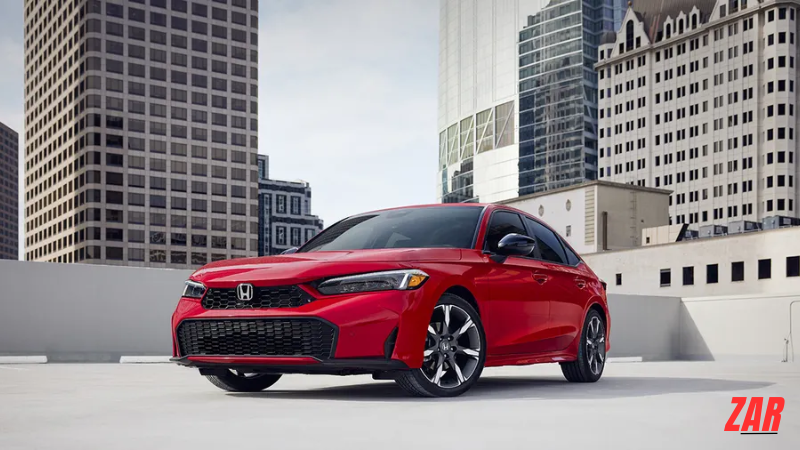
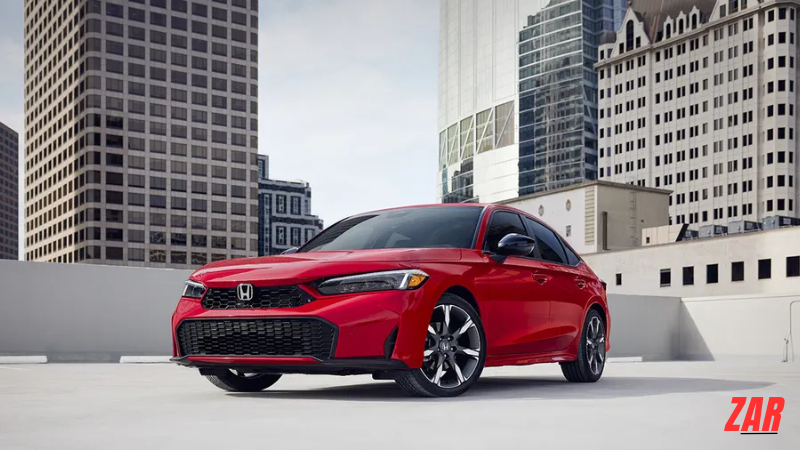
This is the 2025 Honda Civic Hybrid Sport Touring, the trim that sits at the top of Honda’s most important model line, and the one that makes the strongest case that buying a hybrid no longer means giving anything up.
In a segment where most competitors are content to offer fuel economy as the headline and leave driving dynamics as an afterthought, the Civic Hybrid Sport Touring arrives with a different proposition entirely. It is quick, connected, refined, and genuinely enjoyable to drive, attributes that used to belong exclusively to the non-hybrid Civic Si. The fact that it achieves all of this while delivering EPA-estimated fuel economy figures that leave conventional competitors standing makes it one of the more quietly compelling cars on sale in 2025.
What Makes the Sport Touring the One to Have
Honda builds the Civic Hybrid in several trim configurations, but the Sport Touring is the version that brings everything together in a way that makes compromise feel like an irrelevant concept.
The standard Sport Touring package includes a 10.2-inch touchscreen infotainment display running Honda’s latest interface, a 12-speaker Bose premium audio system, a head-up display, heated and ventilated front seats, a heated steering wheel, and wireless Apple CarPlay and Android Auto connectivity. The exterior gets 18-inch alloy wheels, a sport-tuned suspension setup, and a body kit with more aggressive front and rear fascias that visually differentiate the Sport Touring from the more conservative trims below it.
“We didn’t want drivers to look at the hybrid badge and feel like they were settling,” a Honda product planner told automotive media during the car’s development preview. “The Sport Touring is meant to show that the best version of the Civic is also the efficient one.”
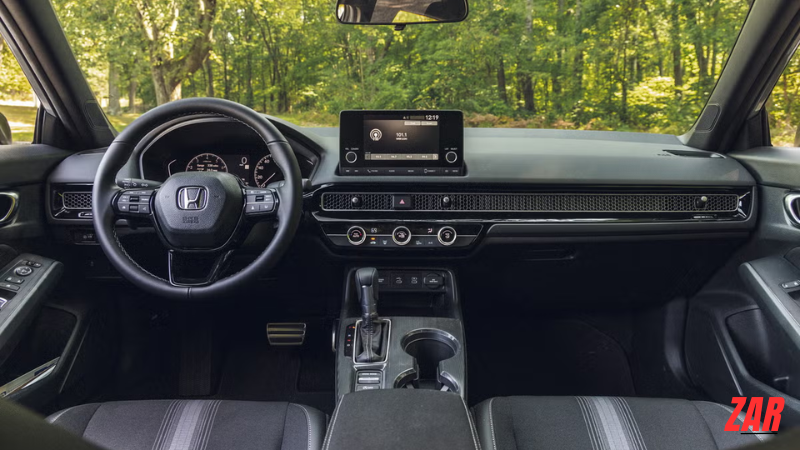
That ambition comes through clearly in the finished product. The cabin is particularly strong Honda has worked hard on material quality and noise isolation in recent Civic generations, and the Sport Touring benefits from additional acoustic glass and sound deadening that makes the interior feel more premium than the price suggests.
The Hybrid System: Where the Real Story Is
The heart of the 2025 Civic Hybrid Sport Touring is Honda’s two-motor hybrid system, a setup that operates differently from the parallel hybrid arrangements used by many competitors, and in ways that most drivers find more satisfying.
The system pairs a 2.0-liter Atkinson-cycle four-cylinder engine with two electric motors and a lithium-ion battery pack. One motor acts as a generator, one drives the front wheels, and the combustion engine contributes directly to propulsion at higher speeds when efficiency is optimal. The result is a combined system output of 200 horsepower, a figure that represents a meaningful step up from the standard Civic’s 158-horsepower turbocharged four-cylinder.
That power difference is felt immediately. The Civic Hybrid Sport Touring reaches 60 mph from rest in approximately 6.5 seconds, which places it meaningfully ahead of non-hybrid Civic trims and within range of the performance-oriented Civic Si. The electric motor’s instant torque delivery gives the car a responsiveness off the line that feels more alert than the numbers might suggest, a characteristic of well-calibrated hybrid systems that reward urban and suburban driving in particular.
What makes this setup especially clever is that Honda has tuned the transition between electric and combustion power to be almost imperceptible under normal driving conditions. There is no lurch, no hesitation, and no audible drama when the engine engages. The system manages its own logic quietly, leaving the driver to simply drive.
Fuel Economy
Honda rates the 2025 Civic Hybrid Sport Touring at 44 miles per gallon in the city, 47 on the highway, and 46 combined under EPA testing conditions. These figures are not merely competitive within the compact segment; they are exceptional by any standard that does not involve a plug-in or pure electric powertrain.
For context, the Toyota Corolla Hybrid is perhaps the most direct competitor to achieve EPA ratings of 53 city, 46 highway, and 50 combined in its LE trim, with the advantage coming primarily in city driving, where its Atkinson-cycle system is particularly efficient. Honda’s edge comes at highway speeds, where the 47 mpg rating reflects the ability to lean on combustion power efficiently during sustained cruising.
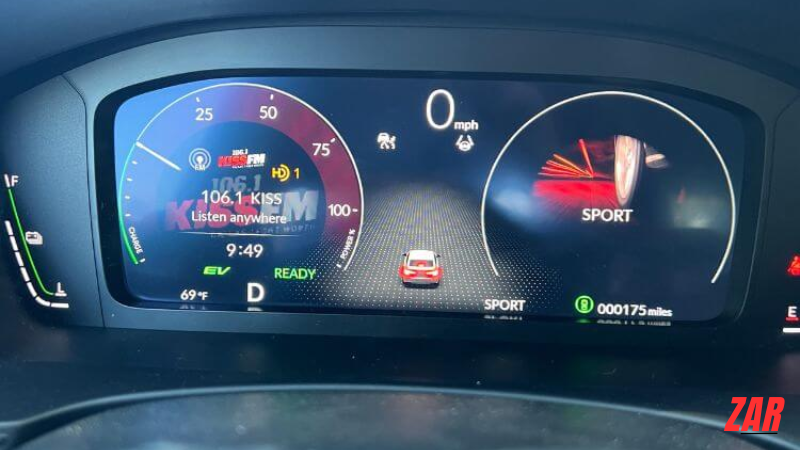
That observation captures something important about how the Sport Touring fits into daily life. Its efficiency is not something the driver has to manage or optimize, it simply happens, in the background, while the driver focuses on the road ahead.
How It Drives
The driving experience is where the 2025 Civic Hybrid Sport Touring most decisively separates itself from the hybrid mainstream. Honda’s engineers have been explicit about wanting the car to feel like a driver’s machine, and the Sport Touring’s sport-tuned suspension, variable-ratio electric power steering, and performance-oriented brake calibration reflect that intent in tangible ways.
The steering in particular deserves attention. Honda has calibrated the Sport Touring’s rack to provide more weight and feedback than the standard Civic trims, and the result is a car that communicates its front-end behavior with enough clarity to reward an engaged driver. This is not a numb, isolated commuter experience, it is a compact car that responds to driver input with something approaching enthusiasm.
The suspension walks a well-judged line between control and comfort. At motorway speeds the car is settled and quiet. In faster corners, body roll is contained without the ride becoming harsh over surface imperfections. Honda has spent considerable time calibrating this balance, and it shows in the kind of fine-grained detail that does not announce itself in a press release but becomes apparent over weeks of daily driving.
The brake, sometimes a weak point in hybrid vehicles, where the transition between regenerative and hydraulic braking can feel inconsistent, is notably well resolved in the Sport Touring. Honda’s brake-by-wire system has been tuned to deliver a progressive, natural pedal that builds resistance predictably rather than falling away abruptly.
Safety Technology
Every 2025 Civic, including the Hybrid Sport Touring, comes equipped with Honda Sensing, the brand’s suite of active safety and driver assistance technologies. The package includes adaptive cruise control with low-speed follow, collision mitigation braking with pedestrian and cyclist detection, lane keeping assist, lane departure warning, road departure mitigation, and traffic sign recognition.
In the Sport Touring, Honda Sensing has been further enhanced with Traffic Jam Assist, which adds steering support to the adaptive cruise control system in slow-moving highway traffic. This is a meaningful addition for drivers who spend significant time in congested urban or commuter environments, where the system reduces fatigue without requiring full attentiveness to be surrendered.
“Safety technology at this level used to be a luxury car feature,” noted one automotive safety analyst reviewing the 2025 lineup. “Honda has made it a compact car standard.”
The Insurance Institute for Highway Safety awarded the 2025 Civic its Top Safety Pick and designation, reflecting well-above-average performance across crash test categories. The structural engineering behind the Civic’s safety performance is not incidental. Honda has invested heavily in high-strength steel usage and occupant protection geometry across the current generation’s platform.
What It Costs and What You Get
The 2025 Honda Civic Hybrid Sport Touring carries a manufacturer’s suggested retail price of approximately $34,000 (₦46.2M) before destination and dealer fees. Within the Civic Hybrid range, which positions it as the premium option, the Hybrid Sport trim below it starts around $30,000 (₦40M), offering the same powertrain with a reduced feature set.
At $34,000, the Sport Touring occupies an interesting position in the market. It is more expensive than a comparably equipped Toyota Corolla Hybrid but offers more power, a more engaging driving experience, and a premium audio and technology specification that the Corolla does not match in its top trim. Against the Hyundai Elantra Hybrid and Kia Niro Hybrid, the Civic asks a small premium and delivers it through build quality, driving dynamics, and Honda’s long-term reliability reputation.
The total cost of ownership calculation is favorable. Fuel savings relative to a comparable non-hybrid compact compound meaningfully over three to five years of ownership. Honda’s service intervals are reasonable, the hybrid system carries an eight-year/100,000-mile battery warranty as required by federal regulation, and the Civic’s strong residual values mean that buyers who choose to sell or trade after several years will find the market more receptive than it is for most competitors.
Who Is It Actually For?
The 2025 Honda Civic Hybrid Sport Touring has a clearer audience than most cars in its segment, and the answer to the question of who it suits is, in practice, a fairly wide group.
It works exceptionally well as a primary commuter vehicle for buyers who value efficiency without wanting to sacrifice the engagement of a well-sorted compact car. It works as a practical daily driver for younger buyers entering the new car market who want technology and connectivity alongside real-world fuel savings. It works for buyers making the step from a non-hybrid Civic who want the familiar platform and reliability credentials with meaningfully better running costs.
What it is perhaps less suited to is buyers who want the outright performance focus of the Civic Si or Type R, where the chassis and powertrain are calibrated more aggressively for enthusiast driving. The Sport Touring is quick and genuinely enjoyable, but it is not a track-day machine, and it does not pretend to be one.
For most people who drive most kinds of roads, that distinction rarely matters. The Sport Touring is fast enough to feel confident in any real-world situation, efficient enough to make a measurable difference to running costs, and well-equipped enough to make every journey more comfortable than the price tag might lead you to expect.
The Hybrid That Earns Its Place at the Top
The 2025 Honda Civic Hybrid Sport Touring does not ask its driver to make a philosophical commitment to efficient motoring. It does not present itself as a vehicle of sacrifice or environmental duty. It is simply an exceptionally well-rounded compact car that happens to use significantly less fuel than most of the alternatives, and in doing so, it makes the most compelling case available in its segment for why the hybrid powertrain has moved from niche choice to genuine mainstream excellence.
Honda has been building the Civic for over five decades, and the current generation represents the clearest expression yet of what the nameplate can achieve when engineering ambition and commercial pragmatism are well aligned. The Sport Touring is the proof of that alignment in its most complete form, a car that is efficient, quick, comfortable, well-equipped, and genuinely enjoyable in a way that makes choosing anything else in the segment require a very specific set of priorities that most buyers simply do not have.