Most mechanical failures do not happen without warning. They happen because warnings were ignored, intervals were missed, or the assumption that a car running well today will continue running well tomorrow was treated as a guarantee rather than a probability. The economic logic of preventive maintenance is straightforward: a routine oil change costing ₦30,000 to ₦60,000 protects an engine that costs ₦600,000 to ₦2,500,000 to rebuild or replace with a tokunbo unit. A brake inspection that catches worn pads before they contact the rotors saves the cost of disc replacement, often ₦60,000 to ₦150,000 per axle, on top of the pad replacement that was always coming. A coolant flush costing ₦20,000 prevents the overheating event that warps a cylinder head, turning a routine service into a repair bill that starts at ₦150,000 and climbs quickly from there.
Beyond the economics, maintenance is a safety matter. Tire condition determines stopping distance and handling in emergencies. Brake performance is the primary mechanism between a driver’s reaction and a collision being avoided. Lighting failures are invisible to the driver but immediately dangerous to every other road user. These are not abstract risks; they are the physical systems that determine what happens when a vehicle is asked to perform at its limits. A car maintenance checklist turns these realities into disciplined, scheduled action rather than reactive crisis management.
Short Term Checks
These checks require no special tools, no workshop visit, and rarely more than fifteen minutes. Their value lies not in complexity but in consistency.
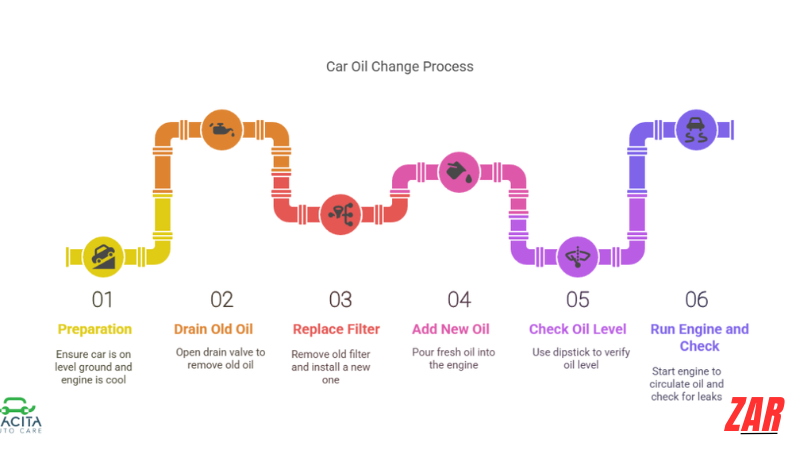
1. Engine Oil Maintenance: Checking Levels and Change Intervals
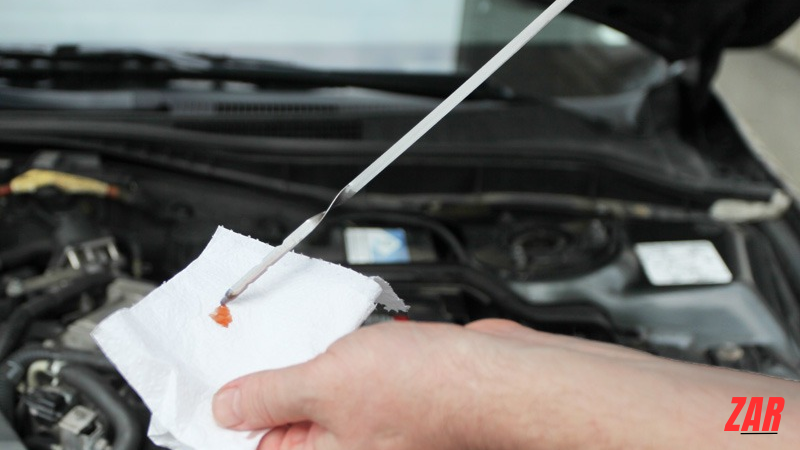
Regular engine oil maintenance is crucial for vehicle longevity and performance. Start by checking the oil level and condition with the engine cold and on level ground; oil should sit between the minimum and maximum marks on the dipstick and appear amber and translucent. If oil looks black and gritty, it’s time for a change, regardless of mileage. Modern engines, especially those using full synthetic oil, can safely go 5,000 to 10,000 miles between changes, depending on manufacturer recommendations. Always use the correct viscosity grade (e.g., 5W-30, 0W-20) to ensure proper lubrication, particularly at startup when engine wear is most significant. Regular oil changes should also include a visual inspection of belts, hoses, and fluid leaks, reinforcing the value of a trusted service relationship for your vehicle’s upkeep
2. Coolant Level
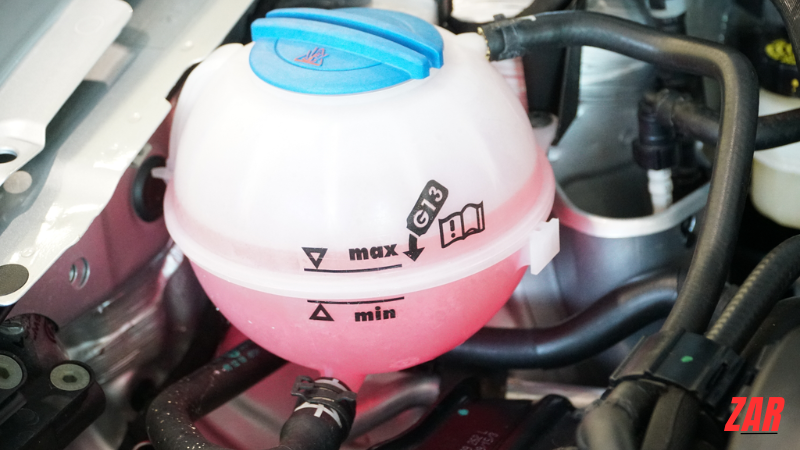
Visible through the translucent overflow reservoir without opening the radiator cap, the coolant level should sit between the minimum and maximum marks when the engine is cold. A level that drops consistently between checkpoints to either an external leak, which leaves evidence beneath the car, or an internal one, which warrants professional attention without delay.
3. Tire Pressure
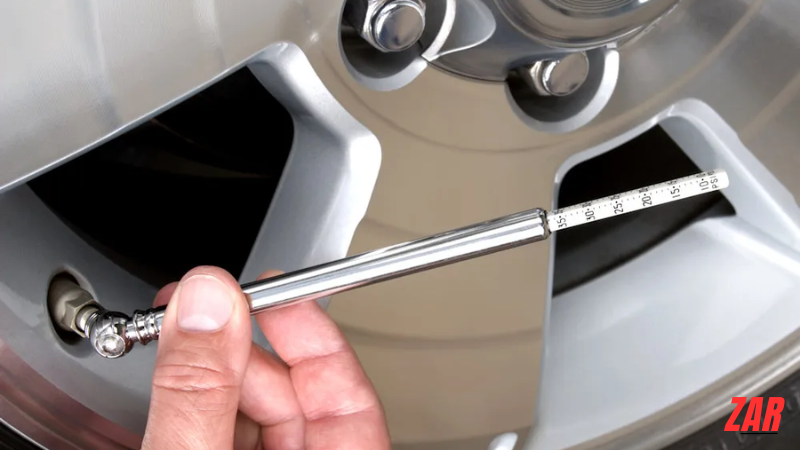
Tires lose approximately one PSI per month under normal conditions, and temperature changes accelerate that loss. Underinflated tires wear unevenly, reduce fuel economy, generate excess heat, and compromise handling in ways that only become apparent when a demanding situation exposes the deficit. The correct figures are on the sticker inside the driver’s door jamb, not the tire sidewall, which shows maximum pressure rather than the recommended operating pressure.
4. Exterior Lights and Washer Fluid
All exterior lights, headlights, taillights, brake lights, turn signals, and reverse lights should be confirmed as functioning. A failed brake light is invisible from inside the cabin but creates a genuine hazard for following traffic. Windshield washer fluid is a minor item that becomes a safety issue at exactly the wrong moment and costs almost nothing to keep full.
Mid – term Checks
These are the services most drivers defer because the car continues running without obvious symptoms, precisely why their consequences tend to arrive suddenly rather than gradually. The checks should be carried out ideally after about 15,000 to 60,000 miles.
1. Engine Air Filter
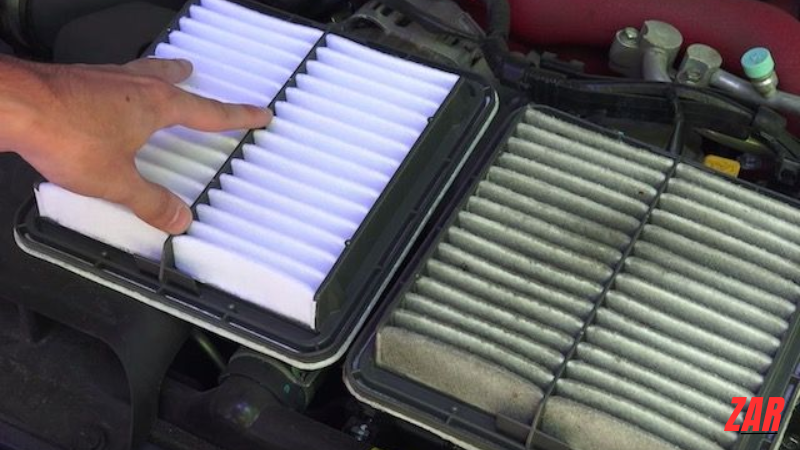
A clogged filter restricts airflow to the engine, increases the fuel-to-air ratio, and forces the engine to burn more petrol to produce the same output a meaningful concern given current fuel costs. Most filters cost between ₦5,000 and ₦20,000 and are accessible without tools. Dusty environments, Harmattan conditions, and untarred roads shorten filter life considerably, and the inspection is simple: a clean filter is light-colored and uniform, a dirty one is visibly dark with accumulated debris.
2. Cabin Air Filter
Located typically behind the glove box, the cabin filter captures dust, pollen, and particulates before they enter the passenger compartment through the HVAC system. A clogged cabin filter restricts airflow, strains the blower motor, and allows unfiltered air into the cabin, all preventable with a modest and straightforward replacement.
3. Tire Rotation
Rotation redistributes wear patterns across all four tires, particularly important on front-wheel-drive vehicles where the front tires carry both steering and power delivery loads. Moving fronts to the rear and crossing the rears to the front can extend total tire life by 20 percent or more, and at every 5,000 to 7,500 miles, it pairs naturally with oil changes.
4. Brake Inspection
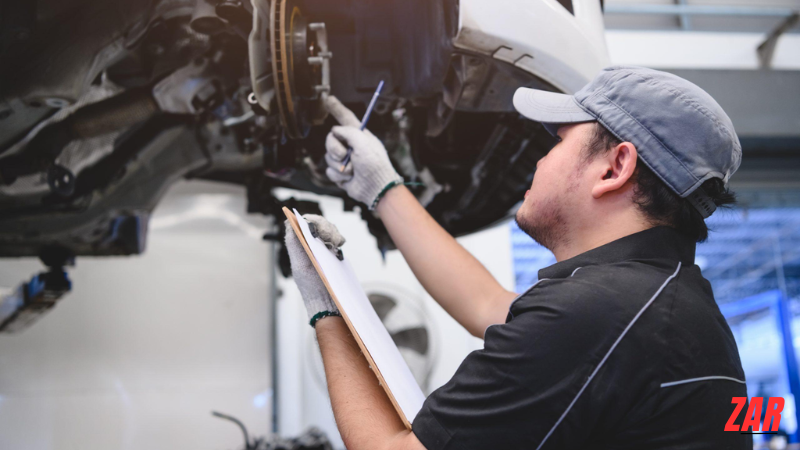
A thorough brake inspection goes beyond pad thickness to examine rotor condition for grooving or heat cracking, caliper operation for sticking or uneven clamping force, and brake lines and hoses for corrosion or swelling. Brake integrity is binary it either meets the demand placed on it, or it does not, and the cost of a thorough inspection is negligible relative to the safety value it provides.
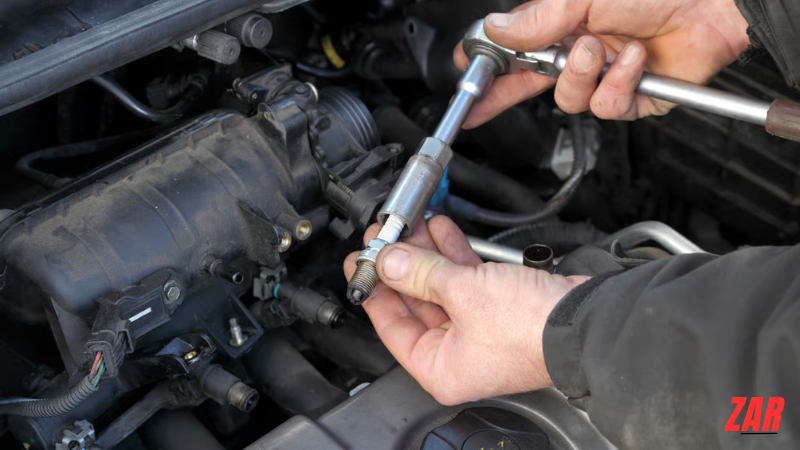
5. Spark Plug Replacement
Worn plugs misfire, increase fuel consumption, cause rough idling, and stress the catalytic converter as unburned fuel passes through the exhaust. Conventional copper-tipped plugs wear within 30,000 miles; platinum and iridium units extend service life to 60,000 or 100,000 miles. Misfires, hesitation on acceleration, and rough cold starts are the signals to watch before the interval is even reached.
6. Transmission Fluid Service
Locally referred to as changing the gear oil, this is one of the most deferred services in this mileage range. Automatic gearboxes can continue functioning even as fluid degrades, creating a false sense of security. Transmission fluid that is dark, burnt-smelling, or contaminated with metal particles signals internal wear. A fluid and filter service costs between ₦40,000 and ₦100,000 a fraction of the ₦400,000 to ₦1,500,000 cost of replacing the entire gearbox with a tokunbo unit.
7. Drive Belt Inspection and Replacement
This covers two distinct systems: the serpentine belt driving engine accessories and the timing belt or chain synchronizing internal engine components. Serpentine belt failure strands a vehicle immediately. Timing belt failure on an interference engine where pistons and valves share overlapping space kept apart only by the timing system’s precision can destroy the engine entirely within seconds. Manufacturer timing belt intervals are non-negotiable service milestones.
8. Coolant Flush
Over time, coolant accumulates acids, scale deposits, and degraded additives that compromise the cooling system’s efficiency and attack internal components. A flush also provides the opportunity to inspect hoses, the radiator cap, and thermostat function catching degradation early is far less expensive than managing the consequences of an overheating event.
Long – term checks
At higher mileage, ideally around 60,000 to 100,000 miles, maintenance attention shifts toward major components whose replacement represents a high cost that consistent care can defer but not eliminate.
1. Brake Fluid Replacement
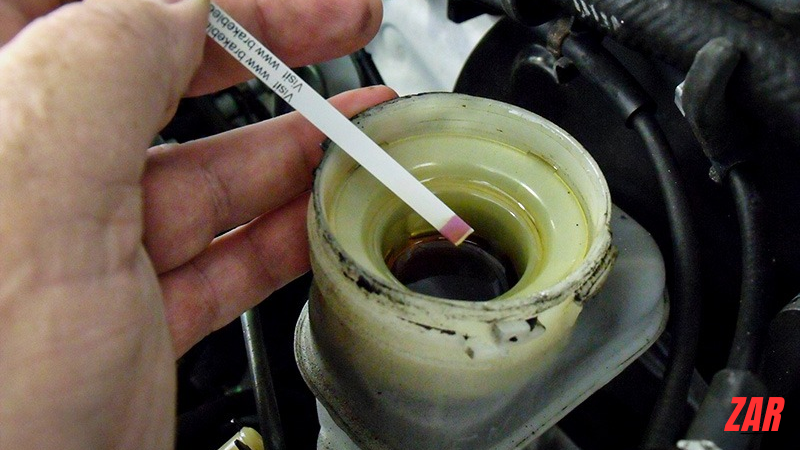
Hydraulic brake fluid is hygroscopic it actively absorbs moisture over time and moisture-contaminated fluid has a lower boiling point than fresh fluid. Under heavy braking, degraded fluid can vaporize, and since vapor compresses where hydraulic fluid does not, the result is a spongy pedal and reduced stopping force at exactly the moment maximum braking is required. Most manufacturers recommend replacement every two years regardless of mileage.
2. Wheel Bearing Inspection
A worn wheel bearing produces a characteristic humming or grinding noise that varies with vehicle speed and shifts under cornering load. Replacing a failing bearing promptly prevents secondary damage to the hub assembly, which turns a moderate repair into a significantly larger one. Wheel bearing wear becomes increasingly relevant as mileage climbs and is worth including in any thorough service inspection from this interval onward.
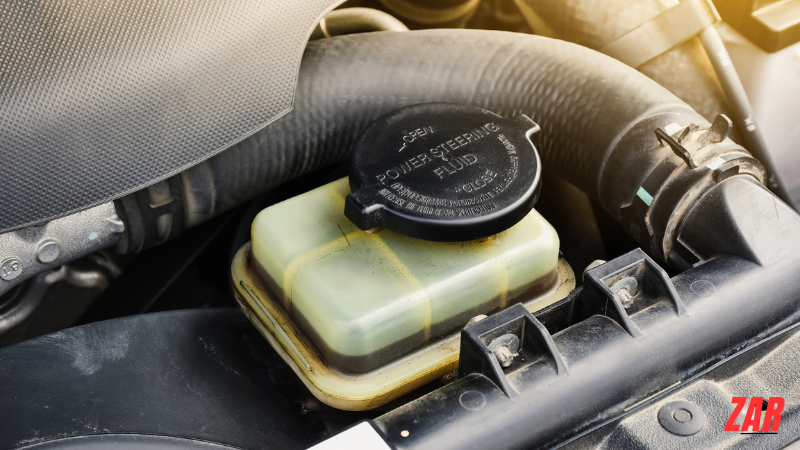
3. Power Steering Fluid Service
For vehicles with hydraulic power steering, deteriorated fluid accelerates wear in the pump and rack over time. Electric power steering systems increasingly common in newer vehicles eliminate this requirement, but older vehicles and many SUVs retain hydraulic systems that benefit from periodic fluid attention.
4. Differential and Transfer Case Fluid
Relevant primarily for four-wheel-drive and all-wheel-drive vehicles, these components operate in sealed environments where fluid is expected to last indefinitely in some manufacturers’ documentation an expectation that real-world Nigerian driving, particularly towing, off-road use, and sustained high-ambient-temperature operation, does not consistently validate. Overlooking this service on high-mileage vehicles tends to surface as expensive drivetrain repairs that a fluid change would have prevented.
Seasonal Preparation: Rainy Season and Harmattan
Beyond mileage intervals, Nigeria’s seasonal transitions create specific maintenance requirements that are straightforward to address and meaningfully protect vehicle reliability through the year’s most demanding conditions.
Rainy season preparation centers on tires, visibility, and braking. Tread depth that seems adequate in dry conditions becomes a serious hazard in heavy rain, where a tire’s ability to channel water away from the contact patch determines whether it maintains grip or hydroplanes. Fresh windshield wipers and confirmed brake pad thickness are equally critical before navigating waterlogged streets where visibility is low and sudden stops are constant.
Harmattan and dry season preparation shifts focus entirely to heat and dust management. The engine’s ability to handle sustained thermal load during hours of stop-and-go traffic under the afternoon sun depends on proper coolant concentration not plain water a functioning thermostat, and a clean radiator. Air conditioning refrigerant that has leaked down delivers poor cooling exactly when Harmattan dust makes open windows untenable. A battery voltage check with a trusted auto electrician before the peak heat months can also prevent the sudden starting failures that extreme under-hood temperatures accelerate.
Finding Reliable Maintenance Guidance for Your Car
Most vehicles on Nigerian roads arrive as tokunbo units bought used, without a service history file, and rarely with a manual. That reality does not make reliable maintenance guidance unavailable; it just requires knowing where to find it.
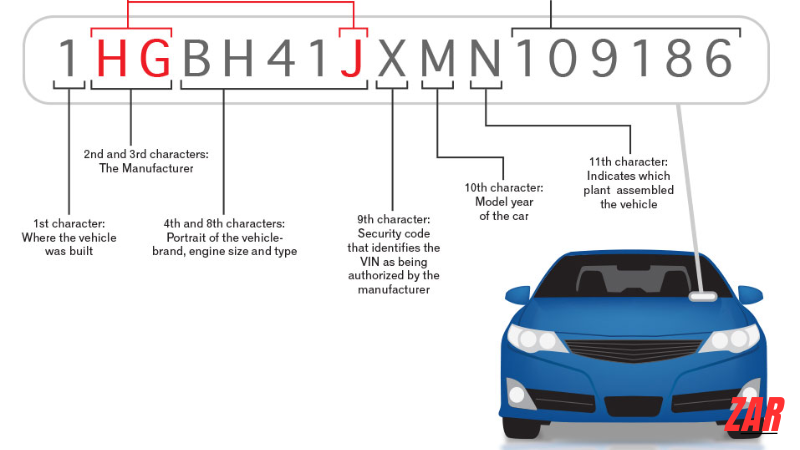
The most direct starting point is the car’s VIN the 17-character Vehicle Identification Number stamped on the dashboard and door frame. Entering it into databases like VINDecoderz or the NHTSA vehicle database returns the production year, trim level, engine specification, and often the factory maintenance schedule for that exact vehicle. From there, service intervals, fluid specifications, and timing belt schedules for virtually every common make and model are available on owner forums Toyota Nation, Honda-Tech, Nairaland’s automotive sections, and model-specific Facebook groups are all active resources where owners share maintenance timelines and flag known issues for specific production years.
The other essential resource is a mechanic who specializes in your specific make. A technician who works primarily on Toyota Camrys or Honda Accords will know the common failure points, correct fluid specifications, and service intervals for those vehicles from accumulated experience rather than guesswork. That relationship built over time and across multiple services becomes a practical substitute for the documentation that most tokunbo buyers never receive.
Conclusion
A car maintenance checklist is a structured commitment to the reality that vehicles are mechanical systems with predictable needs, and that meeting those needs consistently is the most effective thing a driver can do to protect their investment and their safety. The economics are clear: preventive maintenance costs a fraction of reactive repair. The safety logic is equally clear: a vehicle maintained to its engineering standard performs predictably when it matters most.
Find a trusted mechanic who knows your make, establish your car’s service history using the VIN and model-specific resources, document what gets done, and treat the schedule as the minimum baseline of responsible ownership. The cars that last are not the lucky ones they are the cared-for ones.