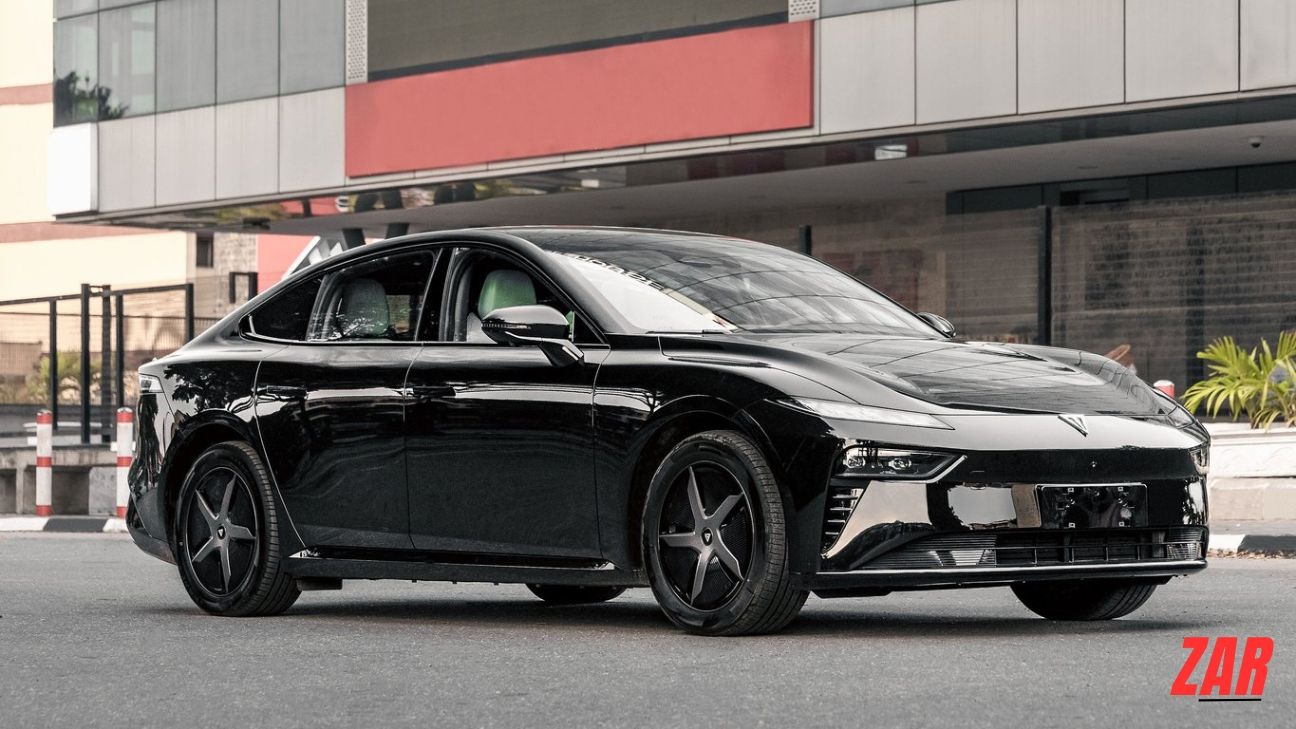
Autonomous driving just crossed a major line not in theory, but on real streets. Pony.ai has officially started fully driverless commercial operations for its Gen-7 Robotaxi fleet across China. It’s the first time the company is scaling its technology beyond pilot programs, and the numbers show this is more than just a flashy upgrade. It’s a massive cost drop, a mobility shift, and a sign that driverless vehicles are finally ready to compete with human-driven rides at scale.
On 5th November, 2025, Pony.ai switched on paid, fully driverless robotaxi rides in Guangzhou and Shenzhen, later extending service to Beijing within 24 hours. That expansion followed a full driverless permit from Shenzhen authorities in late October, the first of its kind in China allowing unrestricted, citywide robotaxi operations. Users can book rides directly through the PonyPilot+ app and ride without a single person behind the wheel. This marks the start of true autonomous mobility at scale in one of the most competitive transportation markets in the world.
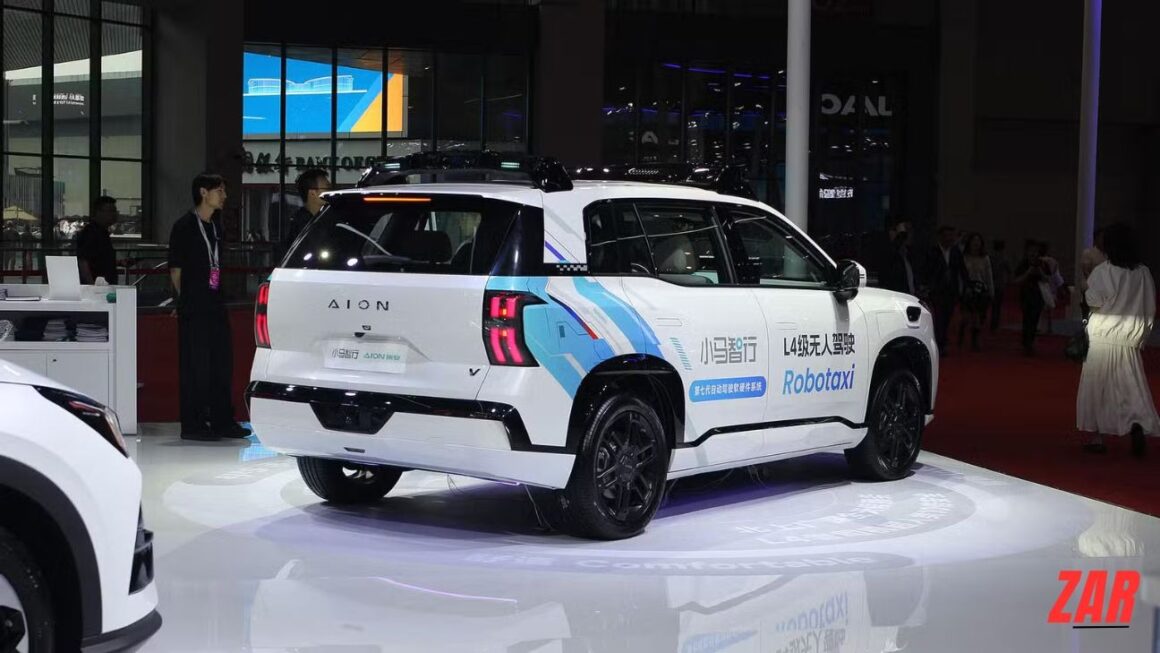
What makes this launch significant isn’t just autonomy, it’s affordability. Pony.ai’s seventh-generation autonomous driving kit (ADK) has achieved a 70% cost reduction compared to its Gen-6 model. The hardware alone tells the story: an 80% drop in computing costs, a 68% cut in solid-state LiDAR, and optimized modular design for faster manufacturing. In simple terms, the robotaxi system that once cost as much as a sports car is now cheaper than a typical family sedan. That change directly impacts pricing. Analysts expect passenger fares to fall by up to 50% as fleets expand, making driverless taxis as affordable or cheaper than current ride-hailing options.
The Gen-7 vehicles themselves are all-electric, built on proven EV platforms such as the Arcfox Alpha T5 and the second-generation GAC Aion V. Designed for a lifespan of 600,000 kilometers, these cars are built entirely with automotive-grade components, meaning they’re designed for real-world roads, not lab tests. Every part, from the compute module to the braking system, is production-grade, allowing for mass manufacturing without the reliability compromises that early prototypes faced.
Technically, the system is a powerhouse. Each vehicle runs a 34-sensor suite with nine LiDARs, fourteen cameras, and four radars providing 360-degree coverage up to 650 meters. Computing performance reaches 1016 TOPS, powered by NVIDIA Orin chips that enable real-time environmental processing and decision-making. Combined with over 3.5 million kilometers of real-world autonomous testing and 45 million kilometers of cumulative system data, Pony.ai’s software is arguably one of the most refined in the world. Unlike earlier generations, Gen-7 features a modular stack that can be integrated into different car models quickly, reducing development timelines and scaling costs.
The strategy behind this rollout is simple scale fast, lower cost, and dominate before global rivals catch up. Pony.ai’s partnerships with Toyota, BAIC, and GAC are central to this approach. These automakers provide base vehicle platforms that the company retrofits with its autonomous driving kits. Pony.ai currently operates around 720 vehicles and aims to surpass 1,000 active robotaxis by the end of 2025. This would make it one of the largest autonomous ride-hailing fleets globally, alongside Waymo and Apollo Go.
Beyond cost and scale, the human impact of this shift is already visible. Traditional drivers are being retrained as remote fleet operators, maintenance technicians, and monitoring specialists. Instead of sitting behind the wheel, they now oversee fleets from control centers, ready to intervene or monitor anomalies. Social media reactions have been largely positive.
Interestingly, data from early operations suggests that nearly half of all robotaxi rides are new trips, journeys users wouldn’t have taken otherwise. This “induced demand” means robotaxi isn’t just replacing taxis or buses; it’s expanding total mobility. More people are moving because it’s easier, cheaper, and more accessible. That aligns with the broader vision of Mobility-as-a-Service (MaaS), where transportation becomes an on-demand utility rather than a personal asset.
The global context matters too. While Waymo continues scaling cautiously across Phoenix and San Francisco, Pony.ai is already operational in all four of China’s Tier-1 cities Beijing, Shanghai, Guangzhou, and Shenzhen. Its cost structure gives it a massive advantage in profitability and accessibility. Western competitors often focus on safety validation and regulation, while Pony.ai benefits from an environment that actively supports mass adoption. That’s why its Gen-7 rollout is not just a tech milestone but a business one; the company is proving that autonomy can make money.
This milestone also hints at where mobility jobs are heading. As the need for on-road drivers decreases, demand for high-skill tech and maintenance roles rises. Fleet managers, AI trainers, systems engineers, and urban data analysts become the backbone of the new ecosystem. The transportation job market is shifting from muscle to microchip.
Pony.ai’s path to the U.S. market remains open but undefined. Trials are still targeted for 2026, though no specific timeline has been confirmed. For now, the company’s priority is clear, scale its domestic dominance and make driverless rides a daily habit for millions.
With China’s EV ecosystem maturing and local governments offering aggressive regulatory backing, the stage is set for an acceleration unlike any seen in mobility tech. Pony.ai’s Gen-7 fleet could redefine not only how we move but who controls the economics of that movement. By cutting costs, boosting reliability, and improving accessibility, Pony.ai has positioned itself as the benchmark for practical autonomy.
Autonomous driving has been talked about for years but this launch marks the moment it becomes real. Pony.ai isn’t experimenting anymore; it’s operating, earning, and expanding. The real question is no longer whether fully driverless cars can work, it’s how fast they’ll take over.