

If you are searching for the Toyota Highlander 2010 price in Nigeria, you can expect to spend around ₦8 million to ₦13 million for a Nigerian-used model, while a clean foreign-used (Tokunbo) example can cost approximately ₦12 million to ₦18 million in September 2026. The actual price depends on mileage, condition, trim, engine, drivetrain, accident history and documentation.
The 2010 Toyota Highlander remains popular among Nigerian families because it combines the comfort of a large family vehicle with the practicality of an SUV. It offers three-row seating, good road clearance and a strong V6 engine, although fuel consumption is considerably higher than what you would get from a Corolla or Camry.
Toyota Highlander 2010 Price in Nigeria
The current price of a Nigerian-used Toyota Highlander 2010 is generally around ₦8 million to ₦13 million, with many clean examples selling or being advertised around ₦9.5 million to ₦11.5 million.
Foreign-used or Tokunbo models are more expensive. You should budget approximately ₦12 million to ₦18 million, while a clean, low-mileage example can sit around ₦13.5 million to ₦16 million.
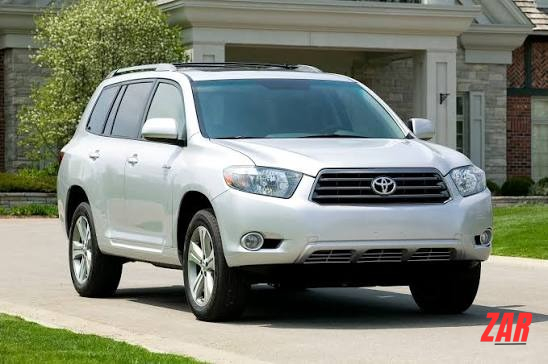
Limited and Sport trims can command more money, particularly when they have leather seats, sunroof, upgraded wheels and other desirable equipment. Very clean low-mileage examples can reach ₦16 million to ₦18 million.
Overall, a realistic budget for a good 2010 Highlander in Nigeria is around ₦11 million to ₦15 million. However, these are market guide figures rather than fixed prices. A vehicle with excellent maintenance history can be worth more than another Highlander with the same model year but poor mechanical condition.
Location can also affect asking prices. Lagos and Abuja have large used-car markets, but prices can vary considerably between individual sellers.
What Makes the 2010 Toyota Highlander Popular?
The 2010 Highlander belongs to the second generation of the model, which was redesigned for the 2008 model year. It was developed as a family-focused midsize SUV with three-row seating, a comfortable ride and available four-wheel drive.
One of its biggest attractions is the V6 engine. The 3.5-litre V6 produces 270 horsepower and 248 lb-ft of torque, giving the Highlander enough power for highway journeys, carrying passengers and climbing hills. Toyota’s official 2010 Highlander information confirms the 270-horsepower V6, the available 2.7-litre four-cylinder engine and the different trim configurations offered for the model year.
The Highlander is also relatively easy to live with compared with some larger SUVs. It provides good visibility, comfortable seating and enough space for family use without being as enormous as a full-size SUV.
Toyota Highlander 2010 Engine and Performance
The 2010 Highlander was available with a 2.7-litre four-cylinder engine producing 187 horsepower and a 3.5-litre V6 producing 270 horsepower.
The four-cylinder is paired with a six-speed automatic transmission, while the V6 uses a five-speed automatic. Front-wheel drive is available, while four-wheel drive can be found on selected versions.
According to the 2010 Toyota Highlander review and specifications from Edmunds, the V6 produces 270 hp and 248 lb-ft of torque, while properly equipped V6 models can tow up to 5,000 pounds.
For Nigerian buyers, the 3.5-litre V6 is generally the more attractive option if performance is important. The extra power makes the SUV feel less strained when carrying several passengers or travelling long distances.
The four-cylinder can save fuel, but the Highlander is a fairly large vehicle, so buyers should not expect Corolla-like fuel economy from either engine.
Toyota Highlander 2010 Fuel Economy in Nigeria
Fuel consumption is one area where you need to be realistic before buying a Highlander.
In Nigerian driving conditions, a properly maintained 2.7-litre four-cylinder can return roughly 7–9 km/L in city driving, around 10–12 km/L on the highway, and approximately 8–10 km/L combined.
The 3.5-litre V6 generally consumes more fuel, with around 6–8 km/L in city traffic, approximately 9–11 km/L on the highway and about 7–9.5 km/L combined, depending on traffic, air-conditioning use, road conditions and driving style.
Official US testing gives the V6 better fuel-economy figures under controlled conditions. Edmunds lists the front-wheel-drive V6 at approximately 18 mpg city, 24 mpg highway and 20 mpg combined, while all-wheel-drive versions are slightly less efficient.
That difference is important for Nigerian buyers because Lagos traffic, frequent air-conditioning use and stop-and-go driving can push real-world consumption below official laboratory figures.
Interior Space and Comfort
The 2010 Highlander’s interior is one of its strongest selling points. Depending on configuration, it can accommodate up to seven passengers, making it suitable for larger Nigerian families.
The first two rows provide useful passenger space, while the third row gives you additional seating when needed. With all seats occupied, boot space is limited, but folding the rear seats creates considerably more room for luggage.
Toyota’s original specifications describe the second-generation Highlander as having a more spacious and versatile cabin, with seating for seven and up to 95.4 cubic feet of total cargo capacity. Toyota’s original 2010 Highlander overview
The cabin is also designed more for comfort than aggressive driving. The ride is generally smooth, which makes the Highlander useful for interstate journeys.
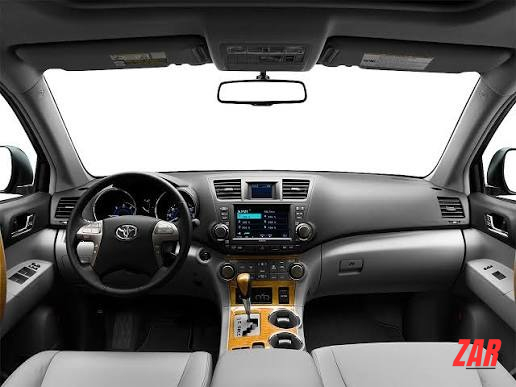
Higher trims such as the Limited can have leather upholstery, upgraded audio equipment, power seats, sunroof and additional convenience features. However, equipment varies, so inspect the exact vehicle before assuming it has every feature associated with the trim name.
Is the 2010 Highlander Good for Nigerian Roads?
The Highlander can be a practical choice for Nigerian roads because it offers useful ground clearance and a comfortable suspension.
The second-generation Highlander uses independent suspension and was designed around a comfortable ride. Toyota also equipped four-wheel-drive versions with additional traction and downhill-control features, which can be useful in difficult driving conditions.
However, good ground clearance does not mean you should drive carelessly over potholes and speed bumps. A 2010 vehicle is now around 16 years old, meaning suspension components may already have experienced significant wear.
Before buying, inspect the shocks, bushes, stabiliser links, steering components, wheel bearings and tyres. Also check underneath the vehicle for signs of impact damage or poor repairs.
If you frequently travel between cities, the Highlander’s combination of seating capacity, comfort and highway performance can be particularly useful.
Common Problems With the 2010 Toyota Highlander
The biggest concern with a 2010 Highlander today is age. Even a reliable Toyota can develop problems after years of use.
Suspension wear is one of the first things to inspect. Listen for knocking or rattling sounds when driving over rough roads. Uneven tyre wear can also indicate alignment, suspension or steering problems.
The V6 engine should be checked for oil leaks and other signs of poor maintenance. Start the vehicle from cold if possible and watch for excessive smoke, unusual noises or warning lights.
The automatic transmission should shift smoothly. During the test drive, pay attention to delayed engagement, harsh shifting, slipping or unusual noises.
The air-conditioning system also deserves serious attention in Nigeria. Test both the front and rear vents where fitted and allow the system to operate for several minutes while the vehicle is stationary. A weak AC system can become an expensive repair.
Also inspect the electrical systems, power windows, dashboard controls, cameras, sensors and other accessories before paying.
Safety of the 2010 Toyota Highlander
The 2010 Highlander was equipped with a range of standard safety features, including multiple airbags, stability control and traction-control systems. Toyota’s original specifications state that the model came with seven airbags, including front-seat side airbags, a driver’s knee airbag and roll-sensing side curtain airbags covering the three rows.
The Highlander also performed well in several crashworthiness evaluations for this generation. The IIHS safety ratings for the 2008–2013 Toyota Highlander show Good ratings in the original moderate-overlap front test, side test, roof-strength test and head-restraint evaluation. These ratings apply to the relevant 2008–2013 generation.
Still, remember that modern safety technology has advanced significantly since 2010. A used Highlander should therefore be inspected for previous accident repairs and airbag deployment.
Check the dashboard for warning lights and have a qualified technician scan the vehicle before completing the purchase.
Nigerian Used vs Tokunbo Highlander 2010
A Nigerian-used Highlander can be considerably cheaper than a Tokunbo model, but you should focus on condition rather than the label attached to the vehicle.
A well-maintained Nigerian-used Highlander with proper service records can be a better purchase than an imported vehicle that has previously suffered major accident or flood damage.
Tokunbo models can offer lower mileage and less exposure to Nigerian roads, but they are not automatically problem-free. Imported vehicles should still undergo a proper inspection and history check.
Before paying, verify the VIN, ownership documents and customs documentation. Do not rely solely on photographs or a seller’s claims about the vehicle’s history.
Maintenance and Spare Parts in Nigeria
The Toyota name gives the Highlander an advantage in Nigeria because mechanics are generally familiar with Toyota vehicles and replacement parts are available through different channels.
Toyota Nigeria states that its parts department provides genuine Toyota spare parts for vehicles imported and marketed by the company. The company also explains that it can supply or order parts for some Toyota vehicles outside its assigned model lines, including models such as the Highlander, under special arrangements. Toyota Nigeria’s genuine parts information
This is useful for Highlander owners because the 2010 model was primarily sold in markets such as North America rather than being one of Toyota Nigeria’s main model lines.
Toyota Nigeria also recommends obtaining genuine spare parts through its accredited dealers and notes that the VIN is important when identifying the correct part for a particular vehicle. Toyota Nigeria’s official parts and service FAQ
For a 2010 Highlander, servicing should include the correct engine oil, filters, transmission fluid and other manufacturer-specified maintenance items. After buying a used example, it is sensible to perform a comprehensive service so you know exactly when your maintenance schedule begins.
Which 2010 Highlander Should You Buy?
For buyers who prioritise performance and regularly carry passengers, the 3.5-litre V6 is the more capable option. Its 270 horsepower gives it considerably more power than the four-cylinder.
The 2.7-litre four-cylinder makes more sense for someone who wants to reduce fuel consumption and does not need strong acceleration. However, you should still remember that the Highlander is a relatively heavy SUV.
If your budget allows, a clean Limited or Sport model with good maintenance history can offer more equipment and comfort. But do not buy a higher trim simply because it looks better. Mechanical condition should remain the priority.
What to Check Before Buying a 2010 Highlander
Start by checking the VIN and ensuring it matches the vehicle documents. Inspect the engine, transmission, suspension, tyres, brakes and underbody.
For a four-wheel-drive model, pay particular attention to the drivetrain. Test the vehicle at different speeds and listen for unusual noises or vibrations.
Check the air conditioner thoroughly, including rear cooling where fitted. Test the windows, seats, infotainment system, lights, cameras and other electrical equipment.
The vehicle should also be inspected for accident repairs. Check panel gaps, paint differences, chassis areas and the boot floor for evidence of previous damage.
Finally, take the Highlander to an independent mechanic before making payment. A professional inspection is particularly important when buying a 16-year-old SUV because seemingly minor issues can quickly become expensive.
Should You Buy a Toyota Highlander 2010 in 2026?
The Toyota Highlander 2010 remains relevant for Nigerian buyers who need a spacious family SUV without moving into the much more expensive newer SUV market.
Its strongest qualities are its comfortable ride, spacious cabin, capable V6 engine, useful ground clearance and established Toyota reputation. The main disadvantages are fuel consumption, age-related wear and potentially higher maintenance costs compared with smaller Toyota models.
If your budget is around ₦9.5 million to ₦11.5 million, you can look for a clean Nigerian-used example. If you have around ₦13.5 million to ₦16 million, you can target a cleaner Tokunbo unit. Exceptionally clean, low-mileage examples and well-equipped trims can reach ₦16 million to ₦18 million.
The key is not simply finding the cheapest Highlander. Find one with a healthy engine, smooth transmission, functioning AC, good suspension and verifiable documentation.
Final Thoughts
The Toyota Highlander 2010 price in Nigeria currently ranges from about ₦8 million to ₦13 million for Nigerian-used models, while Tokunbo examples generally cost around ₦12 million to ₦18 million. Clean, low-mileage models and higher trims can reach approximately ₦16 million to ₦18 million.
The 2010 Highlander makes sense for buyers who need space, comfort and SUV practicality. Its V6 engine provides strong performance, while the available three-row configuration makes it useful for families.
However, remember that you are buying a vehicle that is now around 16 years old. The condition of the particular Highlander matters far more than the Toyota badge. A properly inspected and maintained example can still serve you well, while a neglected one can quickly turn a seemingly affordable purchase into an expensive repair project.