

If you are searching for the Toyota Matrix price in Nigeria, you are probably looking for something practical, affordable and easy to maintain without spending SUV money. The Toyota Matrix is a compact five-door hatchback that combines the mechanical simplicity of a Toyota with more cargo space than a conventional Corolla sedan.
As of September 2026, a Toyota Matrix can cost anywhere from about ₦2.5 million to over ₦13 million in Nigeria, depending heavily on the model year, condition, mileage, trim and whether the car is Nigerian used or Tokunbo. Older Nigerian-used examples are the cheapest, while clean Tokunbo models from the later years command considerably more.
The Matrix was discontinued after the 2013 model year, so every Matrix you see in Nigeria today is a used vehicle. Toyota itself confirms that the Matrix was discontinued in 2014.
Toyota Matrix Price in Nigeria in 2026
The price of a Toyota Matrix in Nigeria varies significantly because the model has been off the market for years and available cars differ greatly in condition.
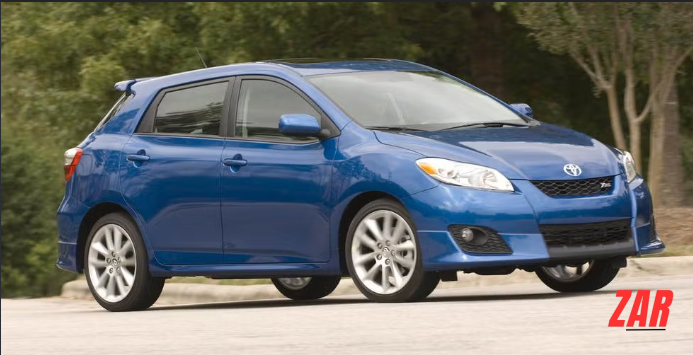
A 2003–2007 Nigerian-used Toyota Matrix currently falls around ₦2.5 million to ₦5.5 million, with many reasonably clean examples advertised around ₦3.5 million to ₦4.5 million.
For a 2008–2010 Nigerian-used Matrix, expect roughly ₦4.5 million to ₦8 million, while a typical asking price sits around ₦5.5 million to ₦7 million.
A 2008–2010 Tokunbo Toyota Matrix can cost around ₦6 million to ₦10 million, with clean examples commonly advertised around ₦7.5 million to ₦9 million. Later 2011–2013 Tokunbo models can reach approximately ₦9 million to ₦13.5 million, depending on mileage and condition.
Across the wider market, an average Toyota Matrix asking price can sit around ₦4 million to ₦7.5 million, although particularly clean late-model Tokunbo examples can go considerably higher. Prices also vary between Lagos, Abuja, Port Harcourt and other Nigerian markets, so treat these figures as market guidance rather than a fixed dealership price.
What Kind of Car Is the Toyota Matrix?
The Toyota Matrix is essentially a compact hatchback/wagon designed to give buyers more practicality than a traditional small sedan. It has five seats, a tall roofline and a rear cargo area that makes it useful for people who carry luggage, groceries, work equipment or other items regularly.

The second-generation Matrix, introduced for 2009, received a redesigned exterior and interior, more powertrain choices and improved safety equipment. Toyota described it as a five-door crossover-style vehicle with an emphasis on cargo utility and everyday practicality.
The Matrix was closely related to Toyota’s Corolla family, which is one reason it has remained attractive in used-car markets. However, you should not assume every component is identical to a Corolla simply because the two models share engineering. Parts availability and prices can depend on the specific year and engine.
Toyota Matrix Engine and Performance
The most common engine you will encounter is the 1.8-litre four-cylinder petrol engine. In the second-generation Matrix, this engine produced about 132 horsepower and 128 lb-ft of torque. Toyota paired it with either a five-speed manual or four-speed automatic depending on configuration.
There was also a 2.4-litre four-cylinder engine, mainly found in higher-performance S and XRS versions. It produced approximately 158 horsepower and 162 lb-ft of torque. Some versions were available with a five-speed automatic or manual transmission, while the AWD S used a four-speed automatic.
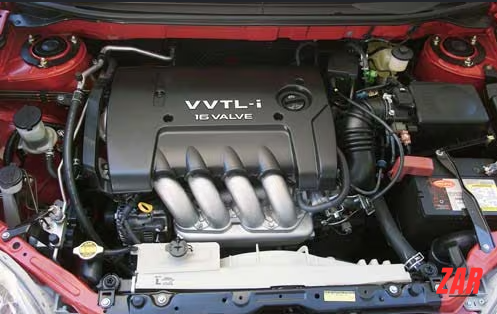
For normal Nigerian city driving, the 1.8-litre is generally the more economical choice. The 2.4-litre gives you stronger acceleration, but it also consumes more fuel. If your priority is keeping running costs under control, the condition of the 1.8-litre engine may matter more than chasing the larger engine.
Fuel Economy of the Toyota Matrix in Nigeria
Fuel economy is one of the reasons the Matrix can make sense for Nigerian buyers who want a practical vehicle without moving into a larger SUV.
In real Nigerian driving conditions, a reasonably maintained 1.8-litre Matrix can return roughly 10–13 km/L in city driving and around 13–16 km/L on longer highway journeys. A realistic combined range is approximately 11.5–14.5 km/L, although traffic, air-conditioning use, tyre pressure, engine condition and driving style can move these figures considerably.
Official EPA figures for the second-generation 1.8-litre Matrix were around 25–26 mpg in city driving and 31–32 mpg on the highway, depending on transmission. The 2.4-litre models consumed more fuel, particularly in AWD form.
In Lagos traffic, do not expect highway fuel economy. Stop-and-go traffic, frequent acceleration and heavy air-conditioner use can push consumption noticeably higher.
Exterior Design and Practicality
The Matrix does not look like a modern SUV, and that is part of its character. It has a compact hatchback shape with a relatively tall roof and a practical rear section.
The second-generation model has a sportier, more angular appearance than the earlier Matrix. Toyota lowered and reshaped the body while maintaining the vehicle’s practical interior layout. Depending on trim, you could also get larger wheels, spoilers, fog lamps and other styling differences.
Its compact dimensions are useful in busy Nigerian cities because it is easier to manoeuvre and park than many midsize SUVs. The trade-off is ground clearance. If you regularly drive badly damaged roads, deep potholes or rough unpaved routes, you need to pay close attention to the suspension and underbody.
Interior, Comfort and Cargo Space
Inside, the Toyota Matrix is more about usefulness than luxury. You get seating for five people and a flexible rear area that can accommodate considerably more luggage than the boot of a conventional sedan.
The second-generation Matrix has approximately 19.8 cubic feet of cargo space, according to Edmunds, while its rear seats can be folded to increase carrying capacity.
This makes the Matrix particularly useful for students, young families, small-business owners and city drivers who occasionally need to transport bulky items.
Do not expect the cabin technology or materials to feel like those of a newer 2020s vehicle. Many Matrix examples in Nigeria are already more than a decade old, so the condition of the dashboard, seats, door panels, air-conditioning system and electrical components can vary significantly.
Technology and Safety
Technology depends heavily on the model year and trim. Some later Matrix versions could be equipped with features such as steering-wheel audio controls, cruise control, upgraded audio systems, Bluetooth and other convenience equipment.
Safety equipment also improved on later versions. Toyota states that the 2010 Matrix received standard Vehicle Stability Control and traction control, alongside features including ABS, Electronic Brake-force Distribution and Brake Assist.
However, when buying a used Matrix in Nigeria, do not judge safety equipment simply by the model name. Check the exact vehicle, trim and market specification. Also inspect the airbag system carefully, particularly on cars that have previously been involved in accidents.
How Does the Toyota Matrix Handle Nigerian Roads?
The Matrix is primarily a city and highway vehicle rather than a serious off-road machine. Its compact body makes it comfortable to drive around urban areas, while the hatchback layout gives you useful cargo flexibility.
The biggest concern on Nigerian roads is suspension wear. Repeatedly hitting potholes and rough surfaces can affect bushes, stabiliser links, shock absorbers, steering components, wheel bearings and other underbody parts.
That does not mean the Matrix cannot handle Nigerian roads. It simply means you should inspect the suspension carefully before buying. A cheap Matrix with worn suspension can quickly become expensive once you start replacing several components.
Common Toyota Matrix Problems
Age is now a bigger concern than the original design of the Matrix. Even a reliable Toyota can develop problems after many years of use.
Suspension wear is common on older vehicles, particularly those that have spent years on rough roads. Look for knocking sounds, excessive bouncing, uneven tyre wear or steering that feels loose.
High-mileage engines can also develop oil leaks or consume oil. Before purchasing, inspect around the engine and underneath the vehicle for signs of leakage.
The automatic transmission deserves attention as well. Hesitation, harsh shifting, delayed engagement or unusual noises should not be ignored. A proper diagnostic inspection and road test can reveal problems that are not obvious when the vehicle is parked.
Air-conditioning performance is another important Nigerian check. Make sure the system produces genuinely cold air and that the compressor engages properly. Also test the windows, central locking, lights, dashboard electronics and other electrical components.
Rust and accident repairs should be checked carefully, particularly on older Nigerian-used vehicles.
Maintenance and Spare Parts in Nigeria
One of the Matrix’s biggest attractions is its Toyota mechanical heritage. Many replacement components are available through Nigeria’s large network of Toyota-focused mechanics and spare-parts dealers.
However, “Toyota” does not automatically mean every part will be cheap. Some Matrix-specific body panels, interior components and less-common parts can cost more or require additional searching compared with popular Nigerian models such as the Corolla and Camry.
Routine servicing should include engine oil, filters, spark plugs where applicable, transmission fluid, brake components, coolant and suspension inspection. A used Matrix that has just arrived from abroad should still receive a proper baseline service rather than being driven indefinitely on the previous owner’s maintenance schedule.
You can also check Toyota Nigeria for official Toyota information and local service-related resources.
Nigerian Used or Tokunbo Toyota Matrix?
The choice between Nigerian used and Tokunbo depends largely on the individual vehicle rather than the label.
A Nigerian-used Matrix can be considerably cheaper and may already have parts and maintenance history in Nigeria. The downside is that some examples have high mileage, accident history, neglected suspension or poorly repaired mechanical problems.
A Tokunbo Matrix can offer cleaner bodywork and a better-maintained interior, but you still need an independent inspection. Import history, auction condition, previous accident damage and mileage should all be verified.
Do not pay a premium simply because a seller calls a car “Tokunbo”. Condition and documentation matter more than the sales description.
What to Check Before Buying a Toyota Matrix
Before handing over your money, inspect the engine for leaks, excessive smoke and unusual noises. Check the transmission during both cold and warm driving, because some problems become more noticeable after the vehicle reaches operating temperature.
Pay particular attention to the suspension and underbody. Listen for knocking over uneven surfaces and inspect the shocks, bushes, links, steering components and exhaust system.
The air conditioner should be tested thoroughly, especially in Nigeria’s hot climate. Check the cooling system, radiator, fans and temperature gauge as well.
You should also inspect the VIN and available ownership documents and confirm that the vehicle’s history is consistent with what the seller is telling you. For imported vehicles, information from the Nigeria Customs Service can also be useful when dealing with import and customs-related documentation.
Most importantly, have an experienced mechanic inspect the car independently before payment. A pre-purchase inspection can reveal problems that are easy to miss during a short test drive.
Toyota Matrix Resale Value in Nigeria
The Matrix does not have the same level of demand as the Corolla or Camry, but its practicality and Toyota badge still give it a market among buyers looking for affordable used cars.
Resale value will depend heavily on condition, engine health, transmission performance, mileage, documentation and appearance. A clean Matrix with good maintenance history will generally be easier to sell than a cheaper example that needs suspension, bodywork and engine repairs.
The availability of Toyota specialists in Nigeria also helps owners keep these vehicles on the road for longer.
Is the Toyota Matrix Worth Buying in 2026?
The Toyota Matrix remains relevant for a particular type of Nigerian buyer: someone who wants a compact, economical and practical car with more cargo flexibility than a conventional sedan.
Its biggest advantage is the combination of a compact footprint, five-seat cabin and useful hatchback cargo area. The 1.8-litre engine can also provide reasonable fuel economy, while the 2.4-litre version offers stronger performance.
The main issue is age. There is no new Matrix to buy, and even the newest examples are now more than a decade old. That means conditions should be your priority. A well-maintained older Matrix can make more sense than a neglected car that looks cheap at first but needs extensive repairs.
If you are shopping for one, compare several examples, inspect them independently and calculate the purchase price together with immediate maintenance costs.
Final Thoughts
The Toyota Matrix price in Nigeria currently ranges from roughly ₦2.5 million for older Nigerian-used examples to more than ₦13 million for clean later Tokunbo models. The exact amount depends on year, mileage, condition, trim, documentation and location.
For buyers on a tighter budget, the older 1.8-litre models can provide an affordable entry into Toyota ownership. Buyers with a larger budget may prefer a cleaner 2009–2013 example because of the newer design, improved equipment and more modern safety features.
The Matrix may not have the road presence of a Highlander or the popularity of a Corolla, but its combination of compact size, five-seat practicality, cargo space and Toyota engineering continues to give it a place in Nigeria’s used-car market.