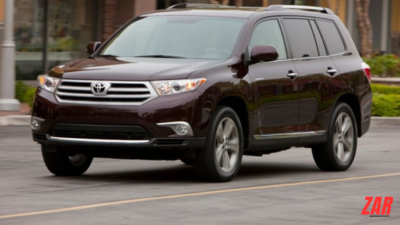
Few midsize crossovers in the Nigerian used-car market combine premium cabin quality, genuine practicality, and Toyota’s legendary mechanical durability as convincingly as the Venza. From Lekki to Maitama, it occupies a specific and well-earned position as the crossover for the established professional who wants genuine comfort and a distinctive silhouette without the maintenance anxiety of a European alternative. Spanning an incredibly wide price range in 2026, buyers can find clean 2010 Tokunbo examples under ₦15M or emerging second-generation hybrid imports pushing past ₦70M. Understanding what drives those enormous differences across two fundamentally different generations, multiple powertrain options, and a rapidly shifting fuel cost environment is the entire point of this guide.
The Venza’s dominance in its segment rests on three pillars perfectly suited for local ownership. Its Toyota mechanical foundation means parts are available everywhere, mechanics know the engines intimately, and reliability is genuinely proven across hundreds of thousands of kilometres on Nigerian roads. Its suspension is calibrated for ride comfort rather than sporting pretension, absorbing Lagos potholes and flooding with impressive composure that stiffer rivals consistently fail to match. And its interior quality punches meaningfully above its price point, delivering a near-luxury cabin experience that competing vehicles at similar cost genuinely cannot replicate. These three qualities, combined with a strong resale value track record, explain why the Venza remains one of the most consistently recommended used crossover purchases across every major Nigerian car platform today.
Toyota Venza Generations in Nigeria
First Generation (2009–2015)
The first generation accounts for over 90 percent of every Venza on Nigerian roads today, and for entirely valid reasons. Built on a platform shared with the Camry and Highlander, it offered buyers a genuine choice between a 2.7-litre four-cylinder producing adequate power for urban use and a more commanding 3.5-litre V6 delivering the effortless highway authority that Nigerian buyers specifically seek. AWD variants widely listed as “full option” across Jiji and Autochek remain the most desirable configurations, providing a meaningful traction advantage during the rainy season flooding that tests Lagos roads every year.

The interior set this vehicle apart from the moment it launched. Leather seating, a panoramic roof on Limited trims, dual-zone climate control, and a level of material quality typically associated with more expensive nameplates gave it an immediate premium identity that resonated strongly with the Nigerian professional market. The cabin remains genuinely comfortable on long inter-city runs, and the wide stance delivers a planted, confident road feel that smaller crossovers at similar prices cannot replicate.

Reliability has proven excellent across this generation, with the V6 in particular demonstrating the kind of long-term mechanical durability that earns a vehicle a permanent place in the Nigerian market consciousness. Parts availability is outstanding; the shared Toyota parts ecosystem means components are accessible in virtually every major market in Lagos, Abuja, and Port Harcourt. Currently in the 2026 market, clean 2009 to 2010 models range from ₦8M to ₦14M, 2011 to 2012 examples command ₦12M to ₦20M, and well-preserved 2013 to 2015 Tokunbo models sit between ₦18M and ₦26M.
Second Generation Hybrid (2021–2024)
The second-generation Venza arrived as a fundamentally different proposition hybrid-only, considerably more technology-forward, and aimed squarely at buyers willing to pay a meaningful premium for modern efficiency and a genuinely contemporary interior. Toyota paired a 2.5-litre four-cylinder with three electric motors for a combined 219 horsepower, achieving a real-world fuel economy of approximately 35 to 40 kilometres per litre, a figure that becomes deeply compelling against current petrol prices of ₦1,227 to ₦1,360 per litre.

The interior takes another step forward in quality, featuring a 12.3-inch touchscreen on XLE and above, heated and ventilated front seats, wireless Apple CarPlay and Android Auto, a panoramic glass roof, and available JBL premium audio on Limited trims. The 360-degree camera system and full Toyota Safety Sense suite covering automatic emergency braking, lane-keeping assist, and adaptive cruise control deliver a safety architecture that genuinely justifies the premium over older alternatives.

Still relatively rare in Nigeria compared to first-generation models, the second generation appeals primarily to importers and early adopter buyers comfortable with higher acquisition costs and the currently limited local track record of the hybrid powertrain in harsh conditions. In the 2026 market, 2021 XLE hybrid models range from ₦52M to ₦70M, while 2022 and 2023 examples command ₦65M to ₦85M. The 2024 model, among the last produced before Toyota discontinued the nameplate, currently sits above ₦80M for clean low-mileage imports.
Full Price Summary: Toyota Venza in Nigeria (2026)
| Model Year | Generation | Variant | Estimated Price (₦) |
| 2009–2010 | 1st Gen | 2.7L / V6 AWD | ₦8M – ₦14M |
| 2011–2012 | 1st Gen | 2.7L / V6 AWD | ₦12M – ₦20M |
| 2013–2015 | 1st Gen | V6 AWD XLE/Limited | ₦18M – ₦26M |
| 2021 | 2nd Gen | XLE Hybrid | ₦52M – ₦70M |
| 2022–2023 | 2nd Gen | XLE / Limited Hybrid | ₦65M – ₦85M |
| 2024 | 2nd Gen | Limited Hybrid | ₦80M – ₦95M+ |
The Variants Explained: LE, XLE, and Limited
The LE serves as the entry point, offering cloth seating, an 8-inch touchscreen, LED headlights, and push-button start on first-generation models. Entirely functional and well-built, it remains the most affordable access point into Venza ownership but misses the premium features that give the vehicle its identity in the Nigerian market.
The XLE represents the genuine sweet spot and accounts for the majority of desirable listings. Leather or SofTex seating, a moonroof, dual-zone climate control, upgraded 19-inch wheels, and blind-spot monitoring deliver the complete Venza experience at a price that remains defensible relative to alternatives. For most Nigerian buyers, this trim is the correct choice.
The Limited commands the top of the range with a panoramic roof, ventilated front seats, JBL audio, navigation, a 360-degree camera, and ambient lighting. On the first generation, a clean Limited commands a meaningful premium over XLE equivalents and delivers a near-luxury interior experience that buyers at this price point consistently find compelling. On second-generation models, the Limited adds a head-up display, digital rearview mirror, and perforated SofTex seating technology and refinement genuinely competitive with entry-level European luxury alternatives at significantly lower acquisition and running costs.
Honest Pros and Cons for Nigerian Ownership
Strengths: Toyota reliability means low long-term repair costs and outstanding parts availability nationwide, a meaningful advantage in cities where European parts can sit on order for weeks. The V6 AWD first-generation configuration handles Nigerian road conditions confidently, and the shared Camry and Highlander parts ecosystem makes routine servicing accessible at virtually every competent workshop in Lagos, Abuja, and Port Harcourt. Interior quality across all trims consistently exceeds expectations at the price point, particularly on Limited examples where the panoramic roof, premium audio, and ventilated seating deliver a near-luxury experience. The hybrid second generation delivers extraordinary fuel savings that partially offset its higher acquisition cost at current petrol prices. Resale value remains strong across both generations, making the Venza one of the more financially defensible premium crossover purchases in the used market.
Cautions: Cargo space is a genuine limitation at 28.8 cubic feet behind the rear seats on the second generation, it is noticeably smaller than rivals like the RAV4 Hybrid and Honda CR-V. Buyers with large families or regular hauling requirements will feel this constraint acutely. The sloping roofline compromises rear headroom for tall passengers, making extended rear-seat journeys uncomfortable for adults over 6 feet. Ground clearance is modest, positioning it firmly as an urban and expressway vehicle rather than anything approaching off-road capable buyers who regularly encounter severely degraded roads outside major cities should consider alternatives with greater suspension travel. The second-generation hybrid powertrain, while technically impressive and genuinely efficient, lacks the extensive long-term Nigerian ownership data that makes the first-generation V6 so confidently recommendable. Early buyers of the hybrid are essentially proving its durability in local conditions on behalf of subsequent purchasers.
Who Should Buy a Toyota Venza in Nigeria
The Venza makes its most compelling case for the Nigerian buyer who prioritises a premium cabin experience, genuine ride comfort on long highway stretches, and the reassurance of Toyota mechanical reliability all without the escalating ownership costs that European alternatives routinely impose. It is emphatically not the right vehicle for buyers who need maximum cargo volume or serious ground clearance; the RAV4 or Prado serve those priorities far more effectively, and buyers with those specific requirements should pursue them without hesitation.
For buyers with a budget between ₦12M and ₦22M, a clean 2011 to 2013 V6 AWD XLE or Limited Tokunbo represents one of the most defensible luxury crossover purchases in Nigeria. The combination of proven mechanical durability, outstanding parts access, and a premium interior is difficult to match at an equivalent cost. Buyers should insist on a pre-purchase inspection covering engine compression, transmission behavior, and accident history via Carfax or Autochek. Thorough checks for flood damage are also essential, focusing on waterlines in door panels and corrosion under the dashboard. For those who can stretch to ₦55M and above, the 2021 XLE second-generation hybrid delivers a modern technology experience and fuel savings that become increasingly compelling as petrol prices rise. At 35 to 40 kilometres per litre, the hybrid’s efficiency advantage over the first-generation V6 narrows the acquisition gap over a three to four year ownership horizon.
The Venza has always rewarded buyers who understand precisely what it is: a comfort-first, style-forward crossover with Toyota reliability at its core rather than those who expect it to be something it was never designed to be. Approached with clear eyes and a realistic maintenance budget, it remains one of the most quietly excellent vehicle purchases in the Nigerian premium crossover segment.