The radiator is one of the most consequential components in your vehicle, yet it receives far less attention than it deserves until something goes wrong. The internal combustion engine generates enormous heat as a byproduct of burning fuel, and left unmanaged, this heat would destroy engine components within minutes. The radiator serves as the heart of your cooling system by performing a vital heat exchange. It receives hot coolant that has circulated through the engine, transfers that heat into the surrounding air, and sends the cooled liquid back to repeat the continuous loop. This process keeps your engine temperature within a safe operating range, which is typically between 85°C and 105°C for most petrol engines.
The efficiency of this heat exchange dictates how well your engine handles sustained operation under load, prolonged idling, or driving in hot ambient conditions. In Nigeria, where temperatures are consistently high and urban traffic frequently brings vehicles to a standstill with the air conditioning running, the radiator is under significantly greater demand than in milder climates. When a radiator begins to fail under these conditions, the consequences are neither gradual nor forgiving. An engine that overheats even once can sustain severe damage to the head gasket, cylinder head, or engine block, costing multiples more to fix than the radiator itself. Understanding how your radiator works and how to properly maintain it gives you a meaningful edge in protecting one of your most significant financial assets.
How the Car Cooling System Works
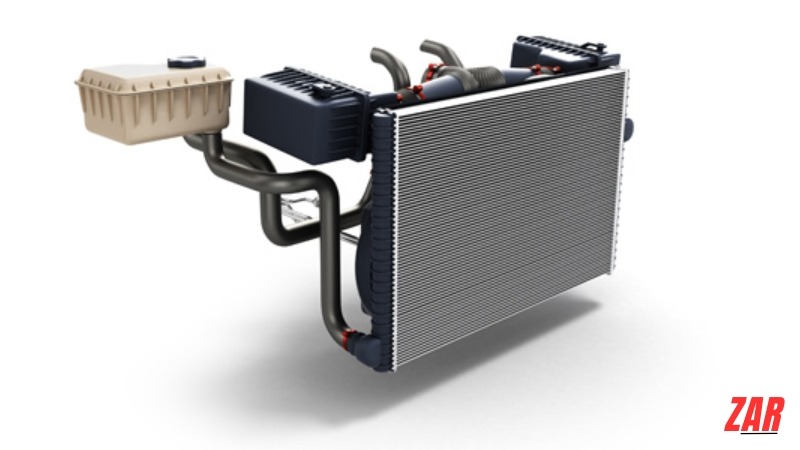
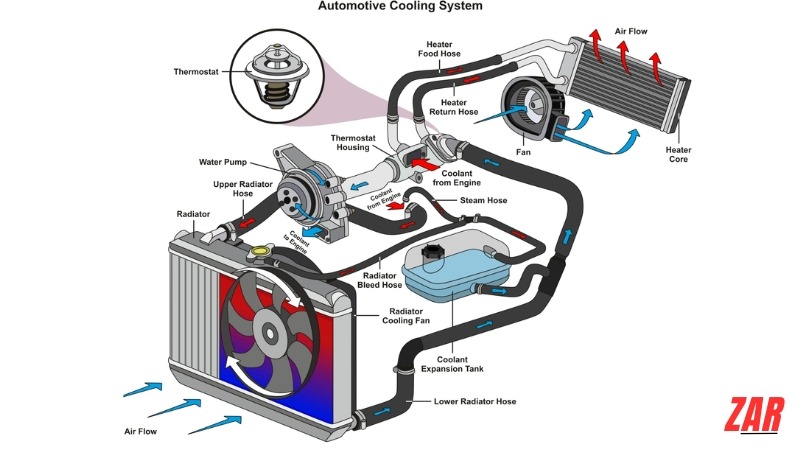
The radiator does not operate in isolation because it is just one component within an interconnected cooling system. Understanding how the entire setup functions helps clarify why individual component failures can quickly cascade into larger engine problems. When the engine reaches its optimal operating temperature, a temperature-sensitive valve called the thermostat opens to allow coolant to flow out of the engine block. The water pump, which is driven by the engine via a belt or chain, then pushes this hot coolant through the upper radiator hose directly into the top tank of the radiator. Inside the core, the coolant flows downward through a series of narrow tubes arranged across a wide area. Thin metal fins surround these tubes to massively increase the surface area available for rapid heat dissipation.
As the vehicle moves forward, ambient air passes through the front grille and across these fins to draw heat away from the hot coolant. When the vehicle is stationary, an electric or belt-driven cooling fan performs the same function by forcefully pulling air through the radiator core. By the time the coolant reaches the bottom tank, its temperature has dropped significantly. The water pump then draws this cooled liquid back through the lower radiator hose and into the engine, where it begins absorbing heat all over again. Throughout this continuous cycle, the radiator cap maintains a specific pressure in the system, typically between 13 and 16 psi. This precise pressurization is critical because it raises the boiling point of the coolant, allowing it to operate efficiently at extreme temperatures that would otherwise cause an unpressurized system to boil over.
Key Components of the Car Radiator System
The radiator system comprises several interconnected parts, each with a specific role. When any one of them fails, the consequences can affect the entire cooling circuit.
1. The Radiator Core
The core is the central heat-exchange structure of the radiator, the section of tubes and fins through which coolant passes and heat is released. Modern radiator cores are typically constructed from aluminium, which is lightweight, conducts heat efficiently, and resists corrosion better than the brass and copper used in older designs. The core is the part most vulnerable to physical damage from road debris and the part that deteriorates most visibly over time through corrosion or clogging.
2. The Radiator Tanks
At the top and bottom (or left and right sides, depending on the design) of the core are the inlet and outlet tanks. These tanks collect and distribute coolant as it enters and exits the core. In most modern vehicles, the tanks are made from reinforced plastic joined to the aluminium core with a rubber gasket and crimped metal tabs. The plastic-to-metal joint is a common failure point the rubber gasket degrades with age and heat cycling, eventually allowing coolant to seep out.
3. The Radiator Cap
The radiator cap is a pressure valve that serves a dual function. It maintains the pressure in the cooling system to raise the coolant’s boiling point, and it releases coolant into the overflow reservoir when pressure exceeds the cap’s rated threshold. A cap that has lost its sealing ability reduces system pressure, lowers the effective boiling point, and can contribute to overheating and coolant loss. It is one of the cheapest components in the cooling system and one of the most frequently overlooked.
4. The Coolant (Antifreeze)
Coolant, often referred to as antifreeze in many markets, is the fluid that carries heat from the engine to the radiator. It is typically a mixture of ethylene glycol and distilled water in a ratio suited to the operating environment. In Nigeria’s climate, the antifreeze function (preventing freezing) is irrelevant, but the corrosion-inhibiting and boiling-point-raising properties of the glycol compound remain important. Coolant degrades over time, losing its corrosion inhibitors and becoming acidic, a condition that accelerates internal corrosion of the radiator, water pump, and other metal components.
5. The Water Pump
The water pump is the mechanical component responsible for circulating coolant through the entire system. It is typically belt-driven (either by the timing belt/chain or a separate accessory belt) and operates continuously whenever the engine is running. A failing water pump reduces coolant flow, which reduces the radiator’s ability to cool the engine even if the radiator itself is in good condition. Symptoms of a failing water pump include coolant leaks at the pump housing, a whining noise from the front of the engine, and overheating.
6. The Thermostat
The thermostat regulates coolant flow based on engine temperature. When the engine is cold, it keeps coolant circulating within the engine only, helping the engine reach operating temperature faster. Once the temperature reaches the thermostat’s opening threshold, typically around 82°C to 95°C, it opens and allows coolant to flow to the radiator. A thermostat that is stuck closed will cause rapid overheating by preventing coolant from reaching the radiator at all. One that is stuck open will cause the engine to run perpetually below optimal temperature, reducing efficiency and increasing wear.
7. Radiator Hoses
Two primary rubber hoses, the upper and lower radiator hoses, connect the radiator to the engine block. These hoses carry coolant under both temperature and pressure, and they degrade gradually over the years of use. The rubber becomes harder and more brittle, eventually developing cracks or collapsing internally. A burst radiator hose causes immediate and total coolant loss one of the fastest ways for an engine to overheat catastrophically. Periodic inspection and replacement of radiator hoses is one of the highest-value preventative maintenance actions a car owner can take.
8. The Cooling Fan
Most modern vehicles use an electric cooling fan (or pair of fans) mounted directly behind the radiator. These fans are activated by a temperature sensor or by the vehicle’s engine control unit when coolant temperature rises above a threshold, or when the air conditioning system is engaged. In older vehicles, a belt-driven mechanical fan with a fan clutch performs the same function. A non-functioning cooling fan will cause the engine to overheat, specifically during low-speed driving and stationary idling precisely the conditions most common in Nigerian urban traffic.
9. The Overflow Reservoir
The overflow reservoir (also called the coolant expansion tank) is a translucent plastic tank connected to the radiator by a small hose. As coolant expands with heat, excess fluid is pushed into this tank. As the system cools, the fluid is drawn back into the radiator. This tank also serves as the reference point for checking coolant level on most modern vehicles. You should never open the radiator cap directly when the engine is warm.
Signs Your Radiator Needs Repair or Replacement
Radiator problems rarely appear without warning signs. Paying attention to these indicators allows intervention before a manageable repair becomes a catastrophic engine failure.
- Engine Overheating
Engine overheating is the most direct symptom. If the temperature gauge climbs toward the red zone particularly during city driving or when the vehicle is stationary the cooling system is not performing adequately. This could trace back to the radiator, but could equally point to a faulty thermostat, a failing water pump, or a coolant leak elsewhere in the system.
- Visible Coolant Puddles
Coolant puddles under the parked vehicle indicate a leak somewhere in the cooling system. Coolant is typically bright green, orange, or pink, depending on the formulation, and has a distinctly sweet smell. A small puddle near the front of the vehicle often points to the radiator or its hoses, while a puddle toward the centre may point to the heater core.
- Sweet Syrupy Smell
A sweet, syrupy smell from inside the cabin or from the engine bay while driving is a reliable indicator of a coolant leak. Coolant vaporises quickly on hot engine surfaces, and the resulting smell is distinctive enough to distinguish from oil burn or exhaust odour.
- Discoloured or Sludgy Coolant
Discoloured or sludgy coolant visible in the overflow reservoir or when the system is opened is a sign of internal corrosion or contamination. Healthy coolant is a clear, bright colour. Rust coloured or thick, muddy coolant indicates degraded inhibitors, corrosion of internal metal surfaces, or, in more serious cases, oil mixing with coolant, which can point to a head gasket leak.
- Recurring Low Coolant Levels
Low coolant levels that recur without any visible external leak can indicate an internal leak with coolant being drawn into the combustion chamber or mixing with engine oil. This is a more serious diagnosis that warrants immediate mechanical attention.
- Cooling Fan Failure
The cooling fan not operating during hot conditions or with the AC running is a straightforward symptom of fan motor or relay failure and one that deserves prompt attention given the demanding thermal environment of Nigerian city driving.
Radiator Repair and Replacement Cost
Radiator repair and replacement costs in Nigeria vary widely depending on the nature of the problem, the vehicle make, and whether genuine, OEM-compatible, or locally fabricated parts are used. Replacing a single radiator hose is one of the more routine cooling system repairs, with parts ranging from ₦3,000 to ₦15,000 and labour adding ₦3,000 to ₦8,000. A coolant flush is a vital maintenance service frequently performed in response to degraded fluid, costing between ₦8,000 and ₦25,000 at Nigerian workshops. While a faulty radiator cap is among the cheapest fixes available at ₦1,500 to ₦5,000, it is a genuine contributor to overheating and should never be overlooked. For radiators with small cracks or pinhole leaks, welding or epoxy patching by specialist workshops in areas like Ladipo or Wuse is a highly viable option. These repairs typically cost between ₦8,000 and ₦30,000, making them a worthwhile solution for relatively recent damage on an otherwise healthy aluminum core radiator.
When major components fail or the radiator itself sustains severe internal corrosion or physical damage, a full replacement becomes necessary. A thermostat replacement is relatively accessible, with parts and labour generally totaling between ₦5,500 and ₦25,000 depending on the housing complexity. The water pump is a more involved job where parts and labour for popular models like the Toyota Corolla or Honda Accord typically fall between ₦30,000 and ₦80,000. For a complete radiator replacement, aftermarket units for common Japanese and Korean vehicles range from ₦25,000 to ₦80,000, while genuine OEM units can reach ₦150,000. European vehicles face significantly higher prices, with aftermarket radiators starting around ₦80,000 and easily exceeding ₦200,000 for premium models. Factoring in labour costs that range from ₦15,000 to ₦50,000 based on the required front end disassembly and cross member removal, the total expense for a complete radiator replacement generally falls between ₦50,000 and ₦180,000 for most common Nigerian market vehicles.
Radiator Maintenance Tips
Given the demanding conditions under which vehicles operate in Nigeria, intense heat, prolonged idling, dusty roads, and stop-and-go urban traffic, the radiator requires more attentive maintenance than the service intervals prescribed for temperate climates might suggest.
- Check Coolant Level Regularly
The coolant level should be inspected at least monthly using the markings on the overflow reservoir. If the level consistently drops between checks without any visible external leak the system needs professional investigation. Never open the radiator cap when the engine is warm because the pressurised system can cause severe burns.
- Flush and Replace Coolant on Schedule
Coolant degrades over time losing its corrosion inhibitors and becoming progressively more acidic. For most vehicles operating in Nigerian conditions a coolant flush every two years or every 40,000 to 50,000 kilometres is a prudent interval and potentially more frequently if you have experienced overheating events or if inspection reveals discoloured fluid. Using diluted coolant like an equal mix of quality antifreeze concentrate and clean water or a pre mixed product is far preferable to plain water which offers no corrosion protection and boils at a lower temperature.
- Inspect Radiator Hoses Periodically
Hoses should be checked for cracks bulges soft spots and hardening. A hose that feels very stiff and brittle has likely lost its flexibility and is highly susceptible to cracking under pressure. A hose that feels spongy or is swollen may be deteriorating from the inside and both conditions indicate a hose that should be replaced before it completely fails. In practice hoses on vehicles older than five years should be inspected at every single oil change.
- Keep the Radiator Fins Clean
Road dust insects plastic bags and debris accumulate against the radiator fins and restrict airflow reducing heat dissipation efficiency. In Nigerian conditions particularly on dusty roads or where plastic bag waste is common this buildup can be significant. Periodically cleaning the front of the radiator with low pressure compressed air or a gentle rinse with water directed from the engine side outward to push debris out rather than in is a straightforward maintenance task that meaningfully improves cooling performance.
- Verify Cooling Fan Operation
With the engine at normal operating temperature, the electric cooling fan should activate. If it does not, which is most apparent during idling or when the AC is running, the fan motor relay temperature sensor or wiring connection should be thoroughly investigated. In Nigerian city traffic, where airflow through the grille is minimal for extended periods, a non-functioning fan is a direct path to engine overheating.
- Avoid Radiator Stop Leak Products
Radiator stop leak compounds are additive products designed to seal small leaks by depositing particles at the leak point. While they can provide temporary relief they also risk clogging narrow coolant passages in the radiator core heater core and engine block causing far more damage than they prevent over time. If a radiator is leaking the appropriate response is a proper mechanical repair or complete replacement.
- Address Overheating Events Promptly
An overheating episode is not simply an inconvenience to be reset by topping up the coolant and continuing to drive. An engine that has overheated should be fully inspected to identify and correct the root cause before further operation. Repeated overheating events degrade the head gasket warp cylinder heads and can eventually cause catastrophic internal engine failure requiring repairs that routinely cost more than the entire vehicle is worth.
- Inspect the Radiator Cap
The cap is a small inexpensive component that is often overlooked during cooling system inspections. A cap that no longer holds pressure adequately reduces the effective boiling point of the system and can contribute to overheating even when the radiator itself is perfectly intact. Caps should be carefully pressure tested or replaced as a precaution whenever any cooling system work is performed.
Summary
The radiator is not a component that rewards neglect. Its failure triggers a chain of consequences that can extend from a minor inconvenience, a tow, and a repair bill all the way to irreparable engine damage if the warning signs are ignored. In Nigeria’s heat and traffic conditions, this risk is heightened compared to milder climates, which makes proactive maintenance not just advisable but genuinely cost-protective.
Knowing how the system works, recognising the early indicators of trouble, understanding the cost landscape for repairs and replacement, and following a consistent maintenance routine are the practical tools that keep the cooling system performing reliably over the life of the vehicle. For most common vehicles on Nigerian roads, the cost of doing this right is modest. The cost of getting it wrong is not.