In the brutal heat of the Nigerian climate, a perfectly functioning air conditioning system is not just a luxury feature. It is a strict daily necessity. Whether you are navigating massive Lagos traffic at high noon, conquering the Abuja to Kaduna expressway in March, or sitting parked in Port Harcourt during the harsh harmattan, the absolute difference between a comfortable drive and a completely exhausting ordeal comes down to one critical component. At the very centre of this entire cooling process sits the AC compressor, a spectacular mechanical device acting as the absolute beating heart of your system. Powered directly by your vehicle’s engine via a drive belt, it flawlessly compresses and actively circulates refrigerant gas throughout the entire air conditioning circuit to make cabin cooling physically possible.
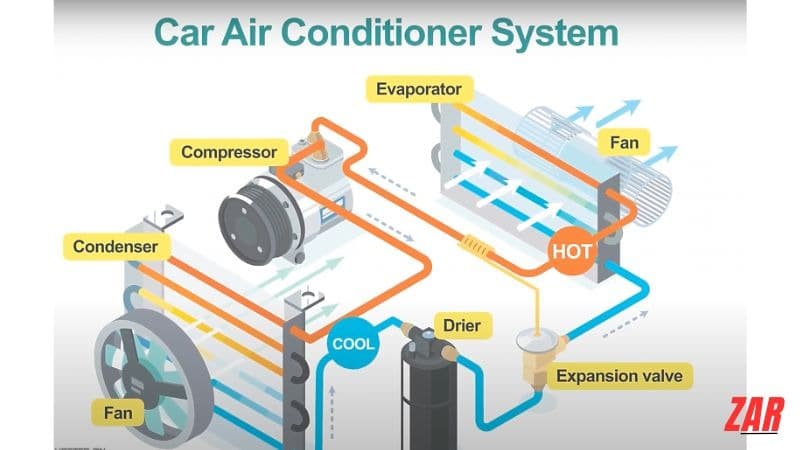
When you engage your AC, an electromagnetic clutch instantly activates the compressor to draw in low pressure refrigerant gas and heavily compress it into a high temperature state. This gas rapidly travels to the condenser to release heat before passing through an expansion device and entering the cabin evaporator to brilliantly absorb interior heat, perfectly creating that highly refreshing blast of cold air from your vents. Because every single component relies entirely on this continuous circulation, a failed compressor instantly renders your entire system completely useless. This highly comprehensive guide perfectly breaks down absolutely everything Nigerian drivers must know about their AC compressor, thoroughly exploring exactly how different types work, critical warning signs of failure, current replacement costs across Nigeria, and the exact maintenance strategies required to brilliantly extend its lifespan under demanding local conditions.
How the Compressor Clutch Works
The AC compressor is brilliantly activated by a highly critical electromagnetic clutch that dictates exactly when your cooling system operates. This spectacular mechanism consists of a pulley continuously driven by the engine belt and a separate electromagnetic plate connected directly to the compressor shaft. The moment you switch your AC on, the vehicle’s electrical system aggressively energizes an electromagnet that pulls this plate forward, locking it perfectly with the spinning pulley to powerfully drive the compressor. When you switch the system off, the electromagnet instantly deactivates, allowing the pulley to spin freely without engaging the compressor. If this spectacular clutch fails while fully engaged, your compressor will absolutely never stop running, but if it violently fails while completely disengaged, your system will utterly fail to produce any cold air whatsoever.
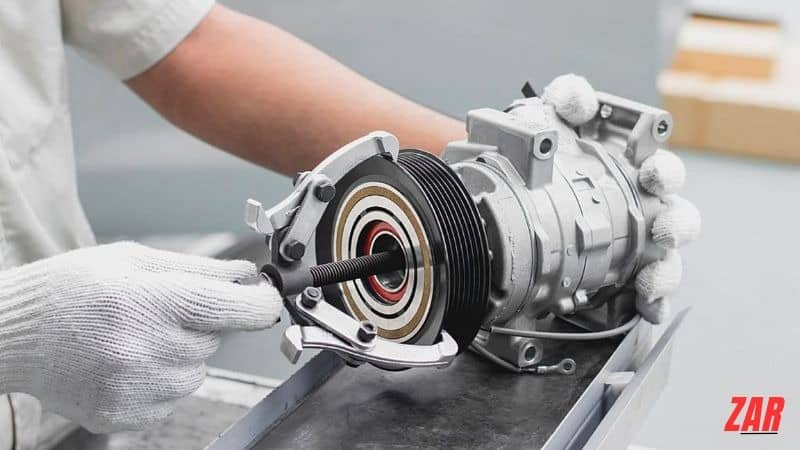
Across the highly active Nigerian mechanic community, clutch failure securely remains one of the absolute most common AC faults encountered daily. The critical clutch bearing heavily degrades over time under brutal local heat conditions, and the electromagnetic coil can completely burn out entirely independently of the actual compressor body. When the clutch makes terrifying noises or completely fails to engage, many local mechanics will aggressively recommend a massive full compressor replacement immediately. However, for highly observant owners whose actual compressor body remains perfectly healthy, finding a genuinely experienced diagnostic mechanic to perform a highly targeted clutch replacement can flawlessly restore your cooling system at a spectacularly lower financial cost.
Types of Car AC Compressors
Not all AC compressors work the same way internally. The type of compressor in a specific vehicle is determined by the manufacturer at the design stage and cannot be interchanged with a different type replacement must use the same compressor design the system was engineered around.
Piston Reciprocating Compressors
The highly robust reciprocating piston compressor officially stands as the most common type across the massive Nigerian used car market. By brilliantly utilizing a wobble plate to drive pistons backward and forward within their cylinders, it successfully pulls in refrigerant vapour and fiercely compresses it into a high pressure state before discharging it into the condenser. While it typically operates with slightly more noise and lower efficiency compared to modern alternatives, its incredible mechanical simplicity makes it spectacularly serviceable for local mechanics working on older Toyota, Honda, and Nissan models where reliable replacement parts remain massively available.
Scroll Compressors
The spectacular scroll compressor proudly reigns as the absolute most widely used design across highly advanced modern automotive cooling systems. It flawlessly utilizes a unique interleaved design featuring one fixed scroll and an oscillating movable spiral that brilliantly traps and aggressively compresses pockets of refrigerant by gradually reducing volume. This incredibly sophisticated engineering perfectly guarantees remarkably quiet operation, smoother airflow, and spectacular fuel efficiency for premium vehicles like the modern Lexus RX and Camry Hybrid, though its massive internal complexity undeniably demands significantly higher replacement costs when failures occur.
Rotary Vane Compressors
The incredibly compact rotary vane compressor beautifully utilizes an offset rotor completely fitted with highly precise sliding blades that actively maintain constant contact with the outer housing wall. As the spectacular rotor rapidly turns, these brilliantly engineered blades slide in and out of their radial slots to create a continuous series of aggressively decreasing volumes to perfectly compress the refrigerant. While it completely offers incredibly quiet and massive operational efficiency for highly popular Japanese and Korean compact vehicles like Hyundai and Kia, it can be slightly less durable when constantly subjected to truly extreme Nigerian climate conditions.
Variable Displacement Compressors
The highly advanced variable displacement compressor brilliantly features a spectacular variable angle wobble plate perfectly controlled by a bellows actuated valve that actively senses the exact cooling demand of the cabin. Instead of constantly running at full output, it flawlessly adjusts its exact displacement to match your precise climate control needs, completely reducing massive fuel consumption and unnecessary mechanical wear. Found heavily across premium Mercedes Benz, BMW, and high specification Lexus models, this spectacular efficiency undeniably requires incredibly precise diagnostic expertise rather than immediate replacement when terrifying faults eventually develop.
Electric Compressors
The brilliantly innovative electric compressor completely shatters traditional belt driven designs by perfectly utilizing an electrically driven motor specifically engineered for spectacular hybrid and fully electric vehicles. This highly advanced unit flawlessly allows completely uninterrupted cabin cooling even when the internal combustion engine heavily shuts down during brutal Lagos traffic idling, making it absolutely essential for spectacular models like the Toyota Venza and Lexus RX 450h. Because of its massive electrical complexity, perfectly repairing these advanced units strictly requires highly trained hybrid specialists rather than standard general AC mechanics.
Warning Signs of a Failing AC Compressor
Understanding the early warning signs of compressor failure is the most practical knowledge a Nigerian car owner can have, because catching a developing problem early before the compressor seizes internally is the difference between a manageable repair and a comprehensive system overhaul.
Warm Air From the Vents
The absolute most obvious and consistently reported warning sign across the massive Nigerian automotive market is undeniably warm air blowing aggressively from your vents. However, you absolutely must understand that this highly frustrating symptom could simply indicate low refrigerant from a minor system leak, a blocked condenser, or a simple electrical fault rather than a completely seized compressor. Because expertly diagnosing and perfectly recharging lost refrigerant gas is spectacularly less expensive than executing a massive compressor replacement, treating every single warm air issue as a catastrophic compressor failure will aggressively waste your financial resources.
Unusual Noises When the AC is Switched On
Hearing terrifying squealing, aggressive grinding, or loud chattering noises exploding from your engine compartment the exact moment you switch the AC on heavily indicates a spectacularly malfunctioning compressor unit. These highly alarming sounds carry critical diagnostic information, perfectly revealing whether you are suffering from a worn clutch bearing, heavily damaged internal pistons, or completely contaminated lubricating oil. For a remarkably brilliant and highly practical diagnostic confirmation, simply switch the AC off while the terrifying noise is actively occurring, and if the sound completely stops instantly, you have flawlessly confirmed that the massive fault securely lies within your clutch or compressor assembly.
The Compressor Clutch Not Engaging
A spectacularly straightforward and highly critical visual inspection involves aggressively checking whether the front electromagnetic clutch plate successfully engages and spins simultaneously with the outer pulley when the system is activated. If the central plate completely fails to rotate, it heavily means the electromagnetic coil has completely burned out, a critical fuse has blown, the pressure protection switch has actively cut power due to dangerously low refrigerant, or the massive compressor body itself has completely seized. Performing this incredibly simple thirty second visual check officially remains one of the absolute most valuable pre purchase inspections for any highly motivated buyer actively evaluating a used family car in Nigeria.
Refrigerant Leaks
Because highly advanced system sensors will actively shut off the compressor to fiercely prevent catastrophic damage when refrigerant severely leaks, visually identifying escaping gas securely remains a completely massive diagnostic priority. These terrifying leaks frequently occur when severe internal problems force the compressor to aggressively over compress the refrigerant, completely bursting critical seals and perfectly leaving a highly visible oily residue completely surrounding compressor fittings and hose connections. While advanced workshops brilliantly utilize sophisticated ultraviolet fluorescent dye tests to flawlessly pinpoint exactly where the gas escapes, highly experienced local mechanics frequently rely on perfectly feeling for this oily residue or aggressively monitoring system pressure drops through specialized manifold gauges.
Excessive Belt Wear or Drive Belt Damage
A severely failing compressor pulley completely suffering from severely worn out bearings can actively move out of its proper alignment, aggressively producing terrifying screeching noises while spectacularly accelerating the premature destruction of your vital serpentine drive belt. If you ever meticulously observe your drive belt wearing significantly faster than normal or completely showing highly uneven wear entirely on one side, the massive compressor pulley bearing absolutely demands immediate and highly aggressive inspection. Furthermore, a completely seized internal compressor can spectacularly shred a perfectly healthy serpentine belt incredibly rapidly, making it absolutely essential to highly suspect the AC system whenever a massive drive belt fails completely unexpectedly.
The AC Cooling Only Intermittently
Experiencing highly inconsistent cold air that frustratingly comes and goes or heavily requires aggressively revving the engine before any cooling actually improves securely represents a highly critical early warning of impending compressor failure. Across standard Nigerian automotive practice, this incredibly annoying intermittent cooling is frequently deferred by drivers because the system deceivingly appears to function just enough to barely tolerate the brutal heat. Unfortunately, completely ignoring this spectacular early warning sign predictably remains a massive financial mistake that completely converts a completely manageable local repair into a spectacularly catastrophic full system overhaul by the time the highly frustrated owner finally addresses the massive failure.
Conclusion
Navigating AC compressor replacement costs across Nigeria completely depends on your exact vehicle and chosen replacement route. While a brand new OEM unit for common Japanese models brilliantly ranges from ₦65,000 to ₦150,000, highly reliable tokunbo compressors securely remain the absolute most popular option at roughly ₦35,000 to ₦90,000. Factoring in standard labor alongside mandatory system flushes and precise refrigerant recharges, a complete Japanese vehicle repair falls between ₦120,000 and ₦300,000, while spectacular European luxury models aggressively demand up to ₦900,000. However, you absolutely do not need a massive full replacement for every single fault. If your compressor body remains completely healthy, a highly targeted clutch replacement or a simple external leak repair can flawlessly restore functionality at a drastically lower cost, completely saving you from incredibly expensive and entirely unnecessary full system overhauls.
Brilliantly extending your compressor lifespan under brutal Nigerian conditions demands highly specific maintenance routines like running the system weekly to perfectly lubricate internal seals and rigorously addressing minor leaks instead of constantly topping up escaping gas. Furthermore, when actively evaluating any used vehicle across the local market, you absolutely must perform a spectacular three minute AC inspection to completely avoid massive unexpected repair bills. Start the engine, switch the system to maximum cold, visually confirm the front clutch plate beautifully engages, and physically verify that the center vent blows air cold enough to create visible condensation within five minutes. If the system completely fails this highly critical test, you must aggressively factor the massive repair cost directly into your final price negotiation or confidently walk away to find a vastly better conditioned alternative.