Founded in Britain nearly a century ago as the Swallow Sidecar Company before moving to Coventry in 1928, Jaguar built its formidable reputation on a simple but powerful idea: that beauty, performance, and accessible luxury did not have to be mutually exclusive. Through the postwar decades, the company produced some of the most celebrated vehicles in automotive history, including the XK120, the legendary D Type racing cars, and the iconic E Type, which is widely regarded as one of the most beautiful cars ever made. In Nigeria, however, Jaguar ownership signals something entirely different from driving a standard Mercedes-Benz or BMW; it is rarer, more understated in some ways, and delightfully eccentric in others. It strongly appeals to a specific buyer who is far less interested in following the conventional luxury hierarchy and vastly more interested in driving something with genuine character. This comprehensive guide covers the full Jaguar model range available in the Nigerian used market, realistic pricing for 2026, the critical fault patterns that every buyer must understand, and what the brand’s extraordinary ongoing transformation means for prospective owners today.
Understanding the reality of modern Jaguar ownership requires grasping its recent corporate history and its sweeping, dramatic strategic transformation. After being owned by Ford and subsequently sold to Tata Motors in 2008, Jaguar Cars merged directly with Land Rover in 2013 to form a single, unified operating company. This monumental merger meant that modern vehicles like the XE, XF, F Pace, E Pace, and F Type emerged from a shared platform and engineering strategy with Land Rover, completely explaining why their fault patterns, specialist service requirements, and parts ecosystems heavily overlap. More importantly, in a bold bid to push the brand significantly upmarket to compete with elite marques like Bentley and Porsche, Jaguar has officially concluded all internal combustion engine production. The final F Pace rolled off the Solihull assembly line on December 19, 2025, paving the way for a brand new, all-electric architecture that will debut with a highly anticipated four-door electric grand tourer. Consequently, every single Jaguar currently available in Nigeria, including any vehicle heavily marketed as a new or nearly new example in 2026, is drawn from production that has permanently ceased, fundamentally turning the entire local landscape into an exclusive used car market and profoundly reshaping how buyers must approach long-term parts planning and value.
The Jaguar Model Range: What You’ll Find in Nigeria
Jaguar XF The Executive Saloon
The XF perfectly stands as the premier executive saloon for Jaguar, directly competing against the formidable BMW 5 Series and Mercedes-Benz E-Class across the global market. Originally launched in 2007 to seamlessly replace the aging S-Type, this magnificent vehicle has successfully transitioned through two highly distinct generations, heavily populating the Nigerian used car market. The older first-generation X250 provided a remarkable range of engines, including a naturally aspirated 3.0 litre V6 and a massively powerful 5.0 litre V8 for the high-performance XFR variant. The vastly superior second-generation X260 triumphantly arrived in 2015, utilizing a highly advanced lightweight aluminium structure and beautifully introducing the proprietary Ingenium engine lineup. For discerning buyers, the incredibly robust 3.0 litre V6 diesel remains universally regarded as the absolute best all-around engine, perfectly offering phenomenal torque, highly impressive fuel economy, and rock-solid long-term reliability.
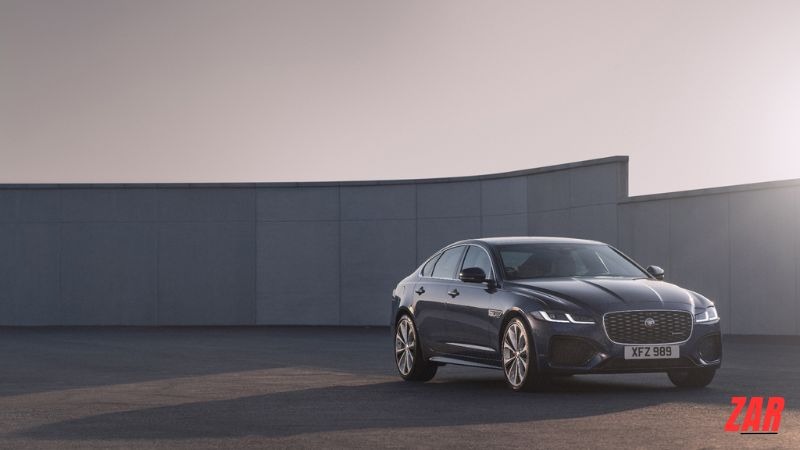
Within the incredibly active Nigerian tokunbo market, this beautifully proportioned saloon remains arguably the most practical Jaguar for demanding urban environments, feeling genuinely executive without becoming unnecessarily challenging to park across Lagos or Abuja. Pricing heavily depends upon the exact generation and overall mechanical condition with highly used first generation units occasionally surfacing for roughly ₦10.9 million though these require absolutely exhaustive mechanical inspections. Conversely securing a beautifully maintained second generation X260 in completely presentable condition typically demands anywhere from ₦28 million to ₦55 million depending heavily on specific engine configurations and premium interior trims. Brand new or extremely low mileage late model variants aggressively push into much higher territory with the stunning XF R Dynamic SE currently commanding approximately ₦67.3 million for executives demanding absolute perfection.
Jaguar XE The Compact Executive Saloon
The spectacular XE successfully serves as the brilliant entry point into the legendary saloon range, purposefully positioned to aggressively challenge the massively popular BMW 3 Series and Mercedes-Benz C Class. Arriving as the very first compact executive vehicle from the brand since the discontinued X Type, the XE beautifully pioneered a highly advanced modular aluminium architecture permanently moving the company away from heavily outdated Ford derived platforms. The wonderfully refined engine lineup perfectly covers highly efficient 2.0 litre Ingenium diesel and turbocharged petrol units available in multiple states of tune, while a thrilling 3.0 litre supercharged V6 remains exclusively reserved for the high-performance XE S variant. This beautifully sculpted vehicle heavily prioritizes incredible driver engagement and dynamic handling perfectly suiting buyers who actively value sporty agility wrapped in a significantly smaller urban footprint rather than demanding the cavernous chauffeur-driven rear seat dimensions of the vastly larger XF.
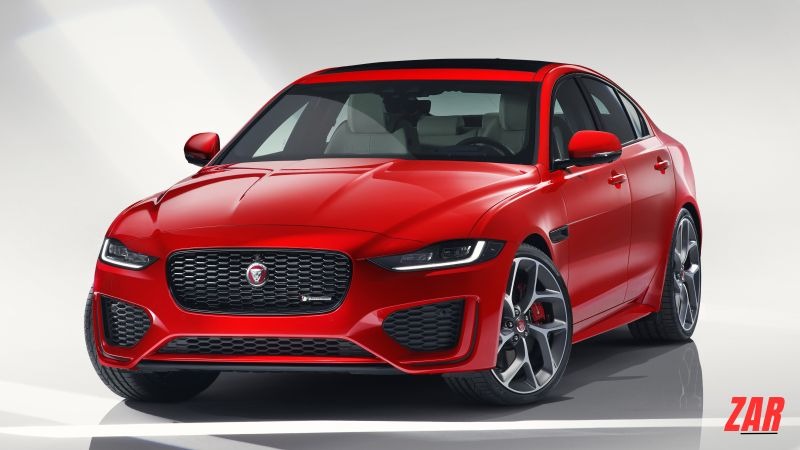
For prospective Nigerian buyers, the highly attractive XE flawlessly offers a significantly more accessible financial path into premium modern British luxury while completely retaining the unmistakable driving feel and immaculate interior quality the iconic brand represents. When aggressively navigating the local used market entry-level first-generation examples spanning the 2016 to 2018 model years typically range from approximately ₦18 million to ₦22 million assuming perfectly reasonable mechanical condition. Stepping up to vastly cleaner and significantly lower mileage iterations from the highly desirable 2019 to 2021 production window organically pushes valuations between ₦28 million and ₦38 million perfectly reflecting their highly updated digital interiors and vastly improved mechanical refinement. Ultimately this striking compact saloon firmly stands as the absolute most affordable route for aggressively entering modern Jaguar ownership across Nigeria without severely compromising on prestigious automotive aesthetics.
Jaguar F-Pace The Luxury Performance SUV
The breathtaking F Pace officially stands as the massively successful luxury crossover that almost single handedly kept the legendary automaker commercially relevant throughout the entire decade perfectly arriving as the very first SUV ever produced by the historic British brand. Unveiled to massive global acclaim at the 2015 Frankfurt International Motor Show this spectacular vehicle beautifully combines incredibly powerful performance with massive class leading cargo space and deeply practical daily utility. Unlike the heavily comfort-focused Range Rover which massively prioritizes pure off road capability the incredibly agile F Pace flawlessly delivers incredibly sharp handling characteristics vastly more similar to the low slung F Type sports car ensuring buyers never sacrifice pure dynamic character for elevated ride height. The brilliant engine range covers a highly efficient standard P250 turbocharged four cylinder a potent mid range P400 producing 395 horsepower and a terrifyingly fast P575 supercharged V8 producing 567 horsepower completely capable of violently launching the SUV from 0 to 60 mph in just 3.8 seconds with power flawlessly managed by an eight speed automatic transmission and standard all wheel drive.

Unsurprisingly, this incredibly versatile vehicle remains the absolute most widely encountered Jaguar currently dominating the Nigerian used market presenting an incredibly broad pricing spectrum completely dictated by generation and specific performance trims. General listings across the active local market typically span from roughly ₦34 million at the absolute entry level all the way to an astonishing ₦150 million for highly premium low mileage SVR examples with the overall market average comfortably sitting around ₦55 million. For the absolute smartest financial investment a beautifully maintained 2018 to 2020 F Pace utilizing the P250 or P300 trim perfectly sits within the ₦35 million to ₦55 million range offering the ultimate balance of modernized technology and vastly improved mechanical reliability over early production models. Buyers aggressively pursuing the terrifyingly fast high performance SVR variant must possess both a considerable financial premium and absolute guaranteed access to highly specialized mechanics completely capable of flawlessly maintaining its incredibly complex supercharged V8 powertrain.
Jaguar E Pace The Compact SUV
Serving as the brilliant entry-level crossover for the prestigious brand the remarkably stylish E Pace arrives purposefully positioned directly below the larger F Pace, beautifully targeting the highly competitive compact luxury SUV segment fiercely occupied by the BMW X1 and Mercedes-Benz GLA. Officially revealed in July 2017 this beautifully sculpted vehicle boldly outsourced its highly precise manufacturing completely to the legendary Magna Steyr facility in Graz, Austria ensuring absolutely flawless build quality until its permanent production conclusion in December 2024. While undeniably less commonly encountered across Nigerian roads than its massively popular larger sibling this striking compact crossover successfully delivers an incredibly agile urban driving experience, completely wrapped in unmistakable British automotive elegance, perfectly suited for effortlessly navigating heavily congested city traffic.

When these incredibly stylish vehicles do occasionally surface across local tokunbo listings, they beautifully present highly attractive pricing brackets, completely making them an incredibly accessible initial entry point into prestigious luxury SUV ownership. The highly desirable E Pace P250 All Wheel Drive configuration alongside the beautifully appointed 300 Sport variant currently commands prices ranging from approximately ₦31.7 million to ₦38.7 million, depending entirely on overall mileage and verified customs duty documentation. For younger affluent buyers or small families actively seeking a highly distinctive premium brand in a completely manageable urban form factor, this exceptionally rare crossover successfully delivers massive visual impact and prestigious exclusivity without demanding the overwhelmingly massive financial commitment naturally associated with the larger flagship models.
Jaguar F Type The Sports Car
The absolutely spectacular F Type stands proudly as the ultimate two-seat performance machine, beautifully serving as the direct spiritual successor, completely inheriting the legendary DNA of the historic E Type. Originally launching as a breathtaking convertible at the 2012 Paris Motor Show before beautifully introducing an equally stunning coupe variant, this completely visceral vehicle successfully returned the iconic brand to the highly focused two-seat configuration entirely lost decades ago. Delivering the absolute most thrilling driving experience across the entire corporate lineup, it heavily boasts a highly diverse powertrain selection brilliantly ranging from a lightweight 2.0 litre turbocharged four cylinder all the way up to a terrifyingly loud 5.0 litre supercharged V8, perfectly delivering an unmistakable exhaust note that instantly commands total attention. Because of its extremely low ground clearance, remarkably firm sport-tuned ride, and strictly limited passenger capacity, it remains entirely impractical for daily Nigerian urban commuting, organically restricting its ownership exclusively to highly dedicated automotive enthusiasts.
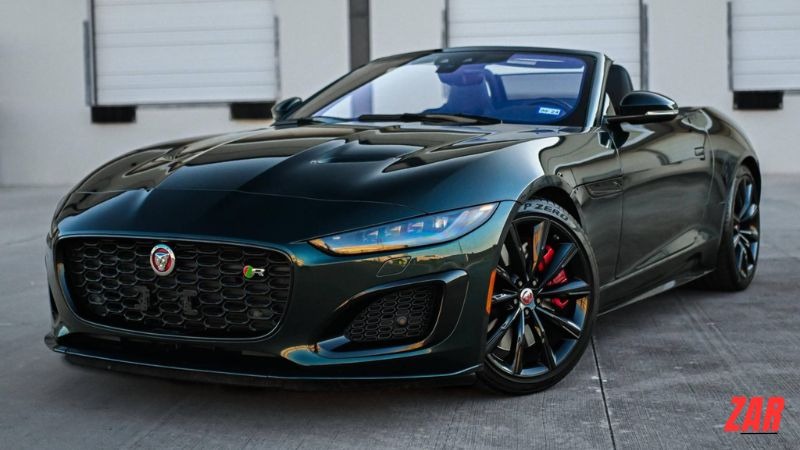
Because this breathtaking performance machine remains exceptionally rare across Nigeria, it naturally commands incredibly massive financial premiums whenever perfectly clean examples actually become available on the local secondary market. Early first-generation examples carrying noticeably higher mileage currently start around a highly accessible ₦35 million, while beautifully maintained late model coupe or convertible units easily push valuations aggressively upward toward ₦80 million or significantly more, depending on their exact engine specification. For elite buyers demanding the absolute ultimate expression of modern British performance, the incredibly exclusive brand new F Type P575 R75 Convertible currently sits at the absolute pinnacle of the pricing spectrum, commanding a staggering ₦155.4 million, flawlessly cementing its elite status as a highly coveted collector piece following the permanent conclusion of all internal combustion manufacturing.
Jaguar XJ The Flagship Saloon
The legendary XJ unequivocally represents the absolute pinnacle of the entire Jaguar saloon lineage, flawlessly arriving as a breathtaking limousine-class vehicle purposefully designed to aggressively challenge the Mercedes-Benz S Class, BMW 7 Series, and Bentley Flying Spur. The spectacular final X351 generation completely revolutionized the highly conservative executive segment by beautifully introducing a striking, sweeping roofline and a highly advanced aluminium-intensive platform, perfectly delivering unmatched driving dynamics for such a massive vehicle before being officially discontinued in 2019. It flawlessly combines incredibly opulent interior craftsmanship heavily featuring vast expanses of premium leather and genuine wood veneers with incredibly potent supercharged powertrains, seamlessly delivering an effortlessly silent yet terrifyingly fast executive transit experience entirely unmatched by its more predictable German rivals.
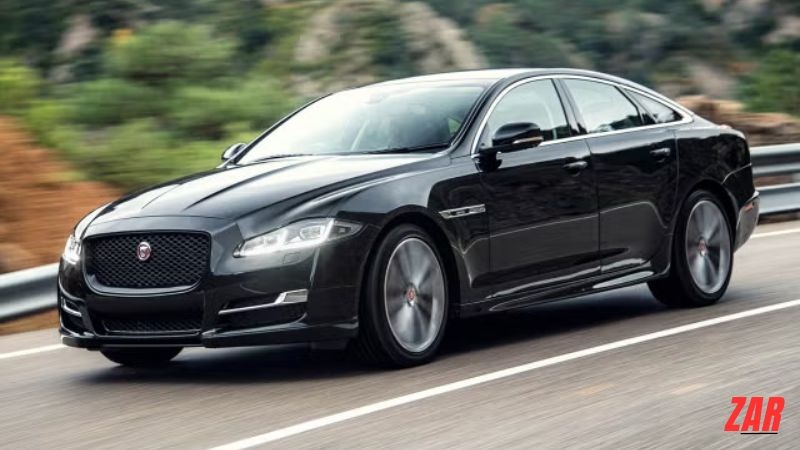
In the current Nigerian market, these breathtaking flagship limousines spanning the 2010 to 2019 production years beautifully represent an incredibly specific and highly complex ownership proposition, perfectly offering extraordinary street presence at valuations that have fallen massively from their staggering original import costs. While a pristine tokunbo XJ can be acquired for a remarkably accessible price point considering its immense luxury pedigree, prospective buyers absolutely must understand the terrifying financial realities hiding beneath the beautiful aluminium bodywork. The incredibly demanding maintenance requirements and highly complex electronic architecture dictate that this magnificent flagship strictly belongs entirely to the most deeply resourceful owners, absolutely possessing completely unfettered access to highly specialized independent technicians, seamlessly capable of sustainably managing its massive long-term repair bills.
Jaguar I Pace The Electric Pioneer
The incredibly groundbreaking I Pace beautifully represents a monumental historical milestone, perfectly serving as the very first fully electric vehicle ever produced by the legendary British automaker. Officially unveiled to massive critical acclaim in March 2018 this spectacularly designed electric SUV completely won the highly prestigious World Car of the Year award, beautifully proving that absolutely zero emissions driving could flawlessly coexist with breathtaking acceleration and incredibly sharp handling dynamics. Beautifully utilizing a highly advanced dual motor setup, flawlessly delivering massive instant torque the vehicle seamlessly provided an incredibly thrilling driving experience while simultaneously offering perfectly silent daily commuting until its permanent global production completely ended in December 2024.
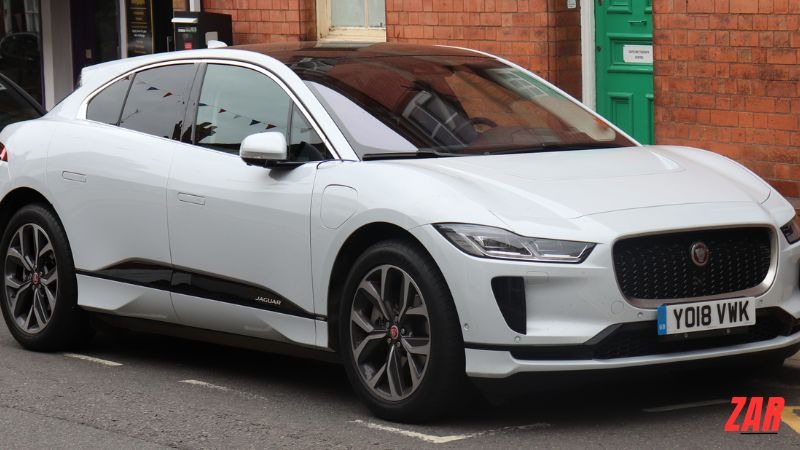
However, integrating this highly advanced technological marvel directly into the current Nigerian automotive landscape presents incredibly significant logistical challenges that prospective buyers absolutely must evaluate with extreme caution. Since a completely reliable fast charging infrastructure remains extremely limited entirely outside heavily affluent areas of Lagos, confidently utilizing the vehicle for long-distance intercity travel remains virtually impossible. Furthermore, the highly specialized diagnostic knowledge strictly required to safely service high voltage battery systems, complex thermal management circuits, and advanced electric drivetrains remains completely unavailable outside a tiny handful of elite independent workshops. Despite these massive logistical hurdles, incredibly wealthy buyers completely fascinated by the electric concept can currently secure the remarkable I Pace EV400 from roughly ₦97.2 million, making it a highly exclusive but deeply complex urban statement piece.
Common Problems With Jaguar Cars in Nigeria
Understanding the specific fault patterns of a Jaguar remains vital for any prospective buyer. Their advanced aluminium construction and proprietary electronics deliver premium performance, but they also create significant maintenance demands that absolutely require specialized JLR infrastructure.
- Timing Chain Failure on Ingenium Diesel Engines
This critical issue heavily affects the 2.0 litre diesel XE, XF, and F Pace. The timing chains stretch prematurely due to oil dilution caused by interrupted diesel particulate filter regenerations and infrequent oil changes. This compromises engine timing, frequently producing a noticeable metallic rattle during cold starts. Ignoring this clear warning will inevitably lead to a snapped chain and catastrophic engine failure.
- Turbocharger Failure
Turbochargers on both single and twin turbo diesel models frequently fail early, often signaled by a whistling noise or a sudden drop into restricted performance mode. Replacing a failed turbo is incredibly labor-intensive, strictly requiring a comprehensive cleaning of the entire engine block and oil supply lines, as leaving any carbon deposits behind will instantly destroy the brand-new unit.
- Piston Cooling Solenoid Failure
The 2.0 litre diesel engines utilize an electronic solenoid to manage vital oil flow to the piston cooling jets. These delicate solenoids frequently fail when hot coolant leaks directly onto them from the thermostat housing. If left unaddressed, this failure leads to severe piston overheating and massive internal engine damage.
- Electrical and Infotainment Faults
Owners consistently report frustrating electrical gremlins, including freezing screens and rogue sensors. Specifically, a documented software defect affecting vehicles built between September 2016 and August 2017 causes the digital instrument cluster to go completely blank, strictly requiring an official software update from an authorized dealer or a specialist with direct access to the JLR TOPIX system.
- Water Pump and Coolant System Issues
The highly potent 3.0 litre supercharged V6 models suffer from notoriously weak water pumps that can completely fail in under 20,000 miles. Coolant infiltrates the bearing housing, causing heavy corrosion and massive fluid leaks. Buyers must meticulously verify the water pump replacement history and rigorously inspect the entire coolant circuit before purchasing any V6 or V8 variant.
- F Pace Bodywork and Build Quality Variation
According to major international reliability surveys, the most common trouble spot for the F-Pace proved to be its exterior bodywork. Consequently, prospective tokunbo buyers must conduct a highly meticulous visual examination, carefully verifying uniform panel gaps, flawless paint consistency, and tight interior trim fitting to ensure they secure a genuinely pristine unit.
- Fuel Leaks in the F Pace and XE
There have been highly critical official recalls relating to dangerous fuel leaks affecting both the F Pace and XE models. These cover defective fuel return hoses and leaking fuel rails on models manufactured between September 2016 and August 2017. Buyers must absolutely verify whether these crucial safety recalls were successfully completed by checking the vehicle’s service history.
- Transmission Behaviour
F Pace owners frequently report incredibly rough and highly unpredictable shifting behaviour, which becomes especially apparent in heavily congested stop-and-go driving. Because a complete transmission replacement is extraordinarily expensive, rigorously testing any prospective Jaguar in dense urban traffic to check for hesitation or unexpected gear hunting remains an essential pre-purchase step.
Final Assessment Inspection Realities and Ownership Verdict
A highly structured pre-purchase inspection remains absolutely essential for any Jaguar, specifically because the incredible complexity of its electronic architecture demands vastly more thoroughness than standard luxury vehicles. Prospective buyers must absolutely insist on specialized JLR-grade diagnostics, utilizing advanced TOPIX or Autologic scanners to reveal deep system faults across the engine, transmission, and body modules that basic OBD2 tools simply cannot detect. Furthermore, you must rigorously listen to the cold start behavior to catch any terrifying metallic rattling that instantly indicates premature timing chain wear on Ingenium diesel engines. It is also crucially important to meticulously examine the entire coolant system for suspicious leaks around the water pump, aggressively verify that all historical safety recalls were officially completed through a detailed VIN check, and comprehensively test the vehicle in dense urban stop and go traffic to expose any hidden transmission hesitation or electrical gremlins that a simple highway test drive would easily miss.
Ultimately, the Jaguar buyer in Nigeria represents a highly specific demographic actively seeking a distinctly British driving experience, one that beautifully prioritizes bespoke refinement and unique character over predictable German precision or standard Japanese reliability. For buyers demanding sustainable ownership costs, the incredibly beautiful second-generation XF utilizing the highly proven 3.0 litre V6 diesel makes the absolute most practical executive case, while the striking F-Pace in P300 or P400 trim perfectly serves affluent drivers wanting a luxury SUV packed with unmistakable personality. However, prospective owners must completely avoid any early Ingenium diesel lacking a documented service history, models with unverified safety recalls, or any vehicle purchased on the dangerous assumption that regular neighborhood mechanics can safely manage its highly specialized maintenance. When approached with a realistic budget and an established relationship with a dedicated Jaguar specialist, this legendary brand flawlessly delivers an extraordinarily rewarding driving experience that very few alternatives can ever truly match.